
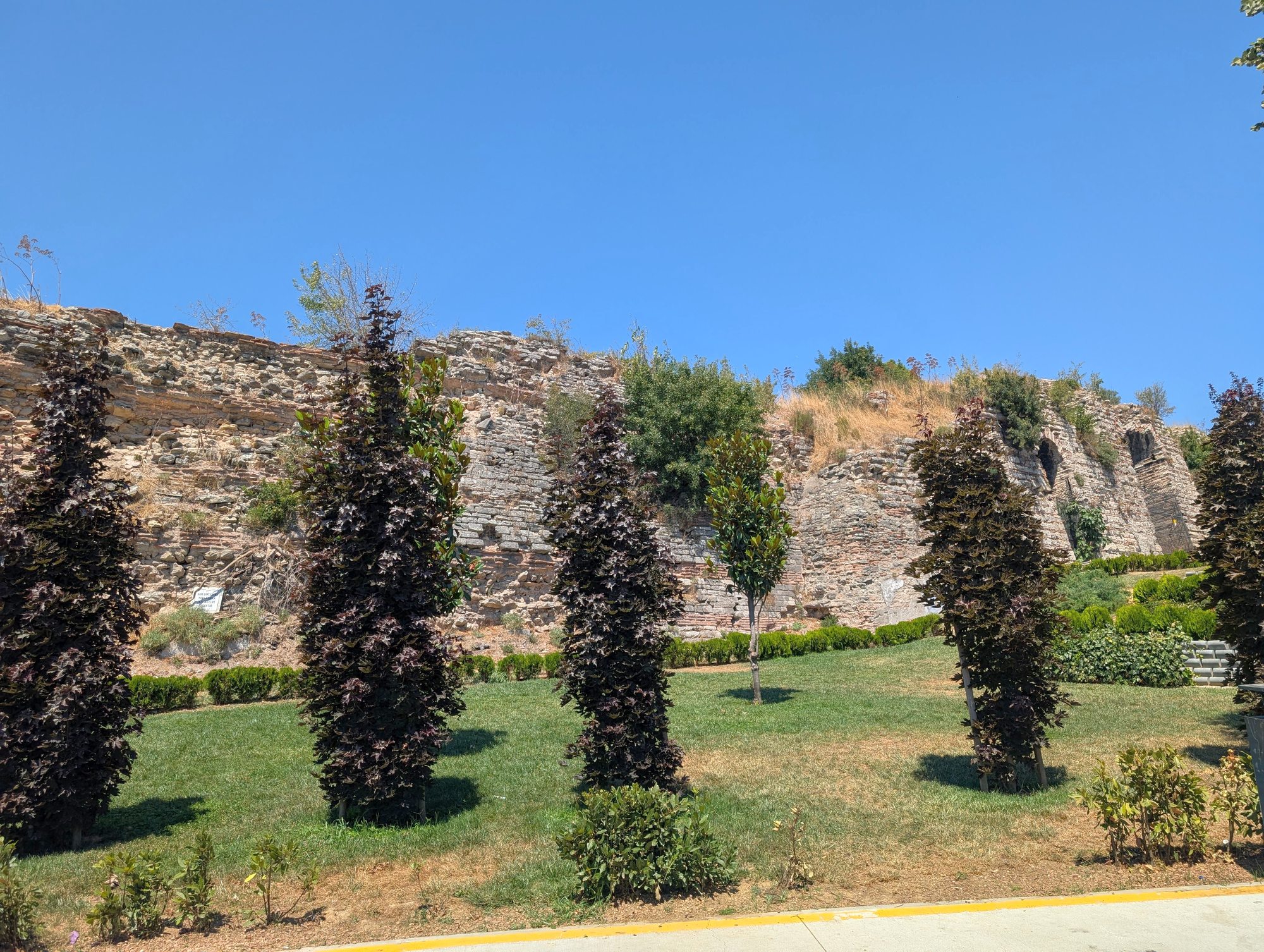
Description:
The Third Military Gate of the Theodosian Walls, known in Greek sources as the Gate of the Third, takes its name from the quarter of the Triton that lay just behind it. Positioned between the Gate of the Spring (Silivrikapı) to the south and the Gate of Rhegion (Yeni Mevlevihane Kapısı) to the north, the gate is located precisely between towers 39 and 40 of the mighty land walls, in the Mevlanakapı Neighbourhood of the Fatih district of the city.
Tower 40 bears a Greek inscription with monograms, stating: "In the time of our glorious Lord/Theotokos help Sovereign (Despotes) [possibly Emperor Justinian]/From Xenodochion and Eparch".
Unlike the larger ceremonial or civic gates that bore Turkish names after the Ottoman conquest, this passage remained anonymous in Ottoman times, a sign of its more modest role. Built in the middle or late Byzantine period, it served primarily as a military gate, providing controlled access for soldiers rather than merchants, pilgrims, or processions. The outer wall once contained a corresponding opening, still visible in photographs of the early 20th century, though it has since vanished. Most scholars believe that this gate can be identified with the Gate of Kalagros described in Byzantine sources, though absolute certainty is elusive.
The location of the gate is particularly notable because it lies just before the distinctive C-shaped bend of the walls known as the Sigma. This unusual curvature is one of the few irregularities in the otherwise straight sweep of the Theodosian fortifications. The reason for the bend remains debated: some suggest it adapted to topographical conditions, while others argue it was a deliberate defensive feature, creating a flanking position from which defenders could sweep attackers with crossfire. The placement of a minor gate near this bend would have been practical, allowing troops to manoeuvre quickly to reinforce vulnerable stretches of the wall.
Another theory proposes that the curve of the Sigma was designed to provide space for imperial guards and members of the court during the emperor’s visits to the Holy Spring (Pege). However, this explanation is considered unlikely. The Theodosian Walls were constructed before the Holy Spring gained prominence as a religious site, and imperial visits to the Pege were neither frequent nor important enough to warrant altering the wall’s design.
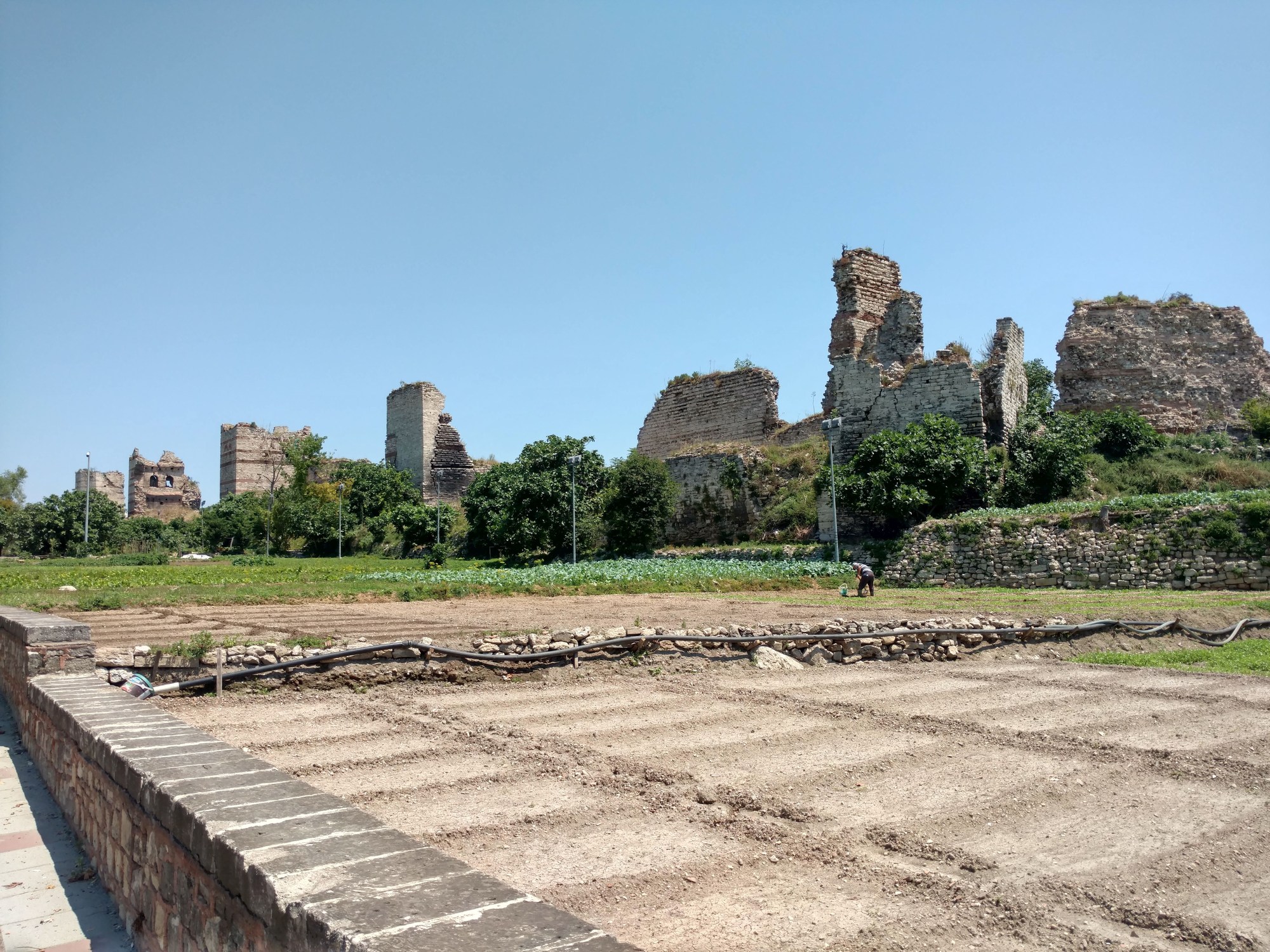
Small military gates like this one formed an essential part of Constantinople's layered defence system. While the monumental gates projected imperial prestige and opened onto major roads, the military gates provided pragmatic access: for moving supplies, launching sorties, or allowing messengers and reinforcements to pass discreetly. Their modest scale belies their importance, as they gave flexibility to the defenders of the formidable fortification system.
Today, the Third Military Gate stands quietly among the ruined towers, its stones weathered but still hinting at its former strategic role. For the modern visitor walking the line of the Theodosian Walls, it offers not only a glimpse into Byzantine military architecture, but also a reminder of how even the lesser gates played a vital part in the story of Constantinople's survival for a thousand years.
Mevlanakapı Neighbourhood
Mevlanakapı Neighbourhood is located within Fatih district of Istanbul, and it borders the Theodosian Land Walls, with Silivrikapı neighbourhood to the south and Topkapı neighbourhood to the north. Nestled along the historic Land Walls of Istanbul, Mevlanakapı is a neighbourhood that blends everyday local life with traces of the Ottoman past. Walking through its quiet streets, visitors can come across hidden gems of architecture and history that reflect centuries of cultural heritage.
A key landmark here is the Hacı Evliya Mosque, often referred to simply as the Evliya Mosque. It was commissioned by Sultan's imam and sheikh Evliya Mehmed Efendi. He accompanied Sultan Murad IV on the Yerevan (Revan) Campaign of 1635, but when he fell ill and returned, he passed away in 1628. This means the mosque must have been constructed before that date. Over time, the building fell into disrepair, but it was restored in 1874 by Hacı Tevfik Bey. Today, the mosque stands as a beautiful example of Ottoman architecture, with its sturdy stone walls, wooden details, traditional plan, a serene courtyard, and a small fountain. The recent restorations have preserved its historic character while keeping it a living centre of worship for the local community.
Just a short stroll away, you'll find the Çorlulu Ali Pasha Fountain, dating back to around 1710–1711. In Ottoman Istanbul, fountains were much more than water sources—they were social hubs where locals met, rested, and shared news. This fountain, with its elegant stonework, stands as a quiet reminder of that tradition, seamlessly integrated into the neighbourhood's streetscape. It is located directly across from the Arakiyeci Mehmet Ağa Mosque, adding to the historic character of this small square.
The Arakiyeci Mehmet Ağa Mosque itself is a modest structure whose architect is unknown. Its minbar was commissioned by Reis Abdullah Efendi, the official in charge of the grand vizier Maktül Damat İbrahim Pasha's seal. Over time, the mosque became neglected but was restored between 1951 and 1958. Its interior covers 113 square meters, while the courtyard and cemetery add another 180 square meters. The mosque's minbar and pulpit are wooden, while the mihrab is low and understated. The women's section and the muezzin's platform are reinforced concrete. The mosaic minaret constructed in 1958 marks the entrance from the side.
The mosque is simple, without a dome, featuring eleven decorated windows with the names of the Sahaba. The Sabaha were the companions of the Prophet Muhammad in Islamic tradition. These were men and women who met the Prophet, embraced Islam, and followed his teachings during his lifetime. They are highly respected in Islam for their role in preserving and spreading the faith.
Just 200 meters west of the Arakiyeci Mehmet Ağa Mosque stands the Tarsusi Mehmet Efendi Mosque, also known as Tarsusi Mehmet Efendi Mescidi. Originally built in the 15th century by the scholar Ali Fakih soon after the Ottoman conquest of Constantinople, the mosque had fallen into ruin over the centuries and was eventually demolished. In 2011, it was completely rebuilt, giving visitors a chance to appreciate its presence in the historic Mevlanakapı neighbourhood. While its original historical features are no longer intact, the mosque continues to offer a serene atmosphere, and many visitors note the special spiritual feeling that historic religious sites in the area evoke.
Bala Süleyman Ağa Mosque stands just 120 meters east of the Third Military Gate. The mosque was originally built in 1463 by Bala Süleyman Ağa, the artillery officer (topçu) of Sultan Mehmed the Conqueror. Over the centuries, it underwent several repairs and renovations. In 1892, the mosque was severely damaged by an earthquake and was subsequently rebuilt by Adile Sultan, a prominent Ottoman princess known for her charitable works. Today, the mosque stands as a testament to both the architectural style of the early Ottoman period and the enduring care of later patrons who preserved Istanbul’s historic religious sites.
Together, these landmarks make Mevlanakapı a rewarding stop for those who want to step off the city’s busy tourist trail and explore a quieter, more authentic corner of Istanbul. With its historic mosque and graceful fountains, the neighbourhood offers not just sights to admire, but stories of faith, community, and daily life across the centuries.
Visitor tips:
There are two more gates in the Theodosian Land Walls of Constantinople located in the Mevlanakapı Neighbourhood - the Gate of Rhegion (Yeni Mevlevihane Gate) and the Fourth Military Gate, further to the north from the Third Military Gate. Their descriptions and stories are presented in the separate articles.
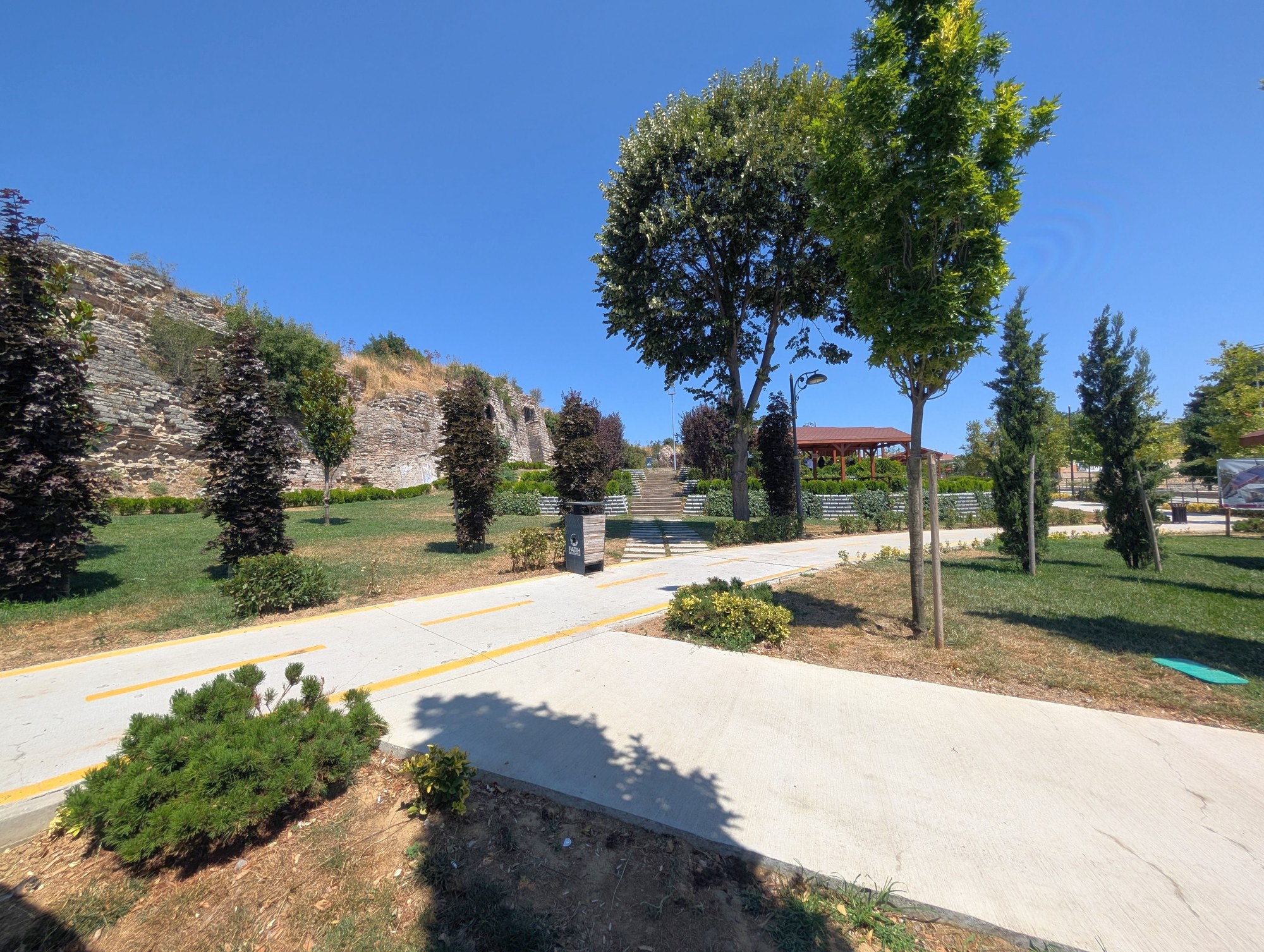
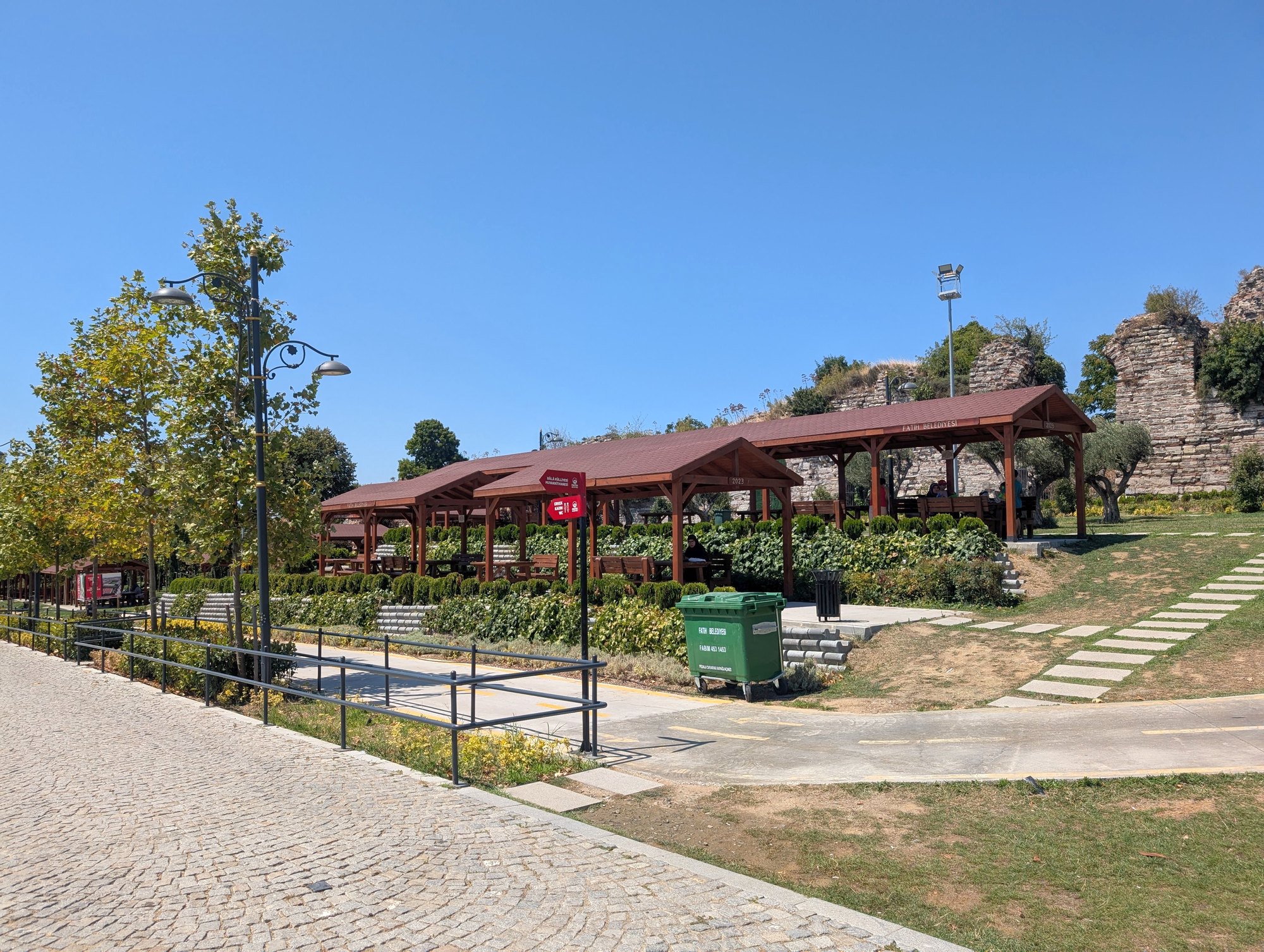
Just to the east of the walls in this area there is a beautiful new park called Karasurları Millet Bahçesi, meaning the National Park of the Black Walls, as the Theodosian Walls are sometimes called in Turkish. Currently it is one of three such lovely spots along the Theodosian Walls, along with the ones near the Gate of the Spring (Silivrikapı) and the Fourth Military Gate. The Third Military Gate can be seen from this park.
Another name for the park is Nation's Garden 3rd Stage Life Centre - this is an area that encompasses the historical and cultural richness of Istanbul. Such projects are of great importance both in addressing the shortage of green spaces within the city and in enhancing social interaction. In addition, the green spaces provided by nation’s gardens offer citizens the opportunity to spend time in nature, exercise, and relax. Such projects not only provide an escape from the stress of urban life but also help strengthen community bonds.
As you explore the Mevlanakapı neighbourhood, several historic mosques and fountains lie within easy walking distance of the Third Military Gate of the Theodosian Land Walls. About 600 meters to the north, you will find the Hacı Evliya Mosque, a 17th-century landmark with a serene courtyard and fountain. Roughly 500 meters from the gate, brings you to the elegant Çorlulu Ali Pasha Fountain, beside which stands the modest Arakiyeci Mehmed Ağa Mosque, a site full of historic charm.
Around 450 meters from the gate, is the Tarsusi Mehmet Efendi Mosque, originally built in the 14th century and reconstructed in 2011. To the east, just 120 meters from the gate, sits the Bala Süleyman Ağa Mosque, founded in 1463 by Sultan Mehmed the Conqueror's artillery officer and later restored by Adile Sultan in the late 19th century.
Like most mosques in Turkey, these sites welcome visitors outside of prayer times, provided that customary etiquette is observed. It is advisable to plan your visit with respect for worship schedules, as some mosques may close temporarily during certain hours. Together, these landmarks create a living tapestry of faith, history, and community life, offering a unique glimpse into the spiritual and cultural heartbeat of Mevlanakapı.
Getting there:
The Third Military Gate of the Theodosian Walls of Constantinople is situated just 200 meters to the north from the Gate of the Spring (Silivrikapı) and around 700 meters to the south of Gate of Rhegion (Yeni Mevlevihane Gate) so the easiest way is to get to one of these to major gates and follow the Land Walls to reach the Third Military Gate
Choosing the Gate of the Spring (Silivrikapı) as the beginning of the hike along the walls, follow the instructions presented in the text about this gate and then walk along the Theodosian Walls to the north until you reach the Third Military Gate after just five minutes.
If you choose the Gate of Rhegion as the starting point, the closest metro stop is Topkapı-Ulubatlı on the M1A or M1B lines, located around 1.5 kilometres to the north of the gate. From there, a pleasant 15- to 20-minute walk along the restored sections of the Theodosian Walls brings you directly to the Gate of Rhegion and after another 10 minutes you will reach the Third Military Gate. Several city buses also serve the area. Lines such as 56C, 56E, 56M, 145T, and 48L stop within walking distance of the Gate of Rhegion, typically near the Mevlanakapı or Zeytinburnu stops.
A walk from the Third Military Gate to the Gate of Rhegion (Yeni Mevlevihane Gate)
As the journey along the Theodosian Land Walls proceeds, the traveller moves north from the Third Military Gate, tracing a path that leads to the Gate of Rhegion. Along this stretch, which stretches roughly 700 meters, Towers 41 through 49 rise as silent witnesses to over a millennium of Byzantine vigilance and urban life. Each tower carries inscriptions, monograms, and subtle carvings, speaking to both the imperial authority that commissioned them and the generations who maintained and defended the city.
Tower 45 offers a vivid glimpse into the expressions of imperial piety and ambition. One inscription, likely commemorating the reconstruction or restoration of the tower under the co-emperors Leo IV and Constantine VI, declares: "May the fortune of great rulers Leo and Constantine be victorious!"
A lower-section inscription on the same tower further emphasizes the connection between imperial authority and divine protection, adding Empress Eirene, mother of Constantine VI and the wife of Leo IV, to the invocation: "May the fortune of our God-protected lords Leo and Constantine and very pious Empress Eirene be victorious!"
Such inscriptions were more than decorative; they were proclamations of legitimacy and divine favour. By invoking the protection of God, the emperors reinforced the sacred dimension of their authority and reminded those who passed by that the fortifications were an extension of imperial and spiritual power.
Moving onward, Tower 46 preserves monograms associated with Justinian II, one of Byzantium's most famous emperors of the late 7th and early 8th centuries. The inscription reads: "Of great ruler Justinian. O Theotoke, help Niketas Anthrax!" The mention of Niketas Anthrax suggests he was a significant figure, possibly a military commander or official, during that period. However, there is no detailed information about Niketas Anthrax in the surviving historical sources. The term "Anthrax" could be a nickname or title, but its exact meaning or significance is not clear. It's possible that Niketas Anthrax was a local commander or a figure involved in the defence or maintenance of the city's fortifications.
This unusual formula combines the emperor's monogram with a personal plea for divine assistance, highlighting both the spiritual devotion and the human stories interwoven with the walls. Scholars suggest that these smaller personal inscriptions reflect the layered history of repairs, dedications, and local involvement in maintaining the fortifications over the centuries.
Further along, Tower 48 again evokes the enduring authority of the co-emperors Leo and Constantine, with a succinct inscription: "May the fortune of great rulers and emperors Leo and Constantine be victorious." Unlike the earlier inscription that also mentions Empress Eirene, this one lacks additional identifiers, making it difficult to determine precisely which emperors are referenced. Byzantine emperors frequently reused names, especially Leo and Constantine. The most plausible co-emperor pair is Leo IV and Constantine VI, a father-and-son duo who ruled consecutively in the late 8th century. Other successive rulers with the same names, such as Constantine IV (r. 668–685) and Leo III the Isaurian (r. 717–741), might also be considered, though they were not co-emperors in the same way. Without further context, the exact attribution remains uncertain.
Standing before these towers today, one can imagine the rhythm of Byzantine life along the walls: soldiers pacing the battlements, citizens witnessing the presence of imperial power etched into stone, and architects and masons leaving their marks for posterity. Each inscription and monogram is a tangible connection to Constantinople’s past, reminding visitors that these walls were both a practical defence and a canvas for asserting imperial and divine order.
- Log in to post comments


