
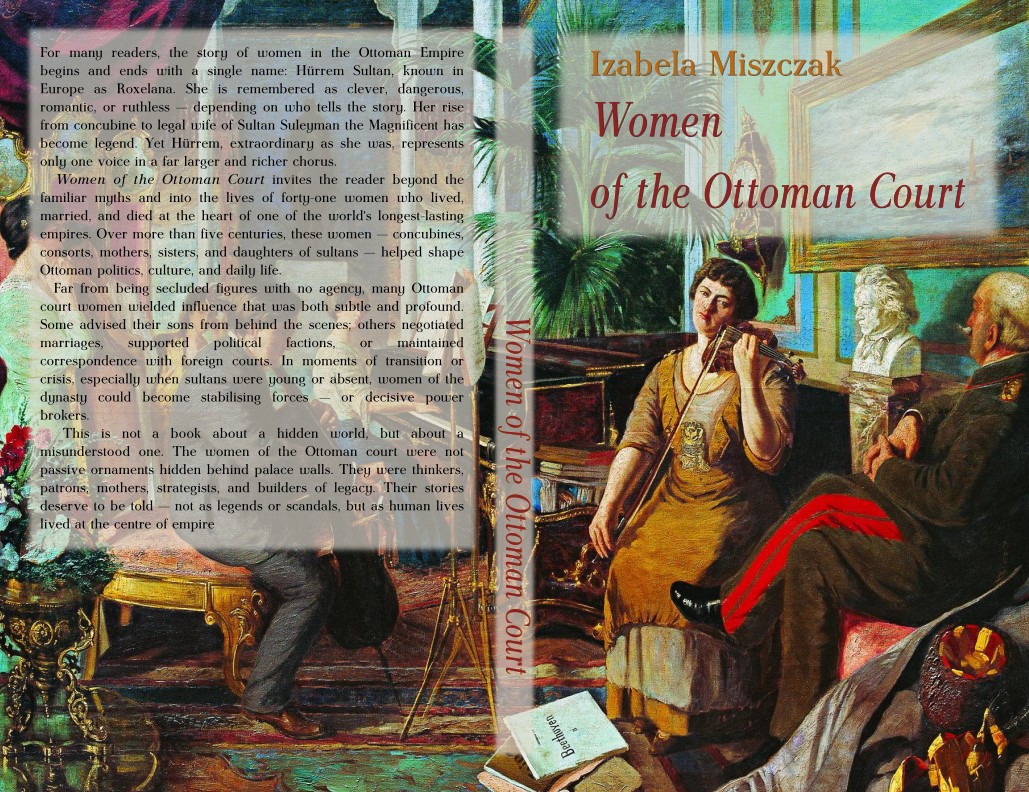
For many readers, the story of women in the Ottoman Empire begins and ends with a single name: Hürrem Sultan, known in Europe as Roxelana. She is remembered as clever, dangerous, romantic, or ruthless — depending on who tells the story. Her rise from concubine to legal wife of Sultan Suleyman the Magnificent has become legend. Yet Hürrem, extraordinary as she was, represents only one voice in a far larger and richer chorus.
"Women of the Ottoman Court" invites the reader beyond the familiar myths and into the lives of forty-one women who lived, married, and died at the heart of one of the world's longest-lasting empires. Over more than five centuries, these women — concubines, consorts, mothers, sisters, and daughters of sultans — helped shape Ottoman politics, culture, and daily life.
Far from being secluded figures with no agency, many Ottoman court women wielded influence that was both subtle and profound. Some advised their sons from behind the scenes; others negotiated marriages, supported political factions, or maintained correspondence with foreign courts. In moments of transition or crisis, especially when sultans were young or absent, women of the dynasty could become stabilising forces — or decisive power brokers.
Their presence is also etched into the cities of the empire. Mosques, fountains, schools, soup kitchens, hospitals, libraries, and caravanserais founded by these women still stand across Istanbul and whole Anatolia. Through charitable endowments, they fed the poor, educated children, supported travellers, and shaped urban life. These buildings were not merely acts of piety, but statements of identity, authority, and memory.
Many of these women were also deeply educated. Within the palace, they studied languages, literature, religion, music, and history. Some wrote poetry, others composed music or supported artists and scholars. They followed political and cultural developments closely, aware that knowledge itself was a form of power.
The forty-one chapters of "Women of the Ottoman Court" each focus on one individual life, from the early centuries of the dynasty to its final years. Together, these biographies reveal patterns of ambition and restraint, loyalty and rivalry, devotion and survival. They also show how women navigated a world defined by hierarchy, ceremony, and constant change.
To help readers unfamiliar with the complexities of Ottoman court life, the book includes a glossary of key terms and titles and concise biographical notes clarifying family connections of the discussed women. A selected bibliography offers pathways for those who wish to explore further.
This is not a book about a hidden world, but about a misunderstood one. The women of the Ottoman court were not passive ornaments hidden behind palace walls. They were thinkers, patrons, mothers, strategists, and builders of legacy. Their stories deserve to be told — not as legends or scandals, but as human lives lived at the centre of empire.
The book is available from Amazon as paperback.
- Log in to post comments


