
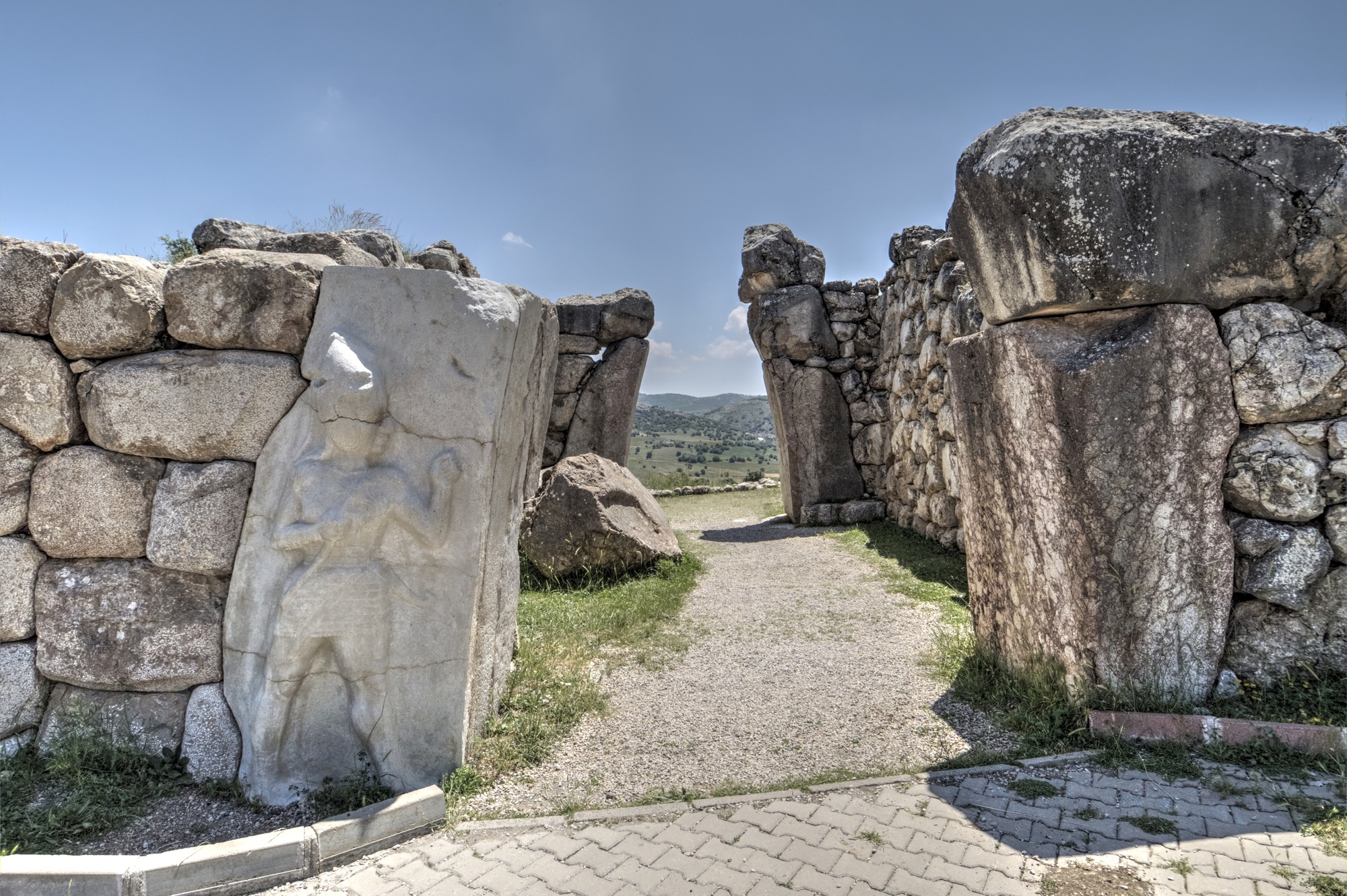
The most important archaeological developments reported in Türkiye in September 2026 included several discoveries that significantly expanded knowledge of Anatolia's prehistoric and ancient past. At Çayönü Tepesi, archaeologists uncovered a roughly 9,000-year-old mining workshop with malachite, copper objects, and a stone-paved working area, offering rare evidence for the organization of early metal production. At Troy, excavations revealed a 2,800-year-old agora, while at Hattusa a newly identified cuneiform fragment was recognized as part of a surviving copy of the Kadesh Peace Treaty. At Aspendos, finds beneath Roman shops pushed the known settlement history of the site back to about 6,000 years ago, while excavations at Yassıtepe Höyük revealed further evidence for a fortified, planned settlement dating to roughly 5,000 years ago. Another major discovery came from a roughly 2,100-year-old shipwreck off Antalya, where thousands of ceramic vessels shed new light on ancient Mediterranean trade in tableware. Finally, research at Göbeklitepe produced evidence potentially relevant to the long-standing question of the site's human remains, while work at Liman Tepe and Maydos Kilisetepe added important evidence for sophisticated water management and defensive architecture in prehistoric western Anatolia.
Turkish Archaeological News collects the most important, interesting and inspiring news from Turkish excavation sites. Here's the review for September 2026. Have we missed anything? Please let us know by using Contact tab!
September 01, 2026
Landmark Hagia Sophia restoration clears key milestone
The most extensive republic-era restoration of the Hagia Sophia Grand Mosque is nearing its final stage, with Culture and Tourism Minister Mehmet Nuri Ersoy confirming three of the four phases are successfully completed after touring the site. Source: Hürriyet Daily News
9,000-Year-Old Mining Workshop Discovered at Çayönü with Malachite and Copper Objects
Archaeologists at Çayönü Tepesi in southeastern Türkiye have uncovered a roughly 5-square-meter mining workshop dating to 6900–6800 BCE, complete with raw and worked malachite, copper objects, and a stone-paved working area. The discovery provides a rare glimpse not simply of the materials Neolithic people were using, but of how production itself was organized within one of Southwest Asia’s most important early settlements. Source: Arkeonews
September 02, 2026
New paved road smooths journey to historic Engüzekkapı Castle
Perched on the steep cliffs of the eastern province of Erzurum’s Uzundere district, the medieval Engüzekkapı Castle — a popular spot for history and nature buffs — is now far easier to reach following the completion of a 1,200-meter asphalt road. Source: Hürriyet Daily News
Baked Bricks in Sardis’ 2,600-Year-Old Wall Suggest an Assyrian Connection
Baked bricks in Sardis are raising new questions about connections between ancient Lydia and Mesopotamia. Found within a 2,600-year-old fortification wall in western Türkiye, they suggest that builders familiar with Assyrian construction techniques may have contributed to the monumental structure around 600 BC. Source: Anatolian Archaeology
September 03, 2026
Spray Paint Removed from Türkiye’s 2,600-Year-Old Midas Monument After Vandalism
Spray paint has been removed from the Midas Monument at Yazılıkaya, one of the most imposing rock-cut monuments of ancient Phrygia. The cleaning was carried out by museum specialists after the historic structure in Türkiye’s Eskişehir Province was vandalized. Source: Anatolian Archaeology
Historic fortress keeps Kars’ cheese culture alive [[https://www.hurriyetdailynews.com/historic-fortress-keeps-kars-cheese-cu...
Türkiye’s first themed cheese museum, established in 2022 inside Kars’ historic Süvari Fortress, is preserving the city’s rich cheese-making culture and attracting growing numbers of local and foreign visitors. Source: Hürriyet Daily News
September 04, 2026
Fourth master craftsman's inscription unearthed at Van's Seljuk cemetery
An inscription reading "Amel-i Ustad Muhammed el-Tebrizi" (the work of Master Muhammed of Tabriz) was found on one of the stones unearthed from beneath the soil at the historic Seljuk Cemetery in Van's Gevas district, which contains the Halime Hatun Tomb, built 700 years ago. Source: Türkiye Today
Izmir's 125-year-old Clock Tower still runs on its first mechanism
For 125 years, Izmir's Clock Tower has stood watch over Konak Ataturk Square—and the original mechanism inside it is still ticking. Source: Türkiye Today
Excavations uncover ancient city of Sebastapolis in Türkiye
Ongoing excavation work at the ancient city of Sebastapolis, located in Tokat's Sulusaray district, is bringing the site's historic layers to light. The founding date of Sebastapolis, most of which lies beneath the district's modern settlement area, is not known with certainty. Source: Türkiye Today
September 05, 2026
Excavations begin at Roman city founded by Hadrian in Türkiye
Archaeological excavations have begun at Hadrianoi, a Roman-era city founded by Emperor Hadrian in the year 123 in the Orhaneli district of Bursa, a city in northwestern Türkiye. Source: Türkiye Today
September 07, 2026
105-square-meter Roman mosaic, Eros head uncovered at Pompeiopolis in Türkiye
A well-preserved floor mosaic covering about 105 square meters and dating back to the fourth century A.D. has been uncovered at the ancient city of Pompeiopolis in northern Türkiye, while excavations have also brought to light an Eros head from the second century A.D. Source: Türkiye Today
Was the Monumental Temple at Pessinus Dedicated to Cybele or the Roman Emperors?
Nearly six decades after excavations began at Pessinus in central Türkiye, archaeologists still cannot say with certainty who was worshipped in the ancient city’s monumental temple. Once identified as the long-lost sanctuary of the Mother Goddess Cybele, the structure is now increasingly interpreted as a temple of the Roman imperial cult—but the two possibilities may not be mutually exclusive. Source: Anatolian Archaeology
September 08, 2026
500-year-old Ottoman palace prayer rugs prepared for display
Historic prayer rugs preserved in Ottoman palace collections are being readied for public display after specialists completed conservation work on six pieces belonging to Topkapi Palace, including examples woven in the 16th century under the Safavids. Source: Türkiye Today
September 09, 2026
Archaeology reveals new clues about Süleyman’s final campaign
Archaeological research near Szigetvar Castle in Hungary, where Ottoman Sultan Süleyman the Magnificent led his final military campaign, has revealed that the settlement around his presumed place of death was larger than previously thought. Source: Hürriyet Daily News
Historic Yedikule gardens set for revival after 100 years
At the foot of Istanbul’s historic land walls, centuries-old urban farming traditions are being revived as the İsmailpaşa Garden in Yedikule prepares to return to cultivation after roughly a century. Source: Hürriyet Daily News
September 10, 2026
4,000-year-old Hittite vessel yields oldest known seeds of Ankara's 'love flower'
The oldest known seed remains of Ankara's endemic "love flower," or Centaurea, have been identified inside a 4,000-year-old Hittite vessel uncovered at Kulhoyuk, Culture and Tourism Minister Mehmet Nuri Ersoy announced. Source: Türkiye Today
2,800-year-old agora uncovered at Türkiye's ancient city of Troy
Excavations at the ancient city of Troy in Türkiye’s northwestern Çanakkale province are uncovering a 2,800-year-old agora, shedding new light on the city’s 5,000-year history of wars, fires and earthquakes that repeatedly destroyed and rebuilt it. Source: Daily Sabah
September 12, 2026
8,000-year-old fig remains unearthed in Balıkesir
Archaeologists in northwestern Türkiye have uncovered 8,000-year-old black fig remains in Balıkesir’s Havran, revealing that the district’s signature fruit has been cultivated in the region since the Neolithic period. Source: Hürriyet Daily News
Hagia Sophia restoration continues with dome work
A new phase is beginning in the restoration of Hagia Sophia Grand Mosque, with a steel platform to be installed to strengthen the eastern semi-dome, identified as the structure’s most vulnerable section. Source: Hürriyet Daily News
September 13, 2026
2,400-Year-Old Twin Sarcophagi Carved into a Giant Rock on Gökçeada
Twin sarcophagi carved side by side into a massive natural rock have survived for roughly 2,400 years on Gökçeada in northwestern Türkiye. Long recognized as one of the island’s archaeological landmarks, the unusual monument formed part of the necropolis of ancient Imbros. Source: Anatolian Archaeology
September 14, 2026
Kulhoyuk fossil discovery links Ankara to ancient Tethys Sea
A 66-million-year-old gastropod fossil linked to the ancient Tethys Sea has been uncovered during excavations at Kulhoyuk, a 5,000-year-old Hatti and Hittite settlement in Ankara's Golbasi district, Türkiye's Culture and Tourism Ministry announced. Source: Türkiye Today
Children's gravestone with rare chevgan motif unearthed in Van
A gravestone belonging to a child and bearing a chevgan motif, a figure symbolizing horsemanship and heroism, has been uncovered during ongoing excavations at the historic Seljuk Cemetery in the Gevas district of Van. Source: Türkiye Today
5,000-year-old drainage system uncovered at Liman Tepe in western Türkiye
Archaeologists have uncovered an approximately 5,000-year-old stone drainage system at Liman Tepe, an ancient coastal settlement in Izmir province in western Türkiye, providing new evidence of how its inhabitants managed rainwater within a fortified town. Source: Türkiye Today
September 15, 2026
New museum explores the transformation of Bosphorus
The Istanbul Bosphorus Museum, prepared by the Istanbul Municipality (IBB), has opened to visitors at the Kabataş Transfer Center, offering a new cultural space focused on the historical and cultural memory of the Bosphorus. Source: Hürriyet Daily News
Historic route from Söğüt to Bursa traces Ottoman history
The route from Söğüt to Bursa preserves the memory of the Ottoman Empire’s formative years through tombs, mosques, religious lodges, baths and fortresses that reflect the military, religious and social history of the period. Source: Daily Sabah
Restoration uncovers medieval history in eastern Türkiye
Excavation and restoration work is underway in Kemah, a district of Erzincan province in Türkiye's Eastern Anatolia region, roughly 570 kilometers (354.1 miles) east of Ankara. The project aims to preserve historic structures dating from the Mengucek, Seljuk and Ottoman periods for future generations. Source: Türkiye Today
September 16, 2026
4,200-Year-Old Defense Wall Unearthed at Maydos Kilisetepe
Archaeologists excavating Maydos Kilisetepe Höyük in northwestern Türkiye have uncovered a 4,200-year-old defense wall beneath seven meters of accumulated settlement layers. Dating to the Early Bronze Age, the structure offers a new glimpse into how the community protected this coastal settlement near the Dardanelles. Source: Anatolian Archaeology
September 17, 2026
Edirne ranks seventh by museum numbers
The northwestern city of Edirne boasts more museums than 73 of Türkiye’s 81 provinces, according to the Turkish Statistical Institute’s (TÜİK) 2025 Cultural Heritage Statistics. Source: Hürriyet Daily News
Digital museum in Ottoman founding town Sogut takes visitors through Turkish history
A newly opened digital history museum in Sogut, the Bilecik district, closely associated with the foundations of the Ottoman state, is taking visitors through the period from the arrival of Turks in Anatolia to the establishment of the Ottoman Empire with holograms, touchscreens and audiovisual displays. Source: Türkiye Today
September 18, 2026
Ermenek brings together ancient heritage, centuries-old traditions in Taurus Mountains
Tucked into the steep slopes of the Central Taurus Mountains, Ermenek in Türkiye's Karaman province brings together archaeological remains, centuries-old houses, turquoise waters and a traditional market culture that has carried on for generations. Source: Türkiye Today
Lost Castle from a Battle That Changed Anatolia May Have Been Found
Researchers working near Çivril in Denizli Province argue that a large ruined settlement overlooking the Kufi Valley could be the long-sought Myriokephalon Castle, the fortress that gave its name to the Battle of Myriokephalon in 1176. Source: Arkeonews
The historic Kahramanmaraş Castle, which was damaged in the Feb. 6, 2023 earthquakes, has reopened to visitors following the completion of restoration work. Source: Hürriyet Daily News
Roman Aqueducts That Once Carried Water to Side Are Crumbling in Antalya
Sections of the ancient water system that once supplied Side, one of Roman Anatolia’s most important port cities, are deteriorating in Antalya’s Manavgat district. Photographs from the area show collapsed arches, displaced stones and vegetation spreading across the surviving structures. Source: Anatolian Archaeology
1,900-year-old children's footprints uncovered at Stratonikeia in Türkiye
Archaeologists have uncovered footprints belonging to three children that date back around 1,900 years at the ancient city of Stratonikeia, or Stratonicea, in southwestern Türkiye, offering a rare trace of everyday life at the site. Source: Türkiye Today
September 19, 2026
Major restoration revitalizes Istanbul Archaeology Museums
The Istanbul Archaeology Museums have undergone extensive restoration, structural reinforcement and exhibition upgrades, transforming the historic museum complex into a more modern and accessible cultural space, Türkiye’s Culture and Tourism Minister Mehmet Nuri Ersoy said. Source: Hürriyet Daily News
8,500-year-old settlement reveals daily life of Izmir's earliest residents
Archaeologists working at Yesilova Hoyugu, the oldest known settlement area in Türkiye's western city of Izmir, have uncovered new evidence showing how people living there 8,500 years ago shared communal kitchens, ate sea bream and mussels, used cosmetics and jewelry, and rebuilt their settlement after destructive fires. Source: Türkiye Today
Italian, Japanese scientists join efforts to protect Cappadocia's frescoes
Conservation work is moving ahead to protect frescoes, or historic wall paintings, inside Cappadocia's cultural heritage sites, with scientists from Italy and Japan joining Turkish experts to help preserve the artworks for future generations. Source: Türkiye Today
September 20, 2026
Ancient petroglyphs in Türkiye's Kars reveal traces of life spanning thousands of years
More than 100 rock carvings of mountain goats, deer and other animals in Türkiye's northeastern Kars province are giving researchers a window into how early communities lived alongside nature. Source: Türkiye Today
September 21, 2026
Cuneiform fragment found at Hattusa identified as part of Kadesh Peace Treaty
A cuneiform tablet fragment uncovered at Hattusa, the ancient Hittite capital in central Türkiye, has been identified as belonging to one of the surviving copies of the Kadesh Peace Treaty, Culture and Tourism Minister Mehmet Nuri Ersoy announced on Monday. Source: Türkiye Today
September 22, 2026
Hand-carved, 5-level Manazan Caves draw hundreds of visitors to central Türkiye
The five-level Manazan Caves in Türkiye's central Karaman province draw hundreds of visitors on weekends, standing out as a historic complex carved entirely by hand into a massive rock formation. Source: Türkiye Today
3,000-year-old Ivriz Cultural Landscape draws visitors in central Türkiye
The roughly 3,000-year-old Late Hittite Ivriz Rock Monument, or Ivriz Cultural Landscape, in central Türkiye's Konya province is drawing thousands of visitors with its Late Hittite reliefs, natural springs and surrounding landscape. Source: Türkiye Today
In Türkiye’s Textile Heartland, Archaeologists Uncover an 8,200-Year-Old Workshop
More than 8,000 years ago, people living in western Anatolia were spinning thread, preparing textile-making tools, and wearing clothes that may have featured colorful patterns. A collection of 57 clay spindle whorls discovered at Ekşi Höyük in Türkiye’s Denizli province is now helping archaeologists reconstruct this largely forgotten part of prehistoric life. Source: Arkeonews
September 23, 2026
Ancient Yassitepe uncovers roots of Izmir's trade and wealth
Archaeologists working at Yassitepe in western Türkiye have uncovered further evidence of a planned, fortified settlement that developed around 5,000 years ago with temples, storage areas, workshops and far-reaching trade connections, leading the excavation director to describe the site as "Izmir's Troy." Source: Türkiye Today
Haydarpasa excavation reveals 80% of original foundation piles missing
Around 80% of the approximately 1,000 timber piles originally placed beneath Istanbul's historic Haydarpasa Station have disappeared over time, according to new technical findings announced as part of the building's most extensive restoration since its official opening in 1909. Source: Türkiye Today
Pottery Found at Türkiye’s Mysterious “Noah’s Ark” Formation
Pottery fragments have been reported at the Durupınar Formation in eastern Türkiye, a ship-shaped landform long associated with claims about Noah’s Ark. Researchers have suggested the pieces could date to a period before the flood described in religious tradition, but their age has not been established. Source: Anatolian Archaeology
Türkiye’s UNESCO-listed Cumalıkızık village set for upgrades
Bursa’s historic Cumalıkızık village in Türkiye, a UNESCO World Heritage site, will undergo a series of improvements aimed at making daily life easier for residents while also providing a more suitable environment for visitors. Source: Daily Sabah
September 24, 2026
Historical Samsun mansion transformed into Book Cafe
A historical mansion that had remained unused for nearly 30 years in the northern province of Samsun’s Alaçam district has been restored and opened to the public as a Book Cafe. Source: Hürriyet Daily News
7.7-million-year-old fossils to go on display at new Kayseri museum
A new Paleontology and Fossil Museum is taking shape in Türkiye's central Kayseri province, where fossils dating back 7.7 million years and unearthed around the Yamula Dam are set to be displayed for visitors and researchers. Source: Türkiye Today
900-years-old madrasa believed to be Anatolia's earliest emerges in Türkiye
Archaeologists in central Türkiye are bringing to light the remains of a roughly nine-century-old madrasa in Kayseri that officials believe may be Anatolia's earliest known Islamic school, with walls of the structure now emerging as excavations move forward. Source: Türkiye Today
10,000-Year-Old Burials at Göbeklitepe May Solve a 30-Year Archaeological Mystery
For more than three decades, archaeologists at Göbeklitepe in southeastern Türkiye have encountered a puzzling sight: hundreds of broken human bones scattered among the remains of its monumental stone buildings. Yet despite the site’s extraordinary archaeological record, researchers had found no clearly identifiable graves that could explain where these remains came from. Source: Arkeonews
Protection work carried out on 7 fairy chimneys in Cappadocia
Protection work has been carried out on seven fairy chimneys in Cappadocia as authorities step up efforts to prevent deformation of the region's fragile natural formations, the Cappadocia Area Presidency said. Source: Türkiye Today
Excavations push Aspendos settlement history back 6,000 years
Recent excavations at the ancient city of Aspendos in Antalya have pushed back the known history of settlement at the site to around 6,000 years ago, after archaeologists uncovered pottery, bowls, and tools dating to the Late Chalcolithic period beneath the floors of ancient shops. Source: Türkiye Today
Roman Pool Fills Again After 20 Years, but Its Water Source Is Still Unknown
A Roman-era stone pool in Kargalık, a village in Türkiye’s Yozgat province, has filled with water after standing dry for about 20 years. Villagers say the water returned following heavy snow and rain this year. Where it comes from, and how it reaches the pool, remains unclear. Source: Anatolian Archaeology
September 25, 2026
Arkeofest 2026 to be held in Bursa
Arkeofest, a festival dedicated to archaeology and experimental archaeology, will bring history enthusiasts together with 50 hands-on workshops at Aktopraklik Mound Archaeopark in Bursa on Sept. 26-27. Source: Hürriyet Daily News
Environmental DNA study to probe 86,000-year-old human activity at Türkiye's Inkaya Cave
Archaeologists working at Inkaya Cave in northwestern Türkiye are preparing to use environmental DNA (eDNA) analysis on sediment from layers associated with human activity dating back as far as 86,000 years, as researchers seek to reconstruct the cave's prehistoric ecosystem despite the absence of preserved human, animal or plant remains. Source: Türkiye Today
The Priestess of Demeter Behind a 2,000-Year-Old Olive Oil Estate in Anatolia
A priestess named Arete paid for a two-storey tower at Lyrboton Kome nearly 2,000 years ago. Her name survives in an inscription on the building. So do the names of her daughter and grandson, whose later decisions show how the family’s olive oil estate was passed on and how its income was used. Source: Anatolian Archaeology
Pognon Cave in Türkiye Holds 1,900-Year-Old Clues to a Moon God’s Cult
Two crescents flank a large niche inside Pognon Cave, near the village of Yağmurlu in southeastern Türkiye. Around them, figures carved into the rock stand beside inscriptions recording the names and titles of prominent people. The carvings belong to the world of Soğmatar roughly 1,900 years ago, when worship of the moon god Sîn shaped religious life in the region. What happened inside the cave is still debated. Source: Anatolian Archaeology
September 26, 2026
Restoration nears completion at 600-year-old Edirne bathhouse
Edirne, a city in Türkiye's northwest near the country's borders with Greece and Bulgaria, is nearing the end of a restoration project at the 600-year-old Gazi Mihal Bathhouse, an Ottoman-era bathhouse often described as one of the most ornately decorated of its kind. Source: Türkiye Today
3,250-year-old Hittite inscriptions in Türkiye still reveal route of western campaigns
Hieroglyphic inscriptions carved into the Yalburt Hittite Water Monument in central Türkiye around 3,250 years ago are still helping researchers trace Hittite military campaigns and reconstruct the ancient geography of western Anatolia. Source: Türkiye Today
Ancient Roman bathhouse in Turkey was turned into a wine and olive oil factory
An ancient Roman bathhouse in Turkey was turned into a large wine and olive oil production center, new research shows. The facility was built inside the Small Bath at Antiochia ad Cragum, an ancient city on the southern coast of modern Turkey. Researchers found stone presses, an olive mill, channels, and large vats built into the old bathhouse. Source: Archaeology News
September 27, 2026
Excavations in İzmir Reveal a 5,000-Year-Old Walled City
Archaeologists working at Yassıtepe Höyük in İzmir are gradually uncovering a settlement built behind defensive walls about 5,000 years ago. Storage areas, workshops and other buildings are revealing how its inhabitants organised life on the Bornova Plain, long before the rise of the modern city around them. Source: Anatolian Archaeology
September 28, 2026
A 2,100-Year-Old Shipwreck Is Revealing the Tableware Even Cicero Wrote About
Thousands of ceramic plates, bowls and serving vessels have emerged from a 2,100-year-old shipwreck off Türkiye’s Mediterranean coast, revealing a cargo linked to one of the ancient world’s best-known centers of fine tableware production. Source: Arkeonews
Ancient tableware found in 2,100-year-old Antalya shipwreck
Culture and Tourism Minister Mehmet Nuri Ersoy said thousands of ceramic artifacts have been unearthed during excavations of a roughly 2,100-year-old shipwreck off Adrasan in Antalya. Source: Daily Sabah
September 29, 2026
What newspapers left out: Pera Museum reveals another side of republican Istanbul
Pera Museum will open "The Republic Behind the Scenes" on Sept. 29, bringing together rarely seen press photographs that capture everyday life, political events and the workings of photojournalism in Istanbul from the 1920s to the early 1950s. Source: Türkiye Today
From sea snails to symbol of power: Andriake’s ancient purple dye
Purple dye made from sea snails known as murex in the ancient city of Myra-Andriake in Antalya's Demre district was among the most valuable commodities of the ancient world, serving as a symbol of power, status and privilege. Closely associated with religious and political elites, the color was so highly prized that its use was restricted by law during certain periods. Source: Daily Sabah
Restored 190-year-old Greek church in central Türkiye readies for visitors
A 190-year-old Greek Orthodox church in central Türkiye is being prepared to open to visitors as part of efforts to draw tourism beyond the better-known sites of the Cappadocia region. Source: Türkiye Today
Fethiye survey documents over 100 rock tombs at ancient Telebehi
An archaeological survey in Fethiye, southwestern Türkiye, is documenting more than 100 rock-cut tombs, numerous burial mounds and settlement remains at ancient Telebehi, also known as Telmessos, as researchers work to piece together the area's development across several historical periods. Source: Türkiye Today
- Log in to post comments


