
Description:
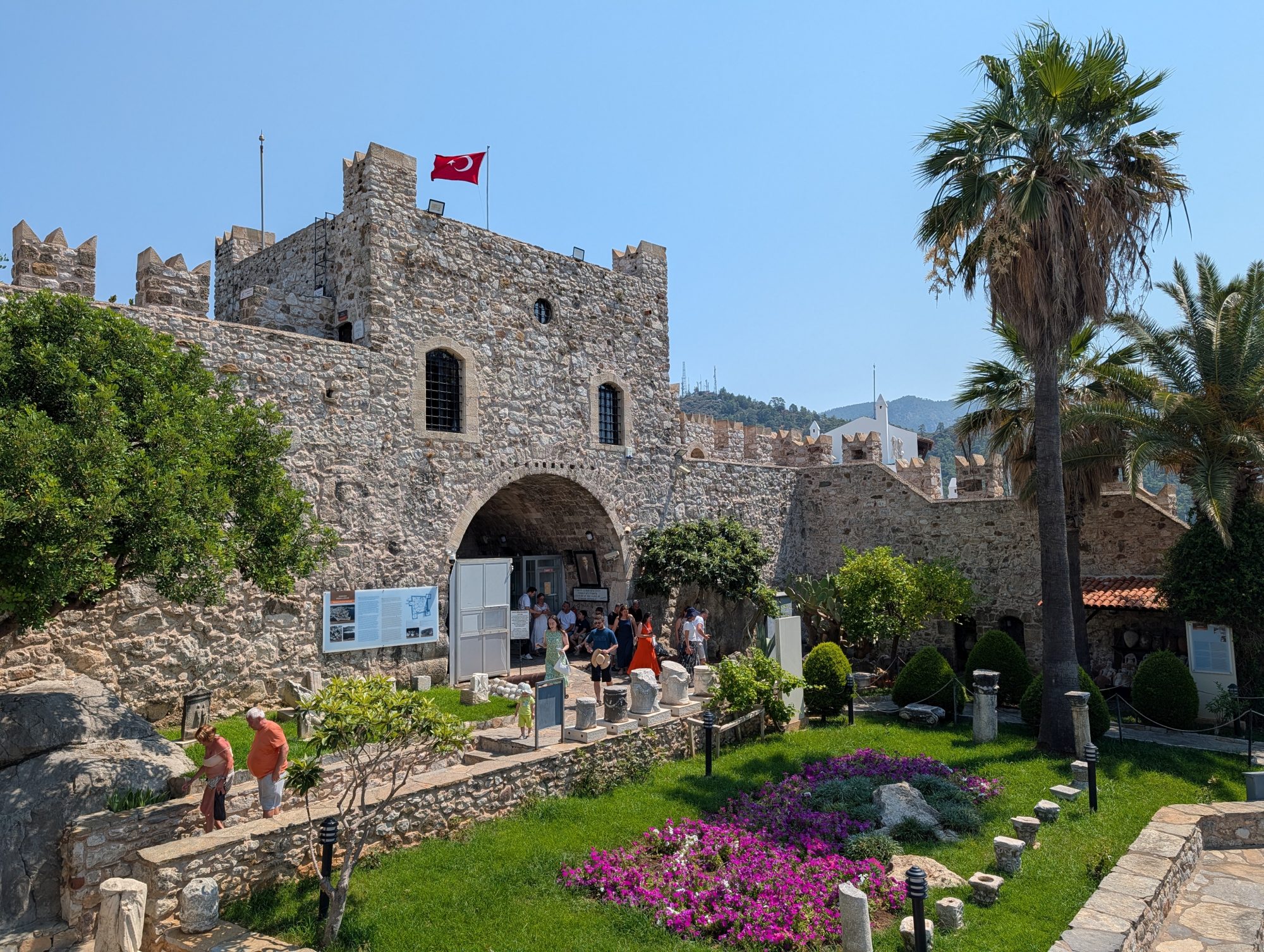
Rising above the sheltered harbour of Marmaris, the historic castle combines a rich history with an archaeological museum showcasing the cultural heritage of the surrounding region. Traditionally associated with Suleyman the Magnificent's preparations for the conquest of Rhodes in 1522, the fortress has witnessed successive periods of political and military change, from its Ottoman origins to its later use as a residential complex and eventual conversion into a museum. Today, its towers, courtyards, and former commander's quarters house collections of archaeological finds from ancient Knidos, Burgaz, Emecik, and other settlements of Caria. Sculptures, funerary monuments, votive offerings, coins, jewellery, and everyday objects illustrate the region's long history, while the castle's ramparts offer fine views over the old town and the bay that once gave the fortress its strategic importance.
Marmaris Castle – History
The ancient origins of the fortress
Marmaris Castle stands on a rocky peninsula overlooking the harbour of Marmaris, in the province of Muğla, southwestern Türkiye. Its elevated position provided an excellent defensive location, commanding the approaches to the harbour and the surrounding coastline. The ancient settlement in this area was known as Physkos (Ancient Greek: Φύσκος), an important Carian town situated on maritime routes connecting the Aegean and the eastern Mediterranean.
Physkos occupied the hills immediately north of modern Marmaris, with its remains particularly associated with Asartepe. The settlement developed around a naturally sheltered harbour, which provided favourable conditions for maritime trade and communication with other coastal communities. During antiquity, Physkos formed part of the Rhodian Peraea, the territory on the Carian mainland controlled by the island of Rhodes. Its harbour served the surrounding region and connected the settlement with the wider maritime network of the eastern Mediterranean. Among the most notable surviving archaeological remains are sections of ancient defensive walls on the elevated parts of the settlement. The ancient town's importance as a harbour is also confirmed by the second-century CE geographer Strabo, who describes Physkos as a small town possessing a harbour and a sacred precinct dedicated to Leto, the mother of Apollo and Artemis (Geography, 14.2.4).
The origins of Marmaris Castle have traditionally been traced back to the ancient period, and some modern accounts attribute the construction of the earliest fortress to the third millennium BCE. Herodotus of Halicarnassus (c. 484–425 BCE) is frequently cited in connection with this early history, but no identifiable passage in his Histories supports this attribution. Although the ancient historian describes several fortified settlements in Caria during the Persian conquest (Histories, 1.174–176), he does not mention Physkos or a fortress at the location of modern Marmaris. Consequently, the frequently repeated claim that Herodotus referred to a castle dating back to the third millennium BCE cannot be substantiated by his surviving text. Strabo's description, meanwhile, provides evidence for the existence and maritime character of Physkos but makes no mention of a castle or defensive walls.
The very early date attributed to the castle should therefore be treated with caution. It represents a traditional historical attribution repeated in modern museum and tourism publications rather than a securely established archaeological date for the surviving fortifications. Although archaeological investigations have identified ancient defensive walls on Asartepe, associated with the Classical and Hellenistic periods, these remains belong to the fortified settlement of Physkos and should not automatically be identified with the origins of the castle on the peninsula of modern Marmaris. Their precise chronology and relationship with the later fortress require separate archaeological consideration.
The strategic importance of the location is easier to establish. Physkos occupied a favourable position on maritime routes, and its harbour maintained connections with Rhodes and other important centres of the eastern Mediterranean. Its inclusion in the Rhodian Peraea further strengthened its importance as part of the island's mainland possessions and maritime network. The fortified peninsula would therefore have been valuable not only as a defensive position but also as a means of controlling access to the harbour.
The region subsequently passed through several periods of political control, including Persian, Hellenistic, Roman, and Byzantine rule. During the Hellenistic period, Physkos became associated with the sphere of influence of Rhodes, while under Roman rule it continued to form part of the wider administrative and commercial landscape of southwestern Asia Minor. The town and its surroundings retained their maritime significance, although the extent and character of settlement during the successive periods remain subjects for archaeological investigation.
A dramatic episode from Alexander the Great's campaign in southwestern Asia Minor has sometimes been associated with the ancient fortress of Marmaris. According to the account repeated by the Muğla Provincial Directorate of Culture and Tourism, Alexander besieged the castle around 334 BCE, whereupon the inhabitants set fire to it and escaped into the surrounding mountains. Alexander subsequently repaired the fortifications and left a military detachment there.
The story appears, however, to have been confused with an episode recorded by the first-century BCE historian Diodorus Siculus (Bibliotheca historica, 17.28.1–5), who describes Alexander's siege of a stronghold belonging to a people called the Marmareis, living near the borders of Lycia. According to Diodorus, approximately 600 young men set fire to their houses and escaped through the Macedonian lines into the neighbouring hills. Although the similarity of the ancient name Marmareis to modern Marmaris may have encouraged the identification, the Oxford University Press reference work An Inventory of Archaic and Classical Poleis associates the ancient settlement with the archaeological site of Kavak Dağı, rather than Physkos on Asartepe.
Kavak Dağı is situated in the mountainous hinterland of Göynük, near Kemer in Antalya Province, approximately 200 km east of Physkos in a straight line. The proposed identification therefore concerns a settlement considerably distant from Marmaris, rather than the ancient town immediately adjoining the modern harbour. Archaeological surveys have documented substantial defensive remains at Kavak Dağı, including sections of ancient walls approximately 100 m long and 2.5 m thick, supporting its identification as a fortified settlement.
Moreover, Diodorus does not mention the subsequent restoration of the stronghold by Alexander. The episode should therefore be treated as a historical tradition associated with Marmaris rather than as a securely documented event in the history of Physkos or its castle.
From the Hellenistic period to the Ottoman reconstruction under Süleyman the Magnificent
Following the Hellenistic period, Physkos and its surrounding territory became part of the expanding Roman sphere of influence and subsequently remained within the Byzantine Empire. Although the ancient settlement continued to occupy a strategically favourable position on the Carian coast, its history during the later Roman and Byzantine periods is not particularly well documented. The region experienced the wider political and military changes affecting southwestern Anatolia, including the expansion of Arab naval activity in the eastern Mediterranean from the seventh century onwards, although no specific destruction episode at Physkos can be securely attributed to these incursions.
During the thirteenth century, the region passed under the control of the Menteşe Beylik, a Turkmen principality established in southwestern Anatolia. Its founder, Menteşe Bey, and his successors progressively took control of much of ancient Caria, including its coastal settlements. The principality developed an active maritime policy, and its rulers sought to extend their influence across the eastern Mediterranean. Under Mesud Bey, who succeeded his father, Menteşe Bey, the principality launched an expedition against Rhodes in 1300, capturing a substantial part of the island.
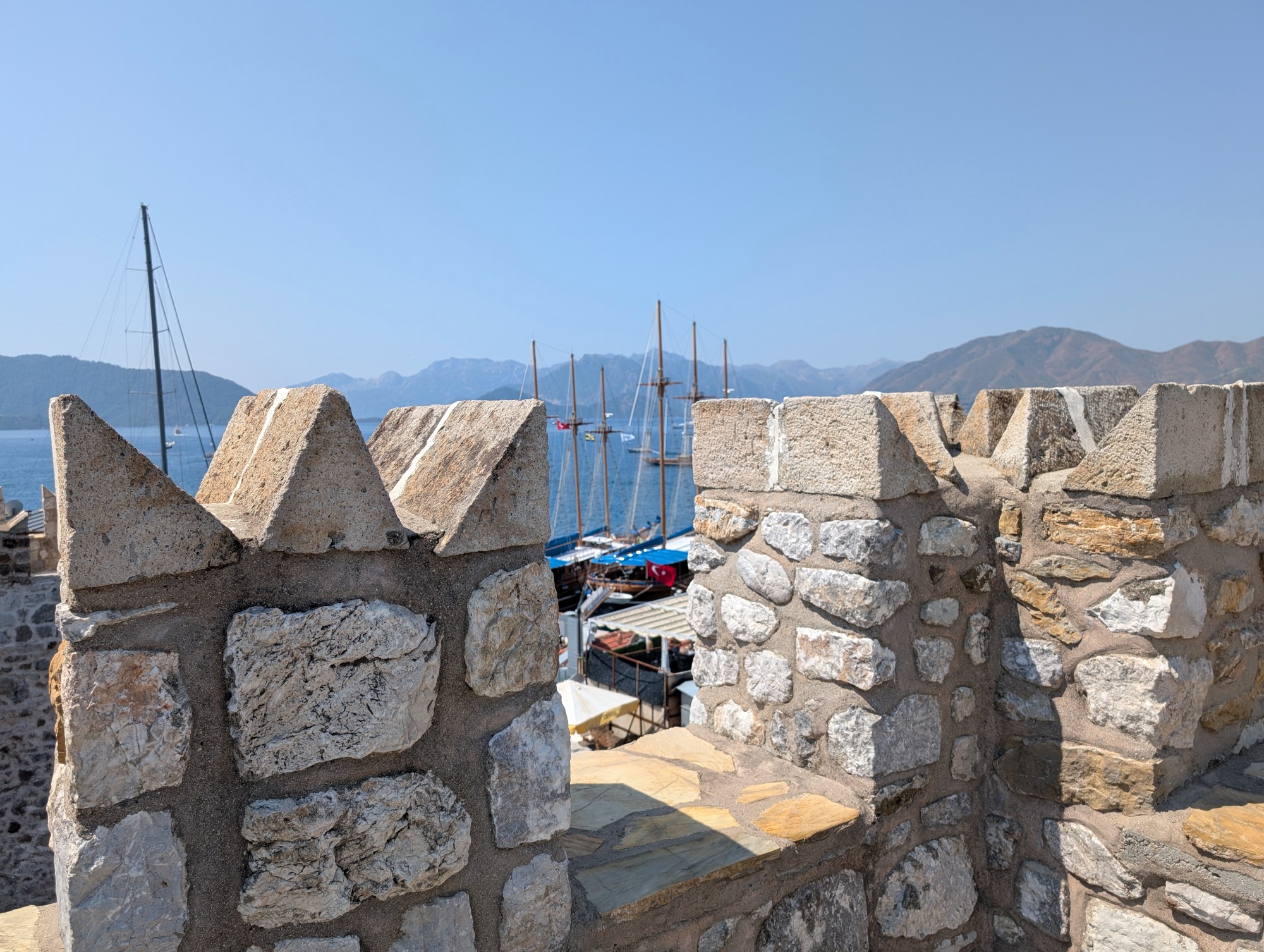
The establishment of the Knights Hospitaller on Rhodes in 1309 transformed the island into a major military stronghold and intensified the strategic importance of the opposite Anatolian coast. The Hospitallers also attempted to extend their influence onto the mainland, acquiring territories belonging to the Menteşe ruler Mesud by 1313, although the precise locations of their possessions remain uncertain. Marmaris, with its naturally sheltered harbour facing Rhodes, occupied an advantageous position in this contested maritime region.
According to the historical account published by the Marmaris Municipality, Mesud Bey had already used the harbour and castle of Marmaris as a base for his expedition against Rhodes in 1300. The same account records that Gazi Ahmed Bey, a later ruler of the Menteşe principality, arranged repairs to both the harbour and the castle during the fourteenth century. It further associates the subsequent development of Marmaris with his control, from 1365, of the maritime route between Rhodes and Cyprus. These references suggest that the settlement possessed a fortified stronghold before the Ottoman reconstruction of the castle in 1522. Unfortunately, the available sources do not describe the Menteşe-period fortifications in architectural detail, nor do they establish which parts of the surviving masonry belong to this phase. The medieval history of the castle must therefore be considered separately from the better-documented Ottoman fortress that survives today.
The political situation changed towards the end of the fourteenth century, when the territories ruled by Ahmed Gazi passed into Ottoman hands around 1391, during the campaigns of Bayezid I. This was not, however, the definitive end of Menteşe independence. Following the Ottoman defeat at Ankara in 1402, the Menteşe rulers regained their position, initially as tributaries of the Ottomans. In 1424, Sultan Murad II definitively incorporated the remaining Menteşe territories into the Ottoman Empire, bringing the principality to an end. Marmaris subsequently remained a relatively small settlement, although its harbour continued to have strategic and commercial importance because of its position on the maritime routes to Rhodes.
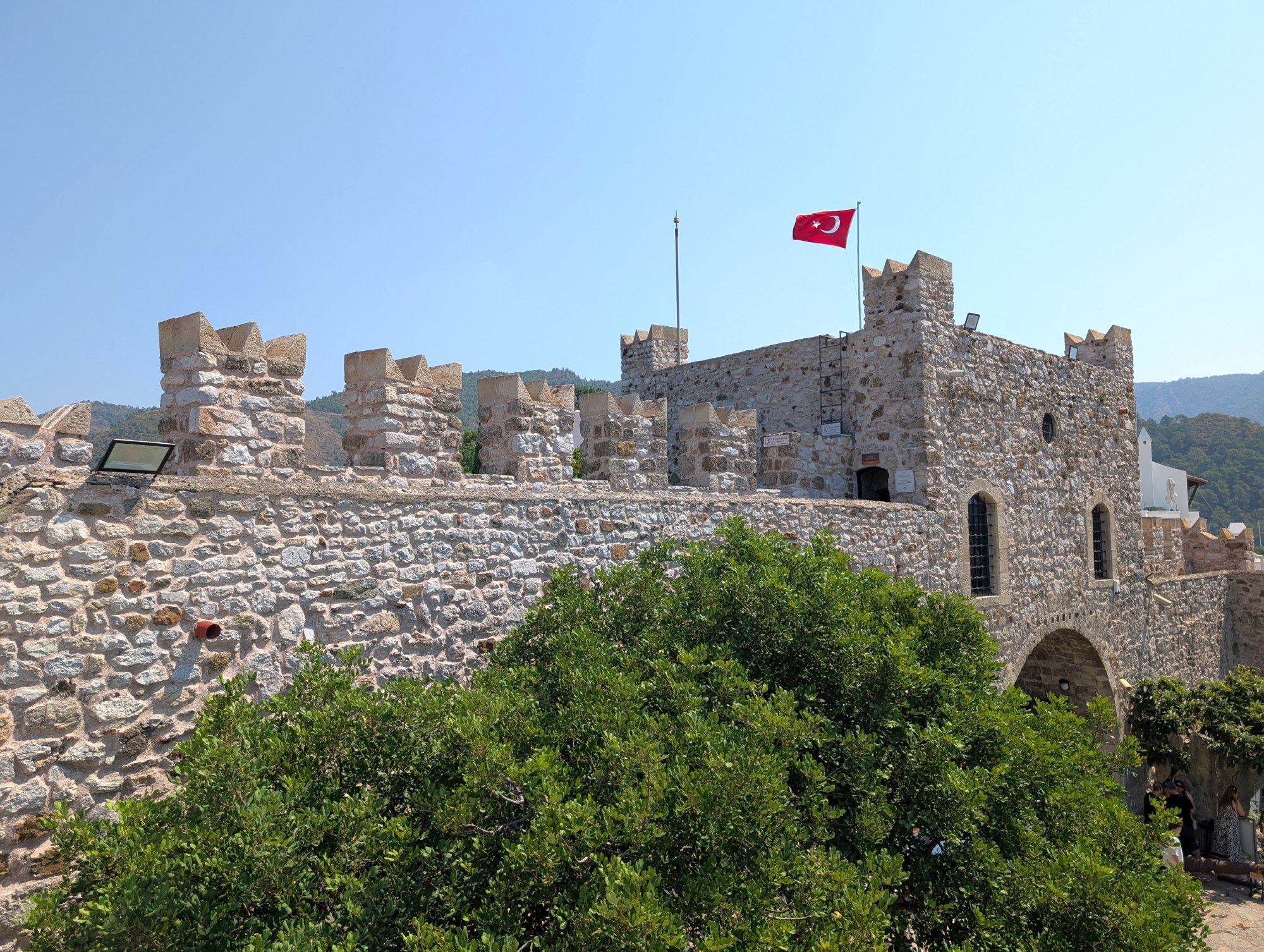
The most important transformation of Marmaris Castle took place during the reign of Sultan Süleyman I, known as Süleyman the Magnificent (1520–1566). The construction or major reconstruction of the present Ottoman fortress is traditionally associated with preparations for the Ottoman expedition against Rhodes in 1522. The castle provided a strategically positioned military base on the mainland opposite the island and formed part of the wider logistical infrastructure supporting the campaign. An inscription above the castle entrance bears the date 1522, reinforcing this association with Süleyman's expedition.
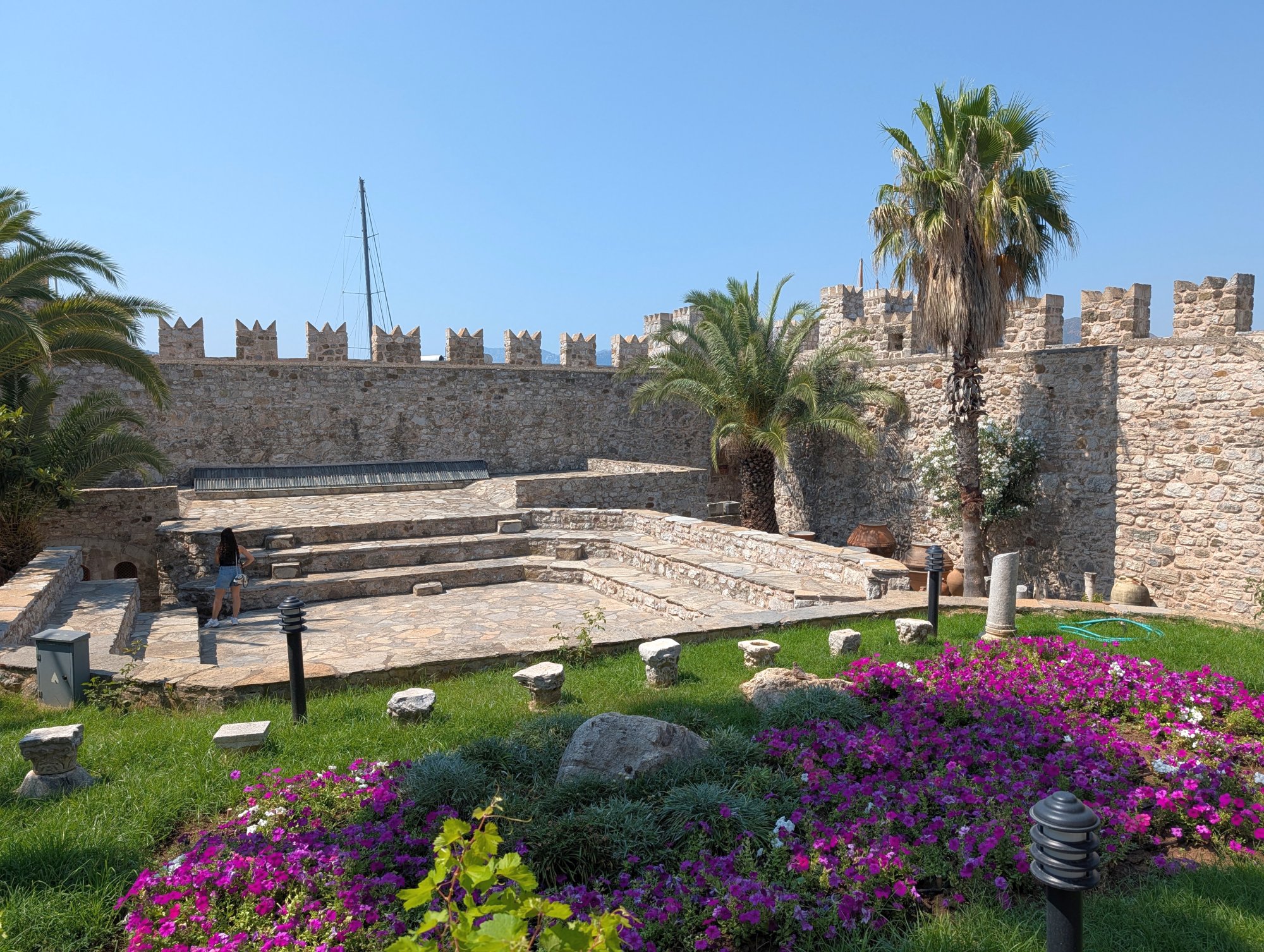
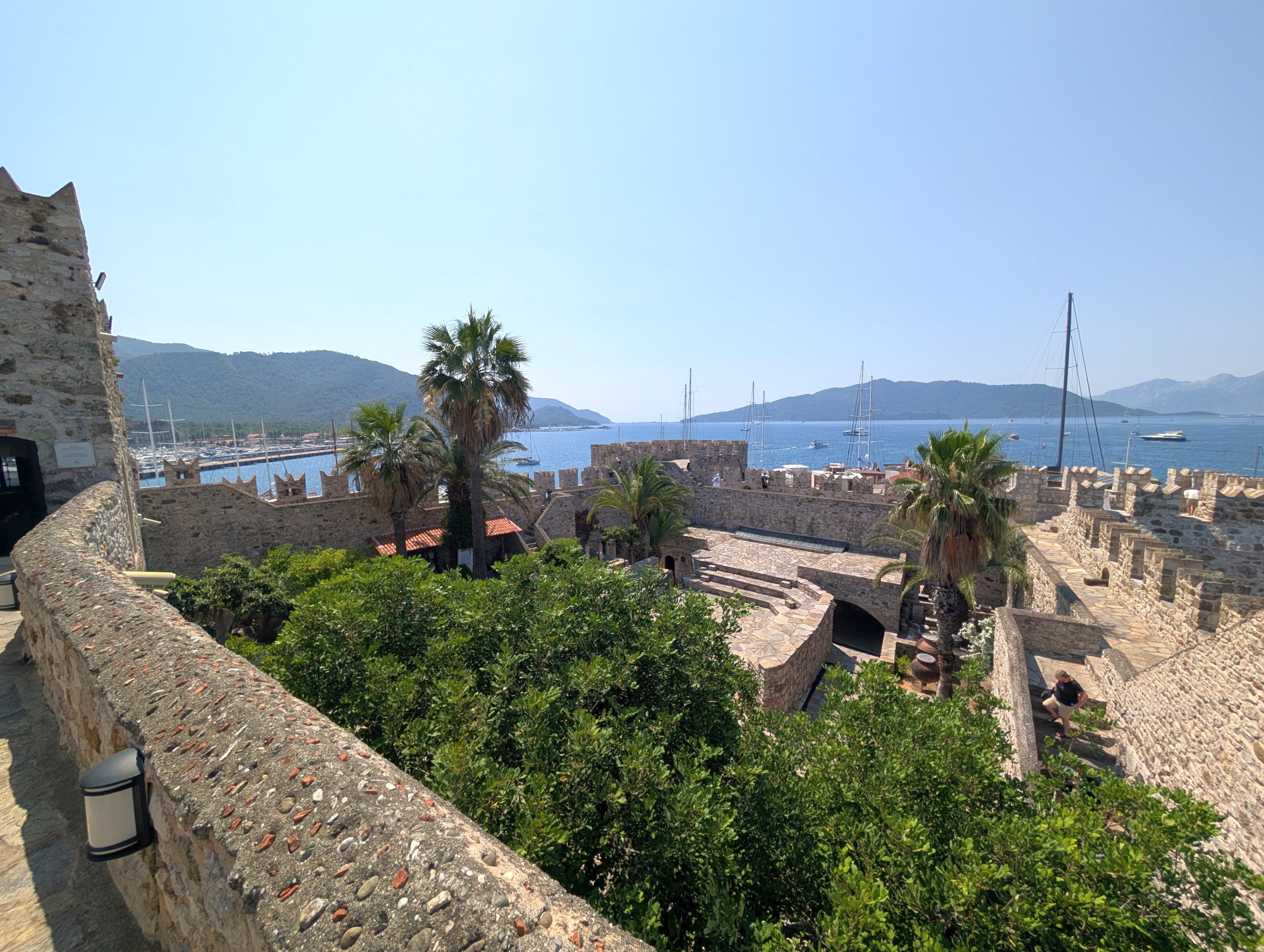
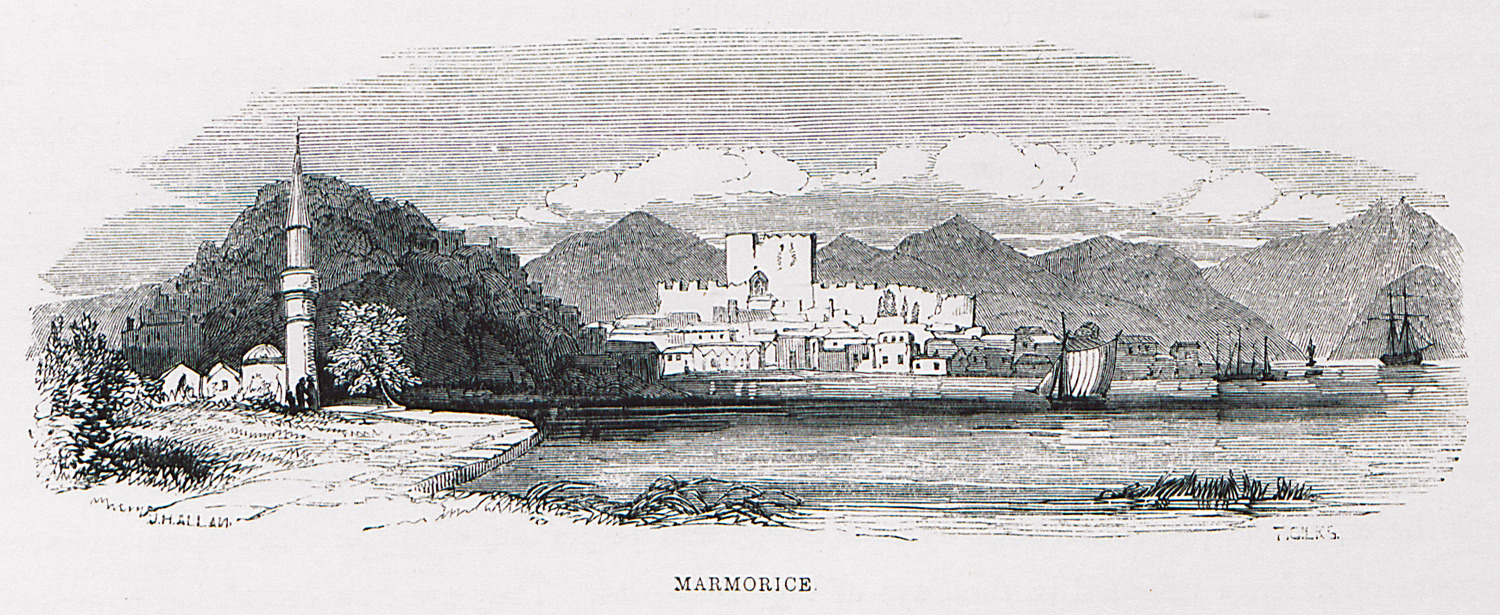
The castle was constructed directly on the rocky peninsula, using regularly cut ashlar blocks together with rubble masonry. Its defensive arrangement included four bastions, while the entrance passage, covered with a barrel vault, leads into the inner courtyard. Staircases on both sides of the courtyard provide access to the defensive walls. Despite its predominantly Ottoman appearance, the fortress also incorporates earlier masonry. According to the official museum description, large cut-stone blocks, reportedly measuring approximately 40 feet in length, survive in the foundations and are interpreted as remains of a Hellenistic-period fortress. Their presence suggests that the Ottoman builders reused substantial elements of an earlier fortified structure. However, the published description does not provide sufficient archaeological documentation to establish the precise date, original arrangement, or extent of these remains. They should also be distinguished from the ancient defensive walls of Physkos on Asartepe, north of modern Marmaris, which belong to a separate archaeological site. Consequently, although the present castle is predominantly an Ottoman construction associated with the campaign of 1522, its foundations preserve traces of an earlier defensive history whose details remain incompletely understood.
The Ottoman conquest of Rhodes was completed on 26 December 1522, following a prolonged siege. The island subsequently became an important Ottoman naval and administrative centre, while Marmaris retained its value as a mainland harbour facing Rhodes. Another building associated with the commercial and logistical development of the settlement was the Hafsa Sultan Caravanserai, situated at the entrance to the narrow street leading towards the castle. An inscription above its entrance dates its construction to 1545 and associates it with Süleyman the Magnificent, who dedicated it to his mother, Hafsa Sultan. The caravanserai provided accommodation and commercial facilities for travellers and merchants, complementing the military function of the fortress.
The Hafsa Sultan Caravanserai has survived, although its original function has long since disappeared. The building eventually passed into private ownership and its rooms were used for shops and tourist-oriented businesses, including bars and entertainment venues. Its deteriorating condition prompted several initiatives aimed at securing its preservation and restoration. In October 2026, the Marmaris Chamber of Commerce announced that a restoration project, specialist team, and budget had been prepared, with work expected to begin once the outstanding legal procedures concerning expropriation had been completed. The proposed new use envisages a cultural centre dedicated to local crafts, traditions, and production. At the time of the announcement, however, restoration had not yet begun.
One of the most valuable descriptions of the fortress comes from the Seyahatname (Book of Travels) of the seventeenth-century Ottoman traveller Evliya Çelebi, who visited Marmaris in 1671, nearly 150 years after the Ottoman conquest of Rhodes. His account provides a detailed picture of the castle's appearance, internal arrangements, garrison, and relationship with the surrounding settlement and harbour. According to Evliya, Sultan Süleyman the Magnificent had ordered the construction of the fortress in preparation for the expedition against Rhodes in 1522. He relates that an imperial decree called for a large castle to be built, but that the resulting structure was relatively small, with a perimeter of approximately 400 paces. Evliya also recounts an anecdote explaining the name Marmaris: when Süleyman inspected the fortress on his way to Rhodes, he reportedly complained to its architect that it was too small. The story derives the town's name from the words mimar azdır, interpreted as meaning that the architect had made it too small, although this should be regarded as a popular etymological explanation rather than a reliable account of the name's origin.
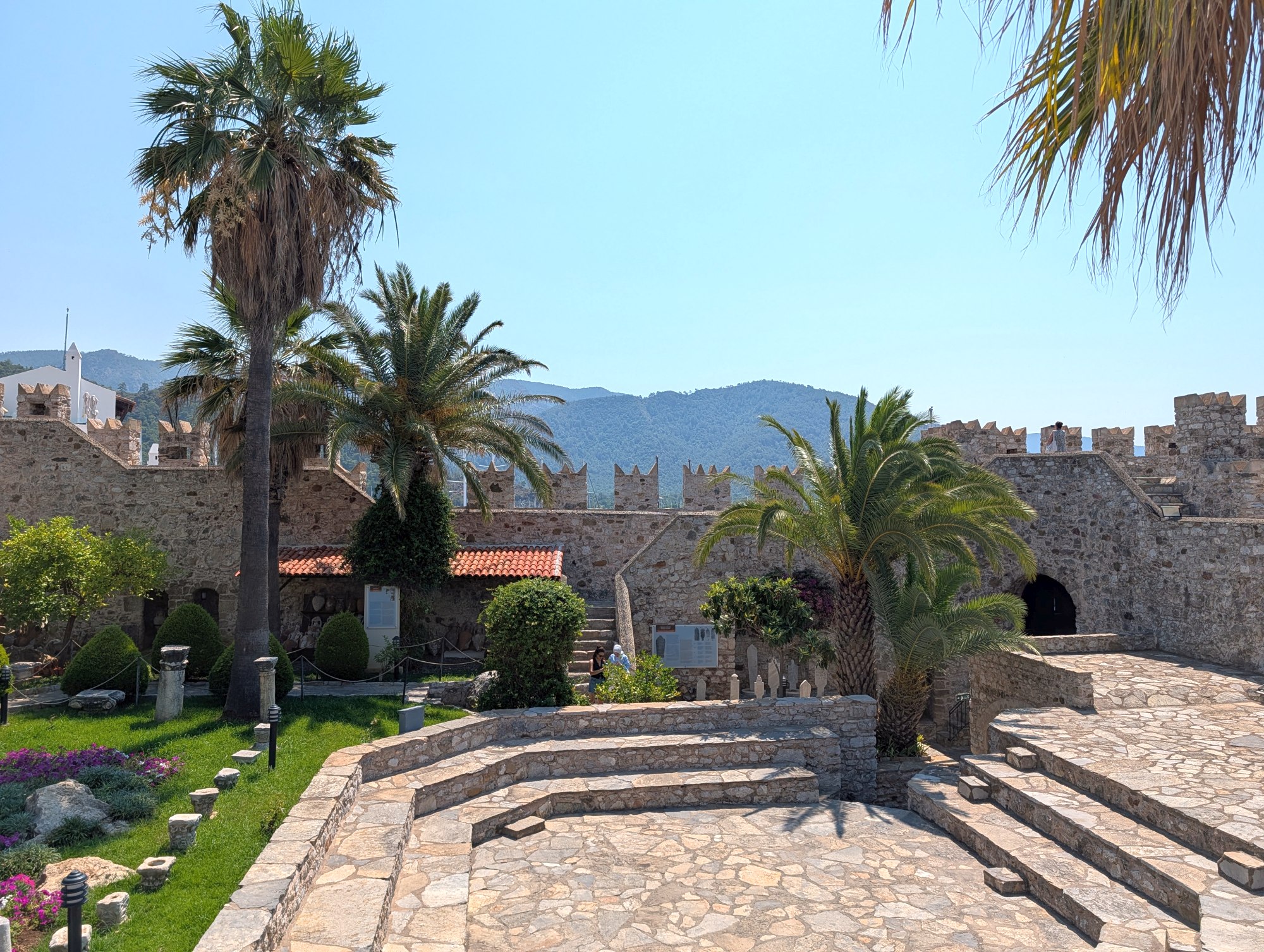
Evliya describes the castle as a strong, quadrangular fortress with four bastions, standing on a steep rocky outcrop beside the sea. Its elevated position made a surrounding moat unnecessary. The entrance faced north, with a rectangular white marble inscription above its arched doorway. The traveller noted, however, that the lettering had faded to such an extent that he could no longer read or transcribe it.
The traveller also recorded details of the fortress's internal arrangements and garrison. Approximately 30 soldiers were stationed inside, under the command of an ağa responsible for the harbour. The castle contained the commander's residence, accommodation for the muezzin, imam, and caretaker, as well as granaries for storing wheat. A small mosque without a minaret stood beneath an arch. Evliya further mentions that the inhabitants sought relief from the oppressive summer heat by spending the warmer months in the surrounding mountains, while the castle itself was guarded in shifts.
Outside the fortress, Evliya describes a small settlement situated among the rocks, consisting of approximately 50 houses with tiled roofs, a mosque, and a bathhouse. He also mentions an inn at the head of the harbour. The harbour itself receives particular attention in his account. With the sea extending along both sides of the castle, it was described as a fine, sheltered anchorage, protected from winds from all eight directions and capable, according to the traveller, of accommodating as many as 1,000 ships. He also notes a very narrow strait on its right-hand side, which he considered so narrow that it could be crossed by stepping over it. Although the figure of 1,000 ships should not be treated as a precise measure of harbour capacity, the description conveys the importance Evliya attached to Marmaris's sheltered maritime position.
His account also provides information about the town's administrative status. Although Marmaris lay within the historical region of Menteşe, Evliya states that it was under the authority of an official connected with the Ottoman administration on Rhodes and belonged to the Province of Rhodes. Taken together, his observations portray Marmaris as a relatively small but strategically situated fortified harbour settlement in the seventeenth century, combining a modest military garrison with the commercial and maritime functions of a port facing the island of Rhodes.
The Castle in the Later Ottoman Period
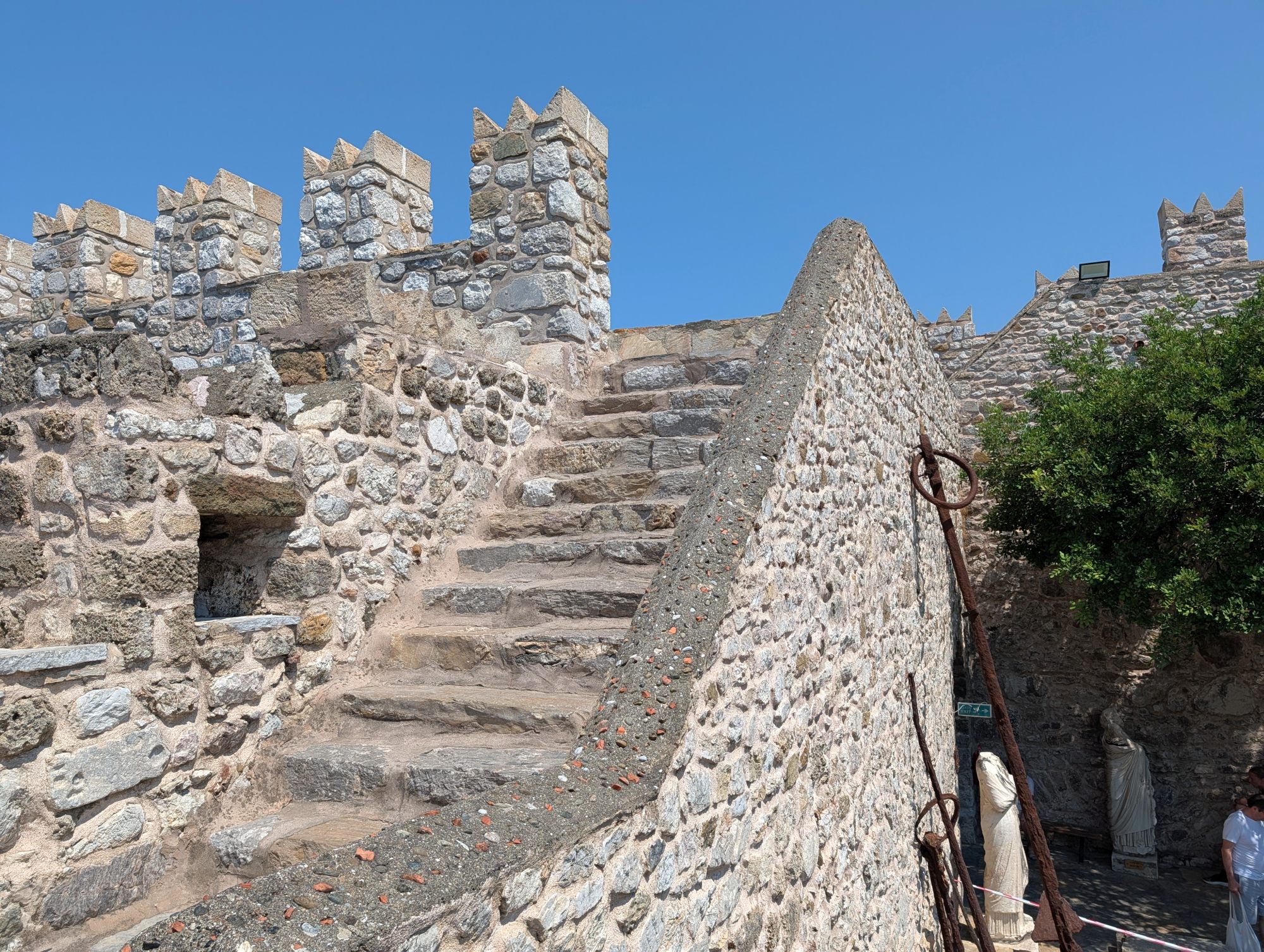
Although detailed written accounts of Marmaris Castle during the eighteenth and nineteenth centuries are scarce, several sources provide glimpses of its later history and the continuing strategic importance of its harbour. In December 1800, during the British expedition against French-controlled Egypt, the Royal Navy used Marmaris Bay as an anchorage and established a temporary headquarters there. Contemporary British visual records also provide evidence for the appearance of Marmaris at the beginning of the nineteenth century. John Elliott Woolford produced watercolours documenting the British expedition and its fleet in Marmorice Bay in 1800–1801. More directly relevant to the castle is an engraving entitled View of the Town and Castle of Marmorice, published in Thomas Walsh's account of the Egyptian campaign in 1803. This anonymous view provides an early nineteenth-century depiction of the fortress and its relationship with the settlement and harbour.
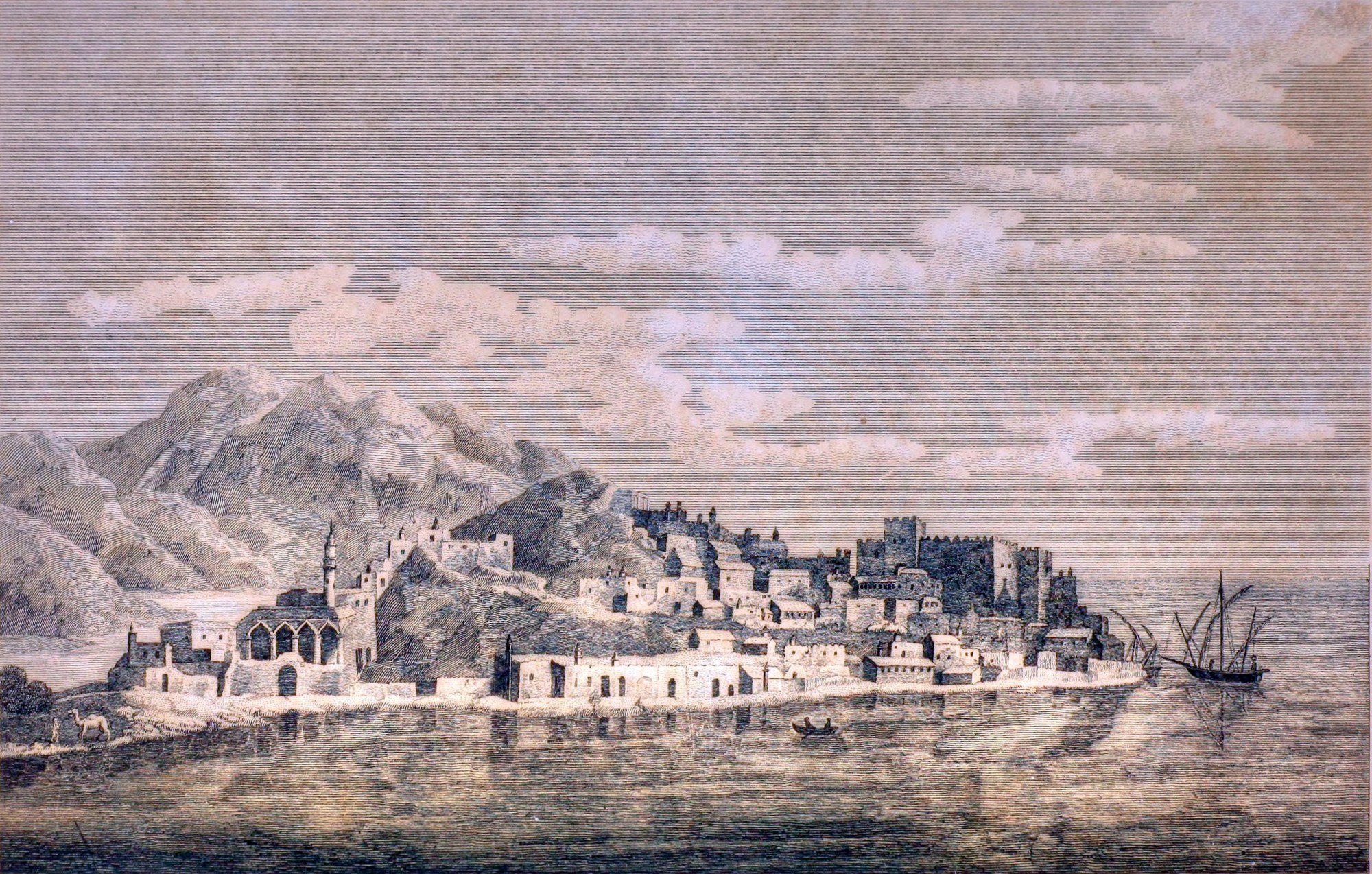
An engraving published by John H. Allan in 1843 provides a further visual record of the settlement, with the castle visible in the background. Its accompanying caption attributes the fortress to the Knights Hospitaller, although this identification is not supported by the known historical evidence and should be treated with caution. During the nineteenth century, Marmaris was also affected by several earthquakes, particularly those of 1856, 1862, 1870, and 1871. These caused damage to buildings in the town, and the Ottoman government provided financial assistance for reconstruction after the 1871 earthquake. However, no specific damage to the castle has been documented in the sources consulted.
By the late Ottoman period, the fortress had gradually lost its exclusively military character and had become partly residential. According to the official historical account, it eventually contained 18 houses, together with a fountain and a cistern. This residential use continued into the Republican period, until the houses were expropriated by the state by 1979 in preparation for the restoration of the complex.
Damage during the First World War
The First World War brought further attacks on Marmaris and its surrounding coastline. Local historical accounts state that Marmaris Castle was bombarded by a French warship in 1914, causing extensive damage and destroying a substantial part of the fortress. The Muğla Provincial Directorate of Culture and Tourism places the bombardment in July and August and adds that French troops subsequently attempted to land but withdrew after encountering resistance from the Ottoman defenders. The Marmaris District Governorship likewise attributes the destruction of an important part of the castle to French naval gunfire in 1914.
The chronology of this episode, however, remains uncertain. France declared war on the Ottoman Empire on 5 November 1914, whereas the local account dates the bombardment to the summer months, several months earlier. Although this discrepancy does not by itself disprove the reported incident, the precise date, circumstances, and scale of the attack are unclear. The account of the attempted landing, too, is presently known chiefly through local historical narratives rather than independently verified operational documentation.
Ottoman archival records provide clearer evidence of Allied naval activity in the Marmaris area during 1915. On 15 May, an Allied cruiser entered Marmaris harbour and searched the boats there. It subsequently seized two boats carrying maize and firewood, together with their captains, as well as two empty craft described in the Ottoman record as praça. The incident is recorded in the Ottoman Archives and is discussed by Mehmet Temel in his study of Allied attacks on Ottoman coastal settlements.
A further and more serious bombardment took place on 16 April 1917. At approximately 4:30 p.m., an enemy warship opened fire on Marmaris from the direction of Yalancı Boğaz. According to the archival account, the attack wounded one acting officer, two cavalrymen, four children, nine men, and twelve women. Some of the wounded subsequently died, although the source does not establish the final number of fatalities. The incident is documented in the Ottoman Archives and is described in studies by Mehmet Temel and Kerim Sarıçelik. The surviving accounts identify Marmaris as the target of the bombardment but do not specify that the castle itself was deliberately attacked.
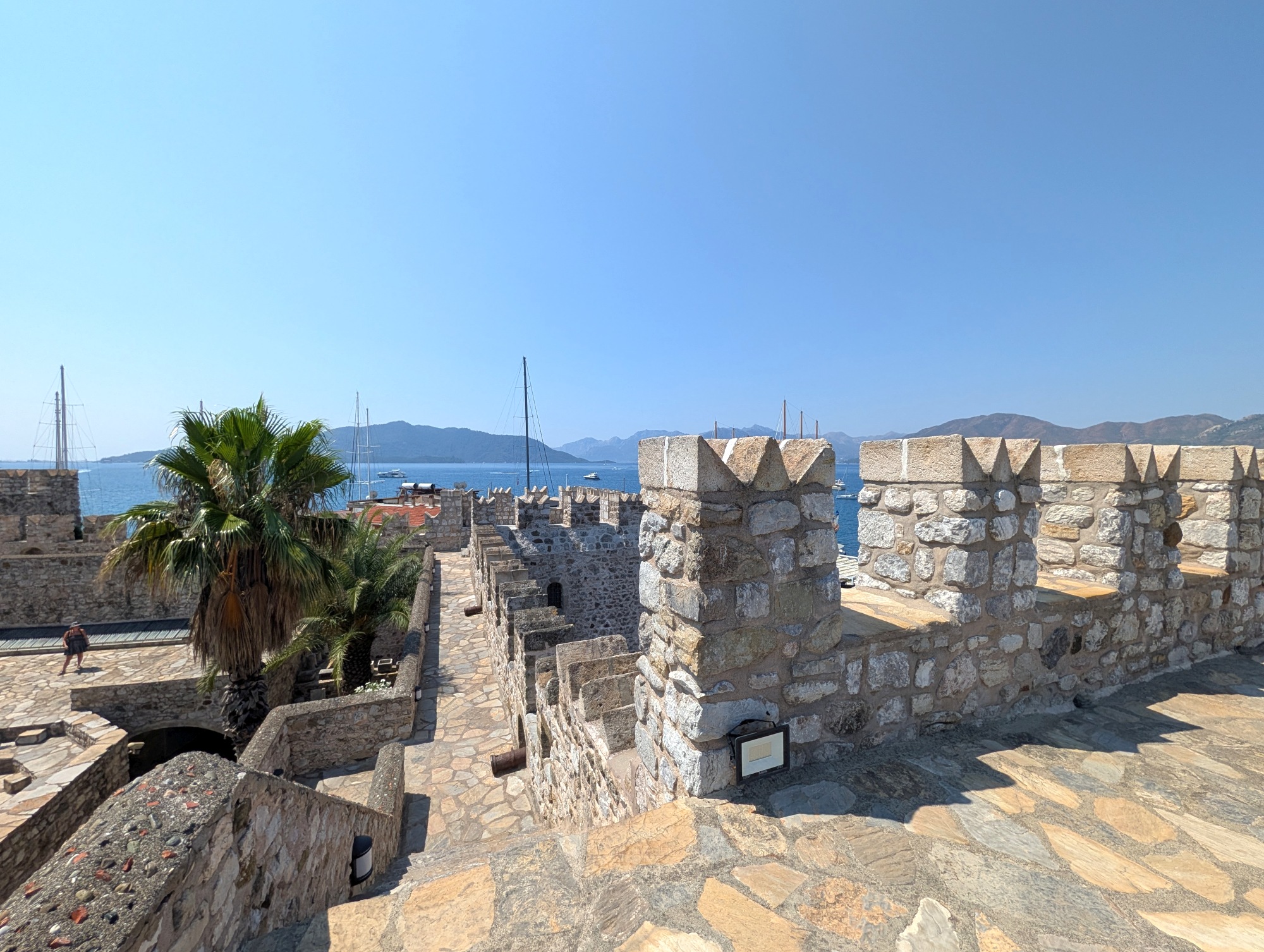
These events illustrate the vulnerability of Marmaris as a coastal settlement exposed to Allied naval operations during the war. They also provide important context for the condition of the castle. The reported destruction in 1914 suggests that the surviving fortress may have lost or undergone substantial alteration to parts of its Ottoman-period fabric. Nevertheless, the extent of the damage attributable specifically to that bombardment has not been established. The castle as it appears today should therefore not be regarded as an entirely intact representation of the stronghold built or reconstructed in the time of Süleyman the Magnificent in 1522. Its present form reflects a longer history of damage, adaptation, residential occupation, and subsequent restoration.
From residential fortress to protected monument
During the twentieth century, Marmaris Castle gradually lost its original military function. Its interior and the area immediately surrounding it became occupied by local inhabitants, and the fortress developed into a residential quarter rather than remaining exclusively a military or administrative installation. According to the official descriptions, the complex included 18 dwellings, a fountain, and a cistern. The residential occupation, which had begun before the establishment of the Turkish Republic, continued until the second half of the twentieth century.
The transformation of the castle into a protected historical monument began in 1979, when the Ministry of Culture and Tourism expropriated the 18 residential properties situated within and outside the fortress. The following year, restoration work began. The castle was formally registered as a first-degree monumental immovable cultural property by a decision of the High Council for the Protection of Cultural and Natural Assets dated 14 October 1983 (decision no. 11). The restoration programme was completed in 1990, after which the surviving buildings and courtyard were adapted for museum use.
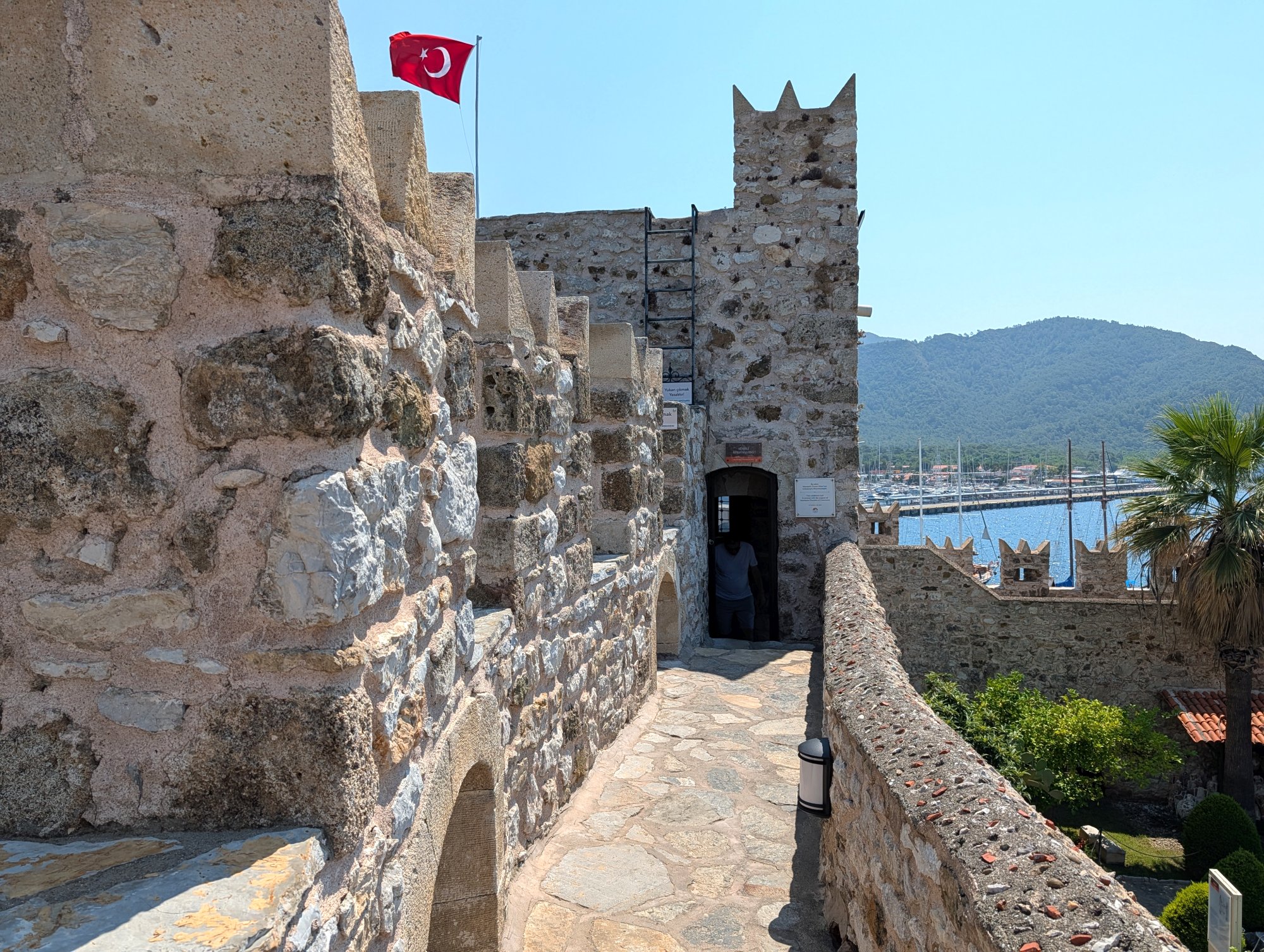
On 18 May 1991, Marmaris Castle opened to visitors as the Marmaris Museum, with its interior arranged as an archaeological museum. The complex contained seven enclosed spaces, including a vaulted entrance passage leading into the inner courtyard. Staircases on either side of the courtyard provided access to the ramparts, while several of the vaulted rooms were converted into exhibition galleries. The museum displayed archaeological finds from Marmaris and the surrounding region, including material from Knidos, Burgaz, and Hisarönü. The collections included stone objects, Hellenistic, Roman, and Byzantine amphorae, terracotta vessels and figurines, glass objects, arrowheads, coins, and ornaments. The courtyard itself was also used as an open-air exhibition space.
The museum's original arrangement remained in use until 2002. Following a reorganisation, it reopened on 23 May 2006 with a new exhibition layout. The displays at that time included a sculpture gallery, a gallery devoted to ceramics and glass, and an ethnographic exhibition, while the courtyard continued to accommodate outdoor displays. This successive reorganisation demonstrates that the conversion of the castle into a museum was not a single intervention completed in 1991, but an ongoing process of adapting the historic rooms to changing exhibition requirements.
A further major programme was undertaken in 2012–2013. The Ministry of Culture and Tourism had prepared a new museum arrangement project in 2011, intended to bring the displays into line with contemporary museum standards and improve the conditions in which the collections were presented and stored. The museum closed to visitors on 18 October 2012, with reopening initially planned for 30 April 2013. The work included the renovation of the exhibition spaces and restoration of a bastion. The castle was restored using horasan material, a traditional building mortar based on lime and crushed brick or ceramic fragments, also employed in Seljuk and Ottoman architecture. The project had an allocated budget of 657,000 Turkish lira. When the castle and museum were officially reopened on 30 September 2013, four exhibition rooms were available to visitors.
The museum now occupies a historic defensive structure whose surviving architecture has been adapted to accommodate archaeological displays, galleries, storage, and administrative functions. Its arrangement makes use of the vaulted rooms, inner courtyard, and access to the ramparts, allowing the fortress itself to remain an essential part of the visitor experience. The conversion has given the castle a new public role, preserving it not as an untouched military monument but as a building that reflects successive periods of defence, residential occupation, restoration, and cultural reuse.
Archaeological Museum within the Castle
Marmaris Museum occupies the interior of the historic castle, making use of both its enclosed rooms and the open courtyard to display archaeological and historical objects. The exhibition spaces are arranged in the castle's towers and along the walls, while the courtyard serves as an additional open-air gallery. The collections cover a long chronological span, from Prehistory and the Archaic period through the Classical, Hellenistic, Roman, and Eastern Roman (Byzantine) periods to the Republican period.
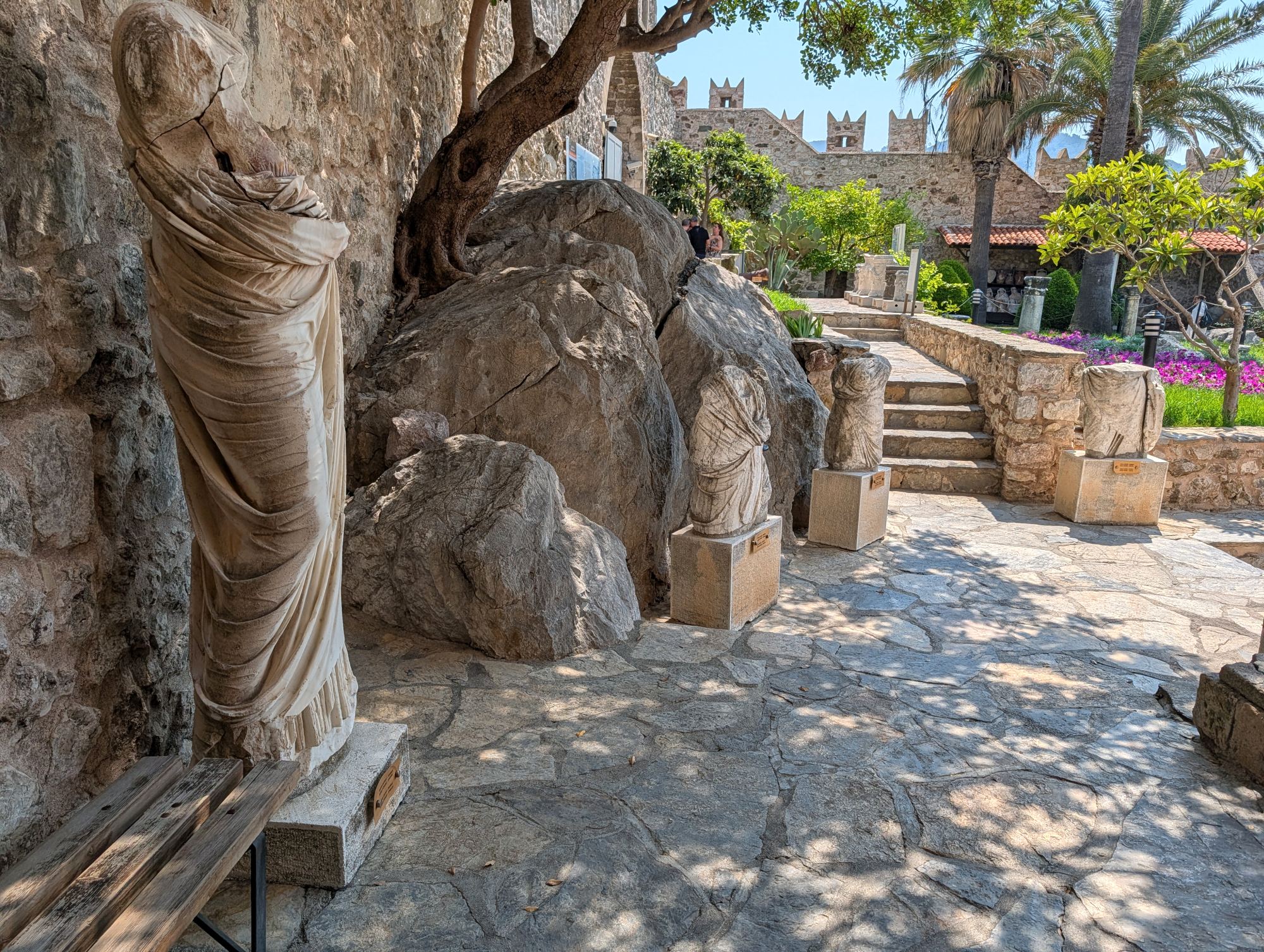
As visitors enter the castle, they arrive in the central courtyard, where stone altars are displayed directly ahead. The courtyard forms the focal point of the museum, with exhibition areas arranged around its perimeter. The towers house the principal themed galleries, while further groups of artefacts are displayed in the spaces between them and along the connecting walls.
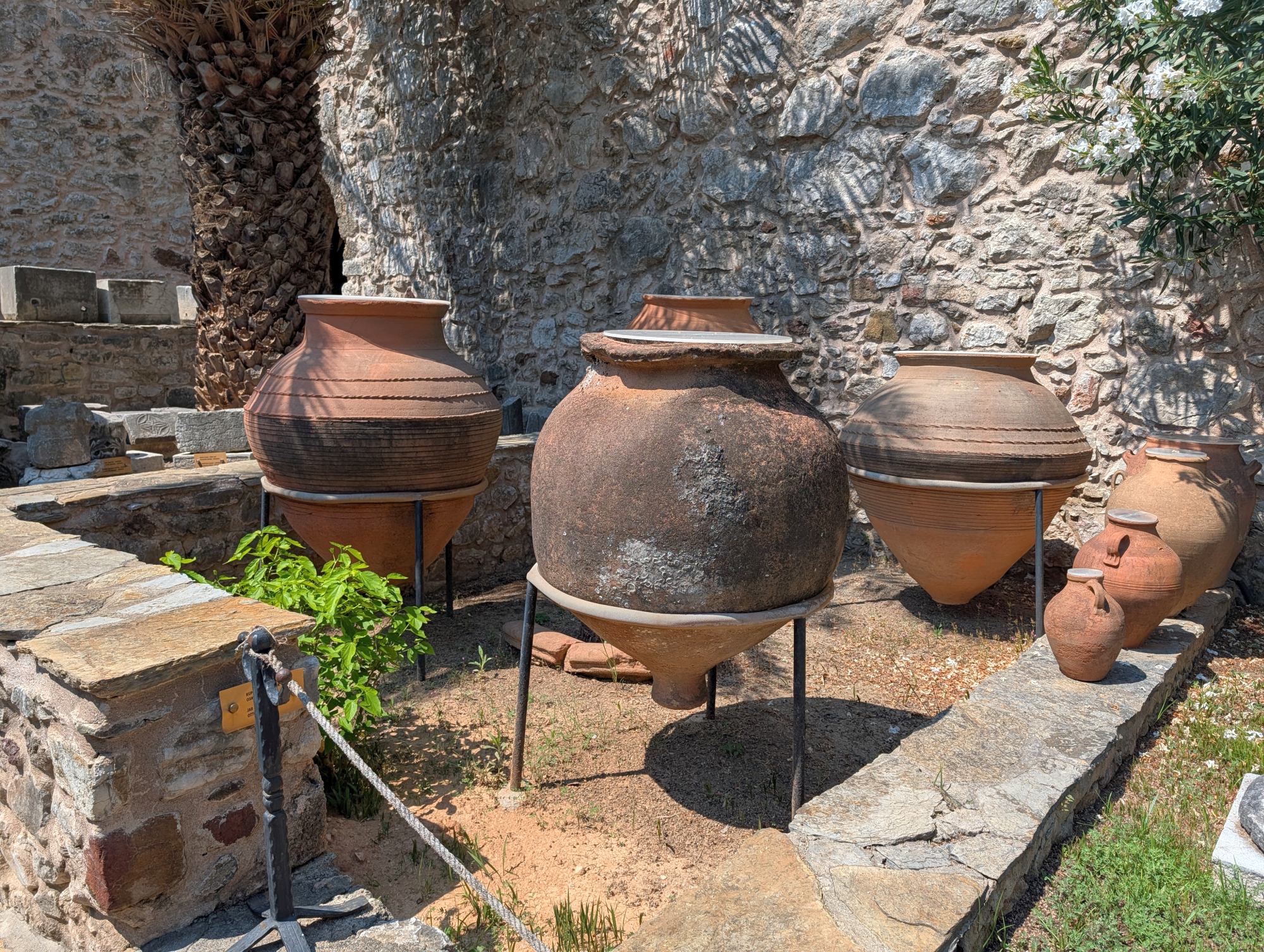
To the right of the entrance, in the north-western tower, is the Knidos Hall. Moving counter-clockwise around the courtyard, the next tower, at the south-western corner, contains the Emecik-Burgaz Hall. In the open area in front of this tower, a collection of amphorae from Marmaris and its surroundings is displayed. The south-eastern tower, the third one encountered on this route, houses the Marmaris and Around Hall. In the space in front of it is the Hall of Stone Artefacts.
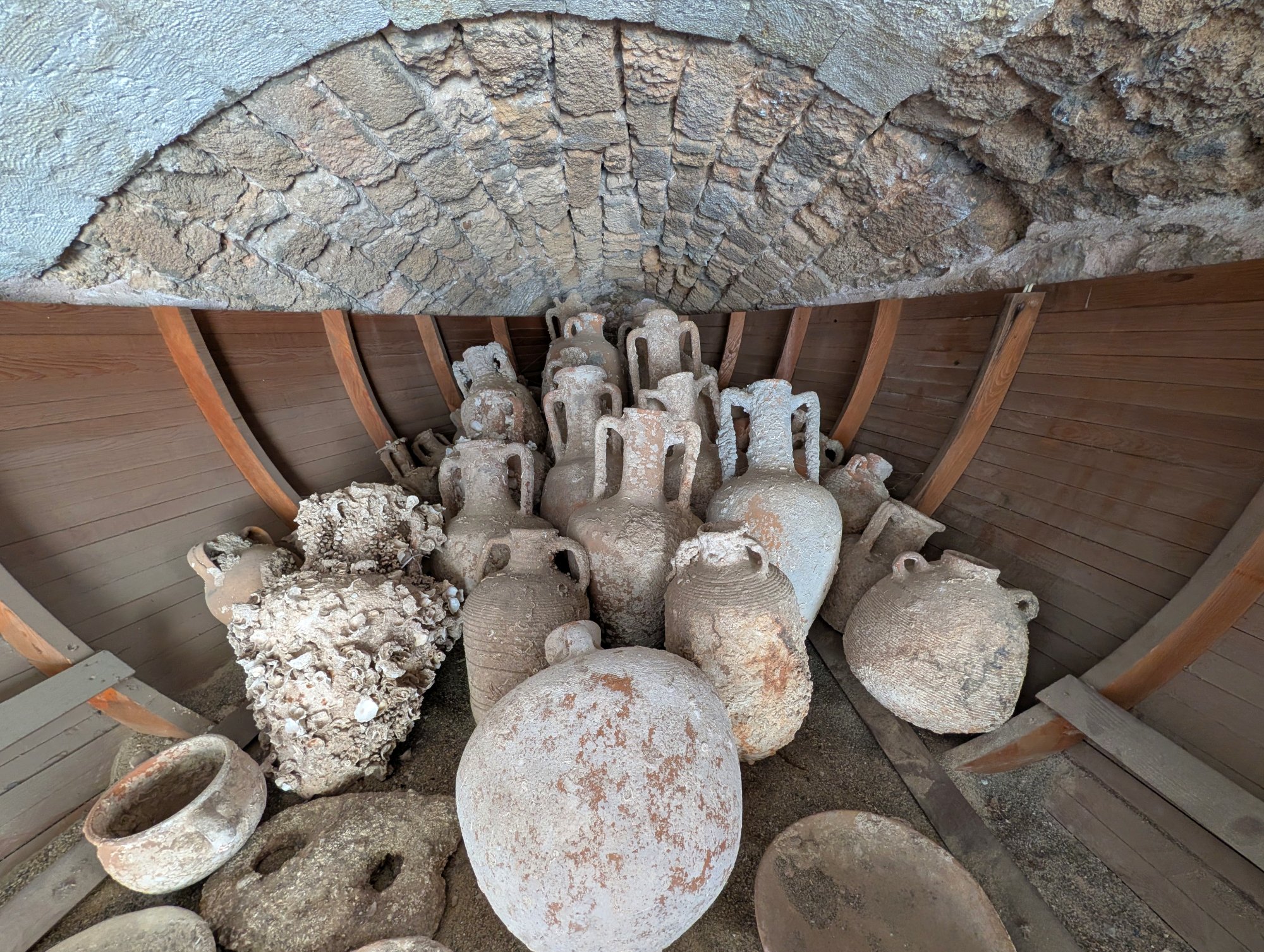
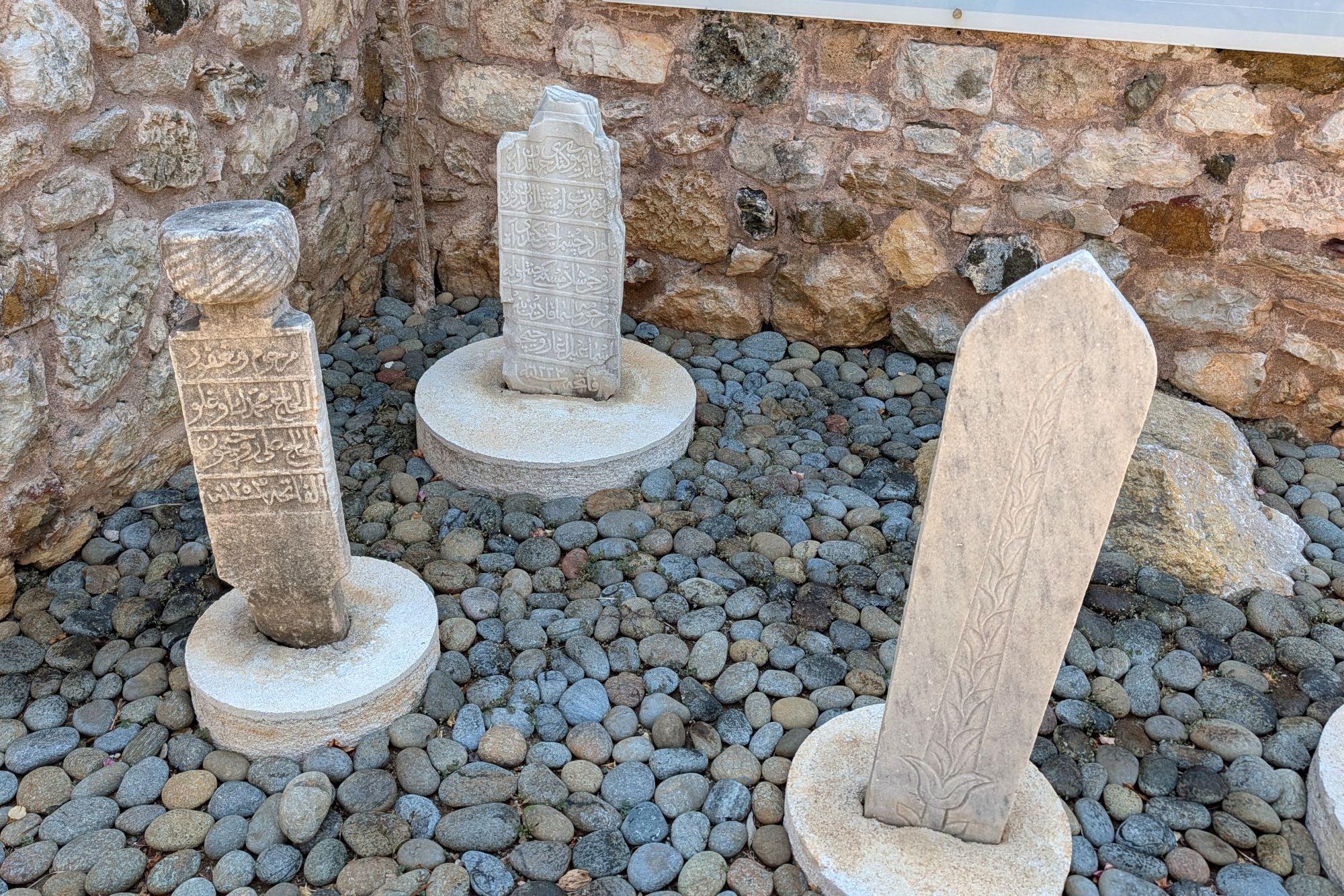
The displays continue along the castle walls. The western wall, connecting the north-western and south-western towers, is lined with large storage jars. Along the eastern wall, visitors can see Ottoman-period tombstones and a collection of architectural pieces.
In addition to these galleries, the museum now has a fifth exhibition hall in the former commander's quarters, situated at the highest point of the castle. Opened in July 2025, this space is centred on a monumental bronze female statue known as The Woman from the Sea. The sculpture, which was recovered from the sea off Marmaris in 2020, is displayed alongside a collection of archaeological objects illustrating women's lives and personal adornment in antiquity. These include jewellery, mirrors, perfume containers, hairpins, dress accessories, and portrait sculptures. The exhibition brings together 95 objects from the surrounding region, most of which were presented to the public for the first time. Its location in the former commander's quarters also allows visitors to explore another part of the historic fortress beyond the galleries arranged around the central courtyard.
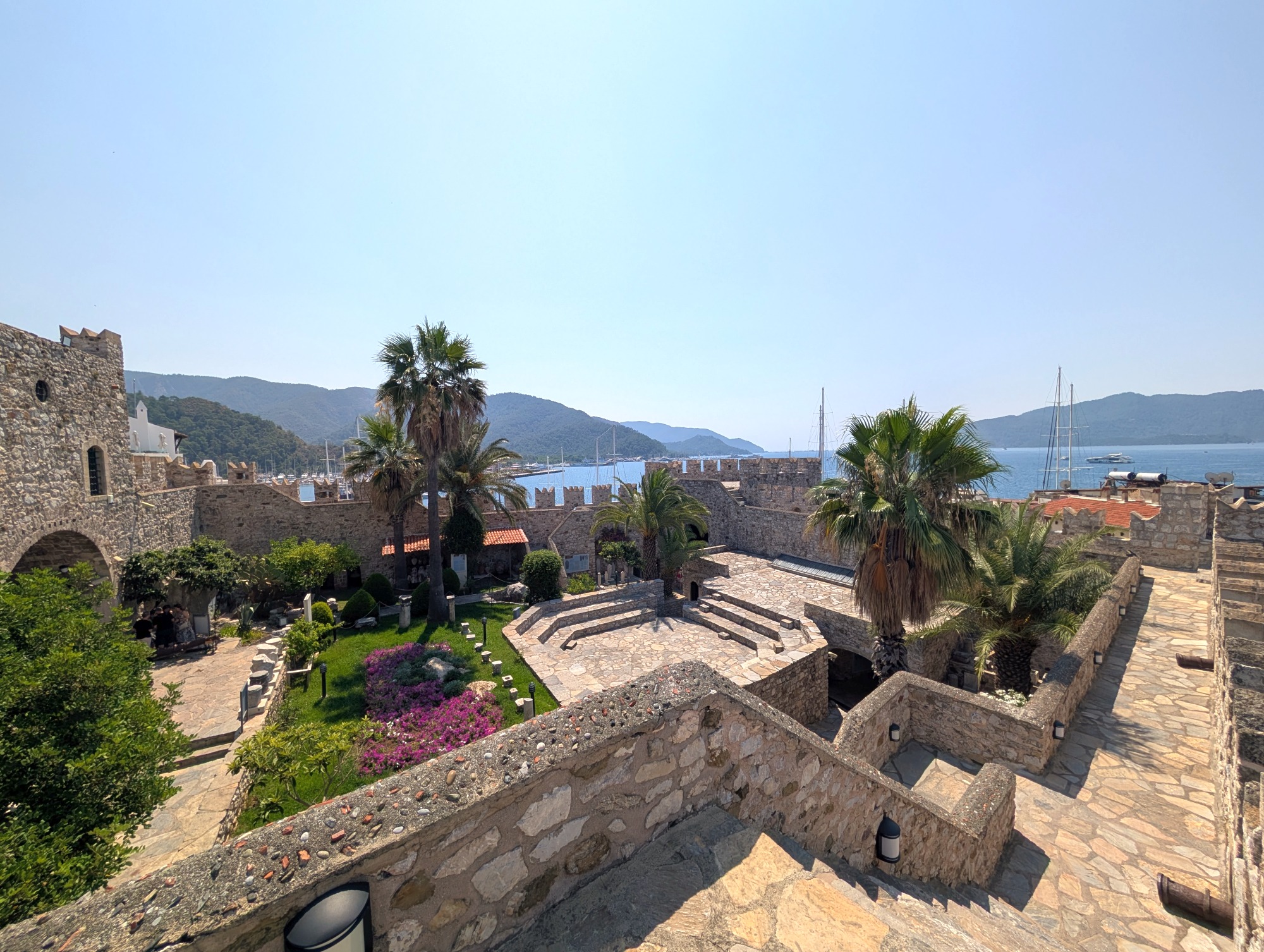
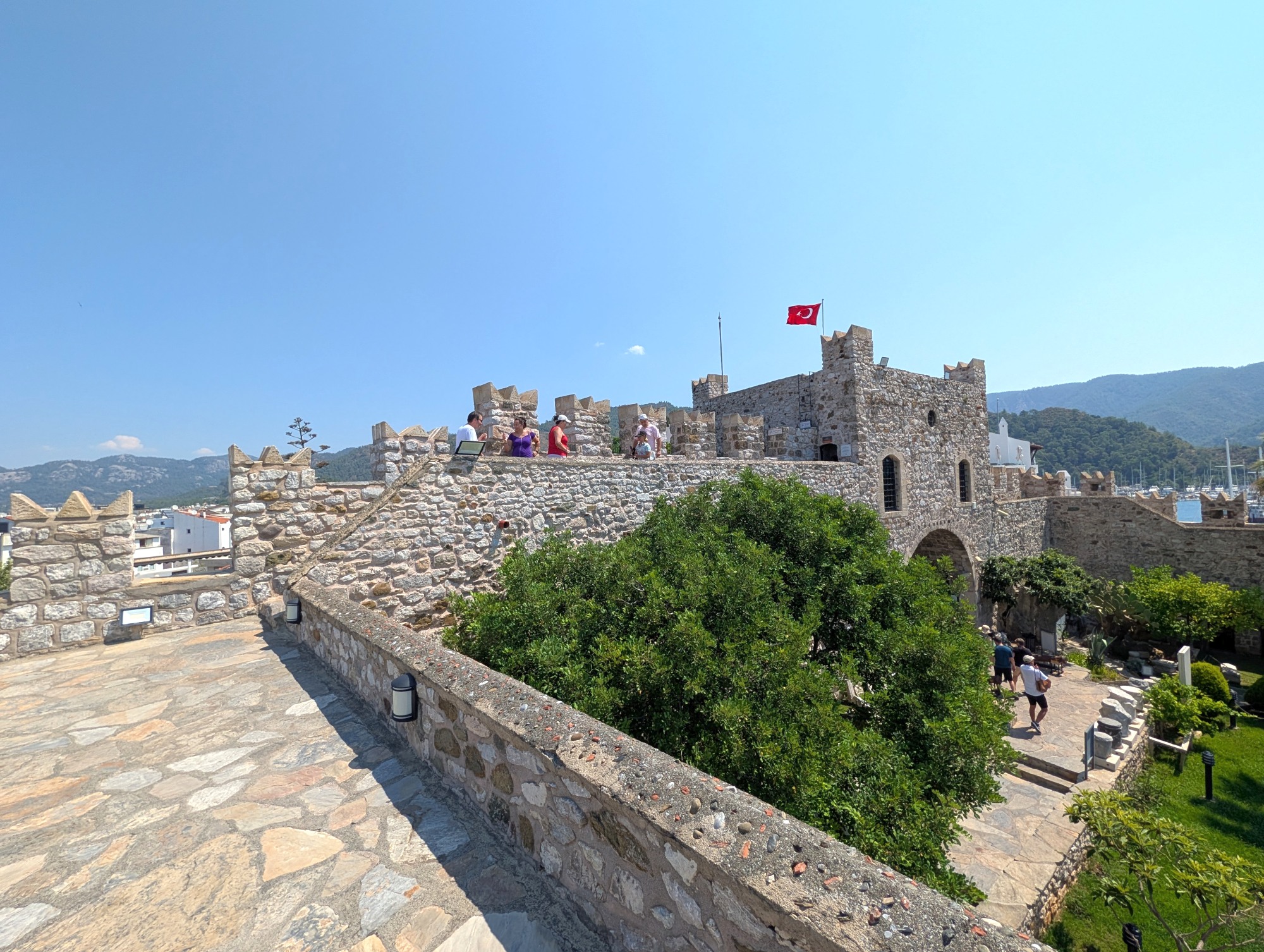
Staircases on both the left and right sides of the courtyard lead up to the castle walls and ramparts. Besides providing access to the upper defensive level, they offer particularly impressive views over the courtyard, the historic town, and Marmaris harbour. Exploring the ramparts is therefore an important part of the visit, as it reveals the castle's position above the settlement and its close relationship with the sheltered bay.
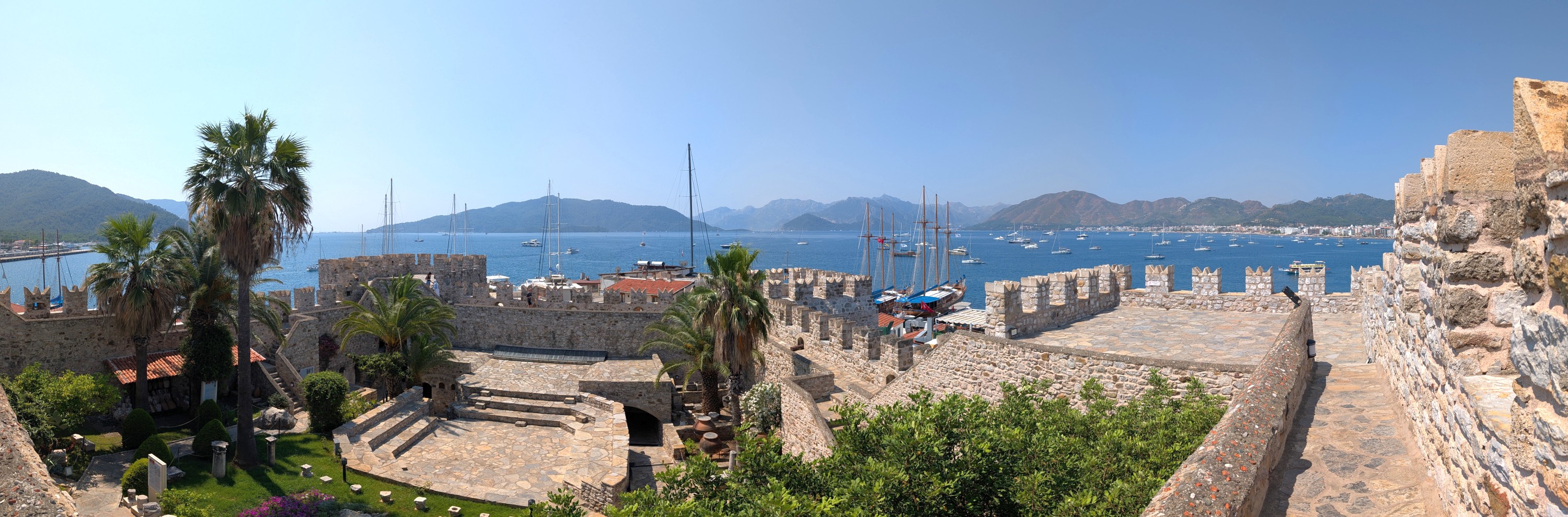
This arrangement allows visitors to explore the museum while also experiencing the castle as an architectural monument. The exhibition rooms present archaeological finds from different sites and periods in the region, whereas the courtyard and ramparts retain much of the character of the former fortress.
Knidos Hall
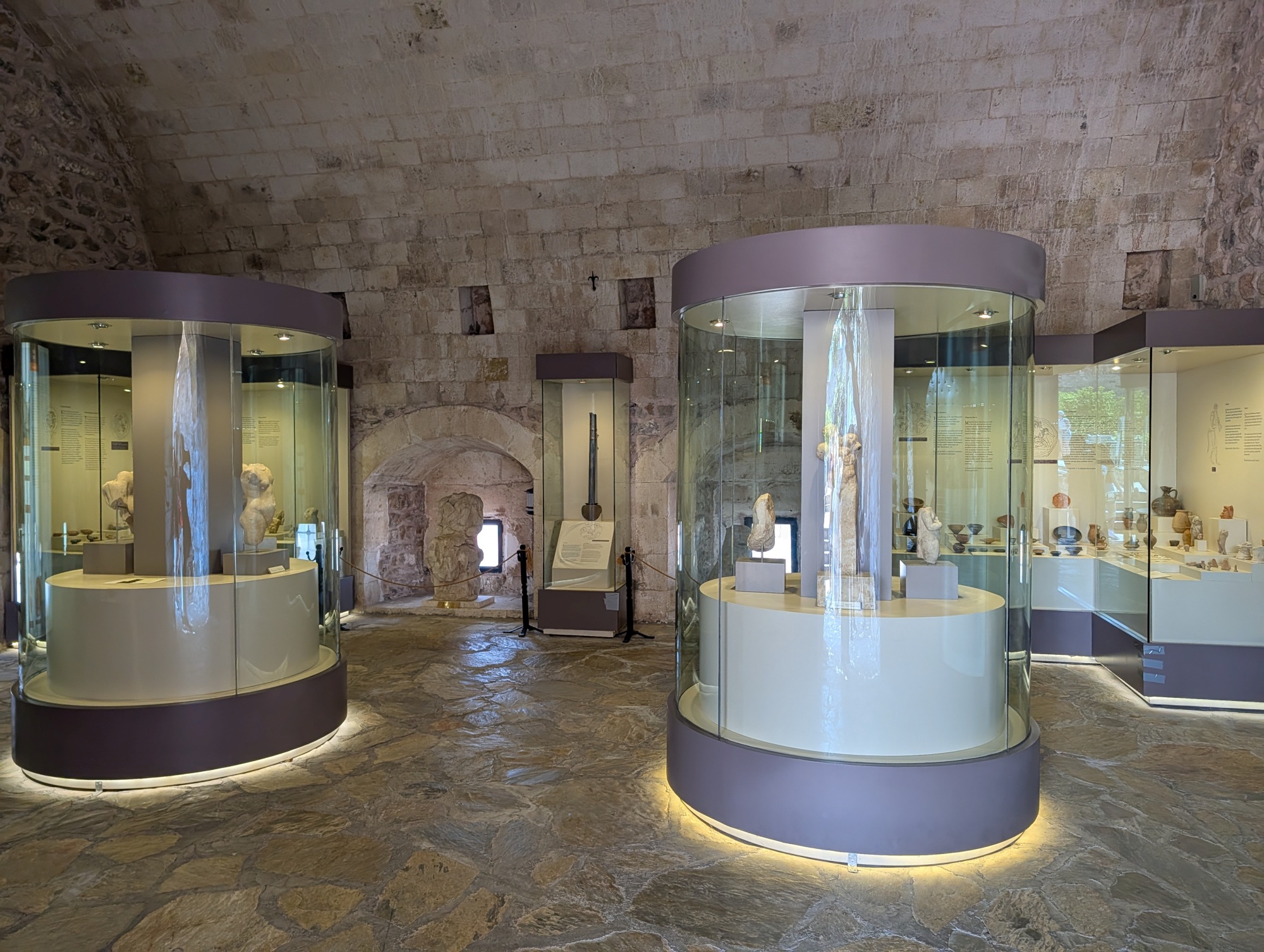
The Knidos Hall, the first exhibition room encountered on entering Marmaris Museum, is devoted to finds from the ancient city of Knidos. Located at the tip of the Datça Peninsula, Knidos was one of the important ancient centres of Caria. The objects displayed in the hall were brought to the museum from archaeological excavations at the site and represent different aspects of the city's artistic production and everyday life.
Knidos was an important Dorian city on the southwestern coast of Asia Minor and a member of the Dorian Hexapolis, a religious and political association of six Dorian communities. Its earlier settlement was at Burgaz, near modern Datça, but during the fourth century BCE the principal urban centre was transferred to the peninsula's western extremity, at Tekir Burnu, where the extensive ruins can still be seen. The new city occupied terraces on the mainland and the neighbouring promontory of Cape Krio, originally an island. The two parts were connected by a narrow artificial land passage, creating two sheltered harbours: the northern harbour, used mainly by military vessels, and the southern one, which served commercial shipping.
Knidos prospered through maritime trade, agriculture, and especially the production and export of wine, while its reputation also rested on its achievements in art, science, and architecture. Among its celebrated inhabitants were the mathematician and astronomer Eudoxus and the sculptors Skopas and Bryaxis. The city was particularly famous in antiquity for its sanctuary of Aphrodite and the renowned statue of the goddess by Praxiteles.
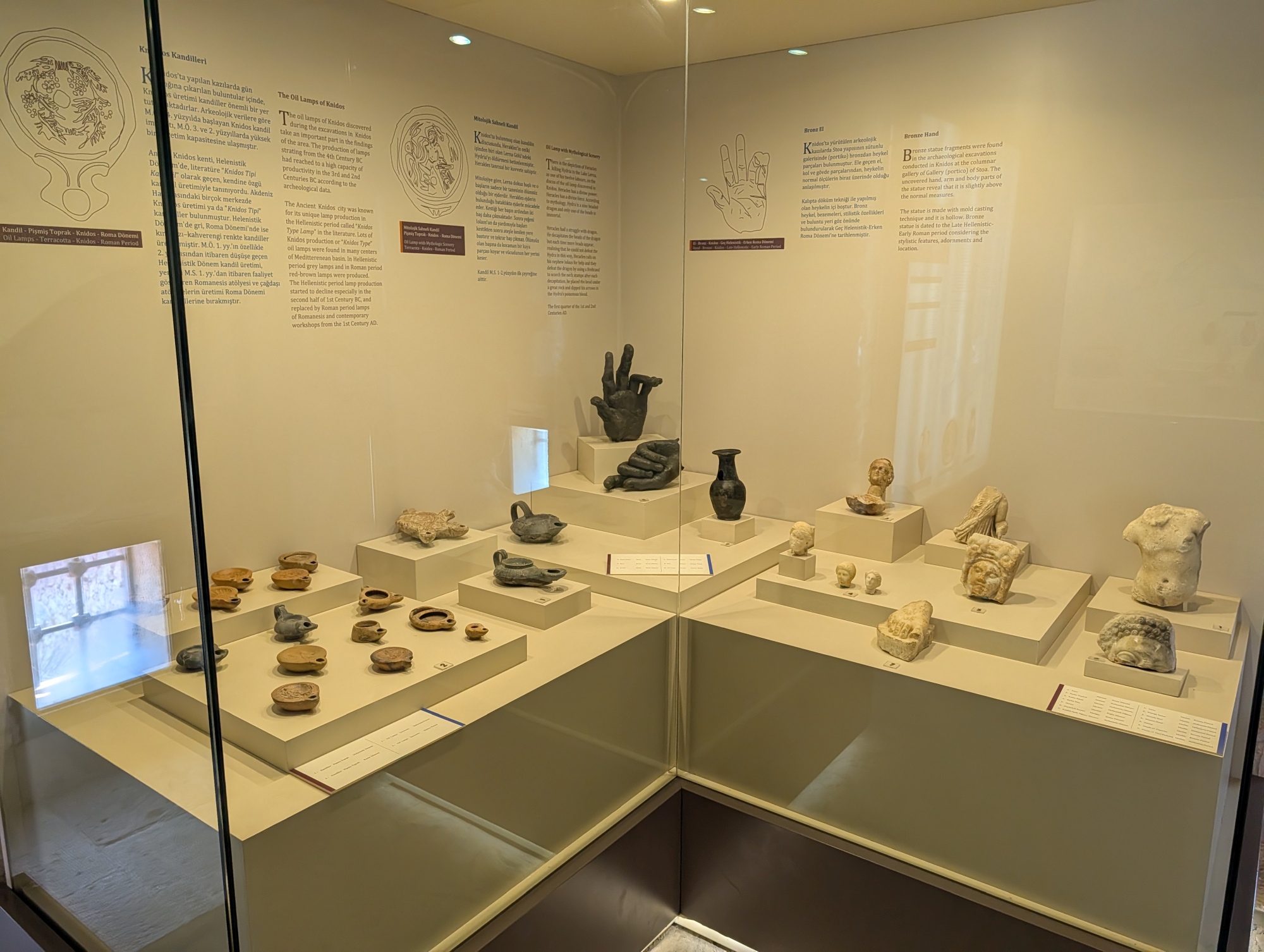
The collection includes marble statues and sculptural fragments, heads of statues, small figurines, ornaments, amphorae, and vessels used in daily life. Together, these objects provide an overview of the range of material recovered at Knidos, from monumental sculpture to smaller personal objects and utilitarian pottery. The marble sculptures and statue heads are particularly important in illustrating the quality and variety of the city's sculptural heritage, while the amphorae and domestic vessels offer a glimpse into everyday activities and the storage and transport of goods.
Two particularly noteworthy exhibits are a bronze scabbard and a seated priest sculpture. The bronze object is believed to have been associated with a large, possibly colossal, statue from the Late Hellenistic or Early Roman period. It was found in the stoa of Knidos. Its precise original function and the identity of the statue to which it may have belonged remain uncertain but quite possibly it was not for an ordinary sword but for a ceremonial weapon. The seated priest sculpture is another important piece in the collection, dating back to the Archaic period.
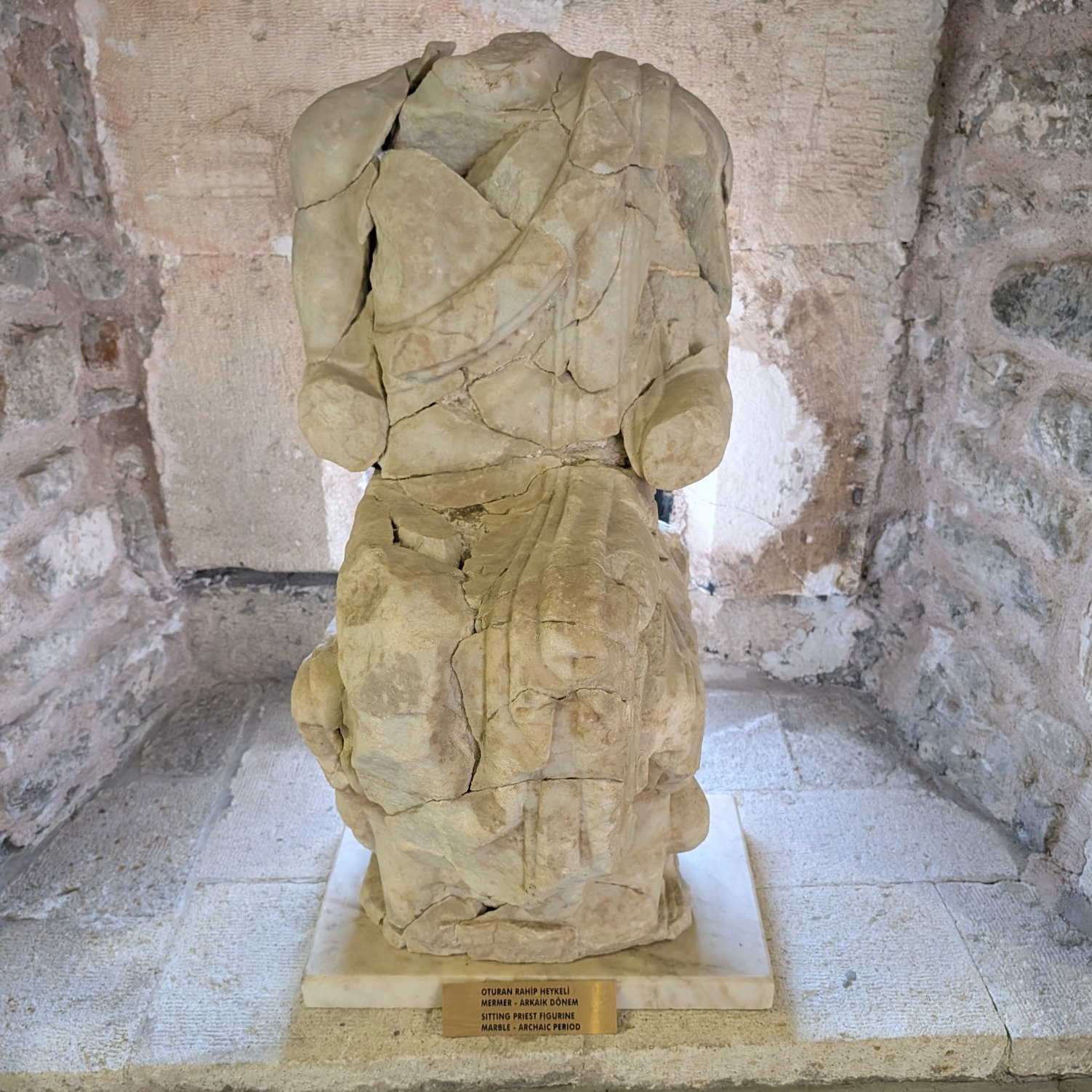
The hall thus brings together evidence for several dimensions of life in ancient Knidos. Its sculptures and sculptural fragments represent the city's artistic and religious culture, while the figurines, ornaments, amphorae, and everyday vessels illustrate the objects used in domestic, commercial, and personal contexts. The bronze scabbard and seated priest sculpture are especially interesting additions to the larger marble works, offering further insight into the range of objects recovered from the ancient city.
Emecik-Burgaz Hall
The Burgaz–Emecik Hall, the second exhibition room in Marmaris Museum, contains finds from two important archaeological sites in the territory of ancient Knidos: Burgaz, near modern Datça, and the Archaic sanctuary of Apollo near Emecik village. Its most distinctive exhibits are groups of limestone statuettes and terracotta figurines, which form one of the most important collections in the museum. The objects from Emecik are particularly significant for the study of religious practices and artistic connections in southwestern Anatolia during the Archaic period.
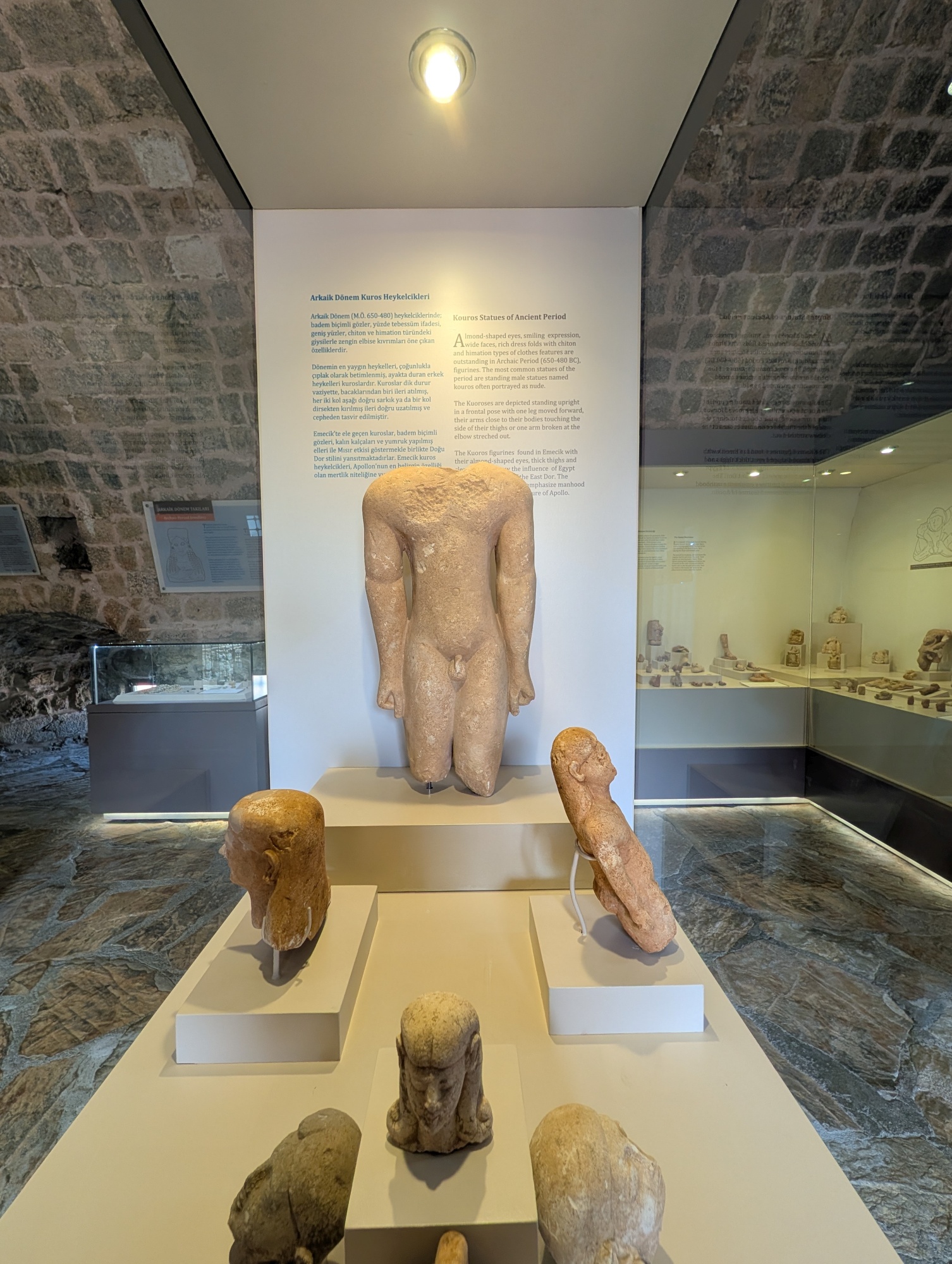
Burgaz is generally identified with Palaia Knidos (Old Knidos), the earlier settlement of the ancient city. Situated approximately 2 km northeast of the modern harbour of Datça, the archaeological site contains remains dating from the Geometric, Archaic, and Classical periods. Excavations, initiated in 1993 under the direction of Numan Tuna and supported by Middle East Technical University, have contributed to the understanding of the early settlement and its development.
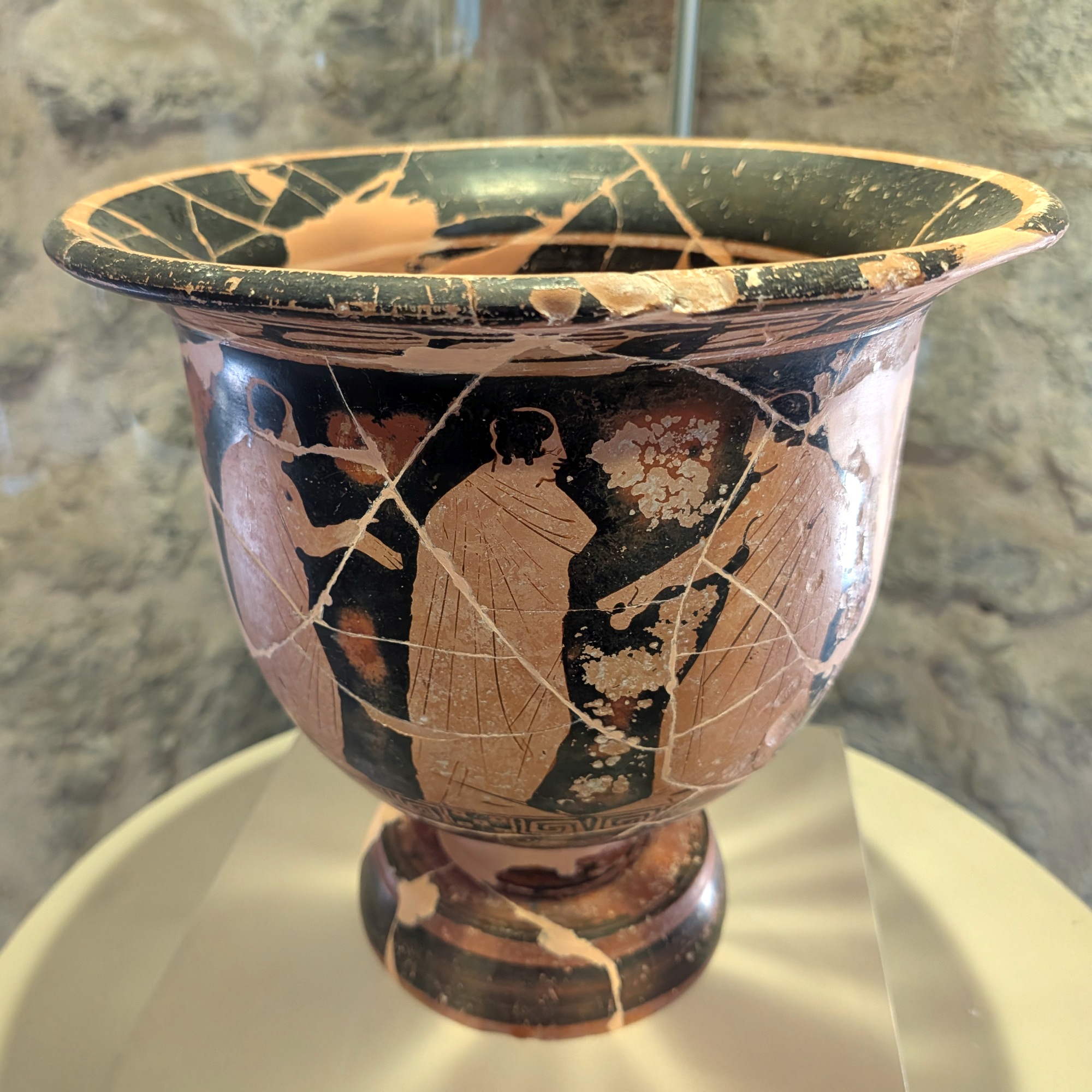
The Burgaz krater is a wide-rimmed vessel with a broad, shallow body, designed for mixing wine with water. In ancient Greece, wine was generally consumed diluted, partly because it was an expensive commodity. Kraters therefore served not only as mixing vessels but also helped keep the prepared drink cool. The decorative band features two separate scenes. The first depicts three young figures standing together, while the second shows a woman and a man. In the latter composition, the female figure is portrayed in a dance-like or running movement, with her arms outstretched. She wears a long chiton that follows the contours of her body, and her face is turned towards the male figure beside her, who holds the hem of her garment. The krater dates to the fourth–third centuries BCE (400–300 BCE).
The second group of finds comes from the sanctuary of Apollo near Emecik, where archaeological excavations conducted between 1998 and 2006 revealed a religious centre with a much longer history than its surviving monumental architecture might initially suggest. The sanctuary was used for cult activities dedicated to Apollo from the Geometric period onwards and became particularly important during the Archaic period. Its location within the territory of Knidos and the character of the finds indicate that it participated in a wider religious network extending across the eastern Aegean and beyond. The excavations revealed evidence of contacts with Cyprus, Egypt, Phoenicia, and other parts of the Mediterranean. The sanctuary has also been proposed as a possible location of the Triopion, the religious gathering place associated with the Dorian communities and the worship of Apollo Triopios. This identification remains a scholarly interpretation rather than an established fact.
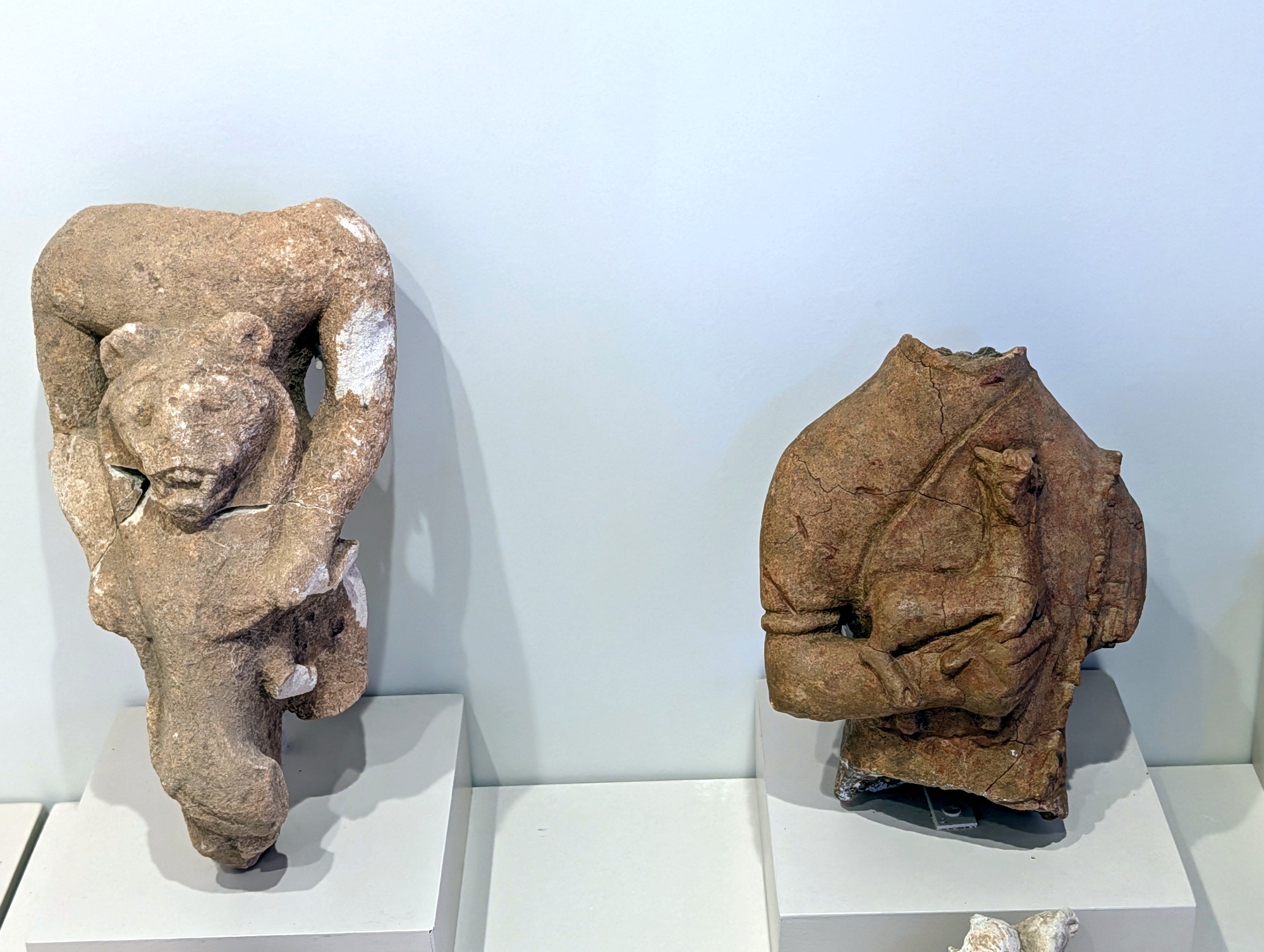
The limestone statuettes are among the most remarkable finds from Emecik. Many were recovered from the lower terrace, where they had been deposited as part of the fill used during a Late Archaic reorganisation of the sanctuary. Their subjects include lions, falcons, and human figures, among them representations of young men in the form of kouroi. These small sculptures were votive objects, dedicated within the sanctuary as offerings to the deity. Their variety and stylistic affinities reveal artistic connections with other eastern Greek centres and with Cyprus.
A particularly noteworthy limestone statuette from Emecik, dating to the sixth century BCE, depicts two male musicians accompanying a larger figure, whose upper body is now missing. The face of the musician in the foreground is badly worn, but he can still be seen playing a flute. His companion holds an instrument resembling a bagpipe, slung around his neck. Both wear long, ankle-length garments and are believed to represent performers who provided music during religious ceremonies held in honour of Apollo, the god of music and the fine arts.
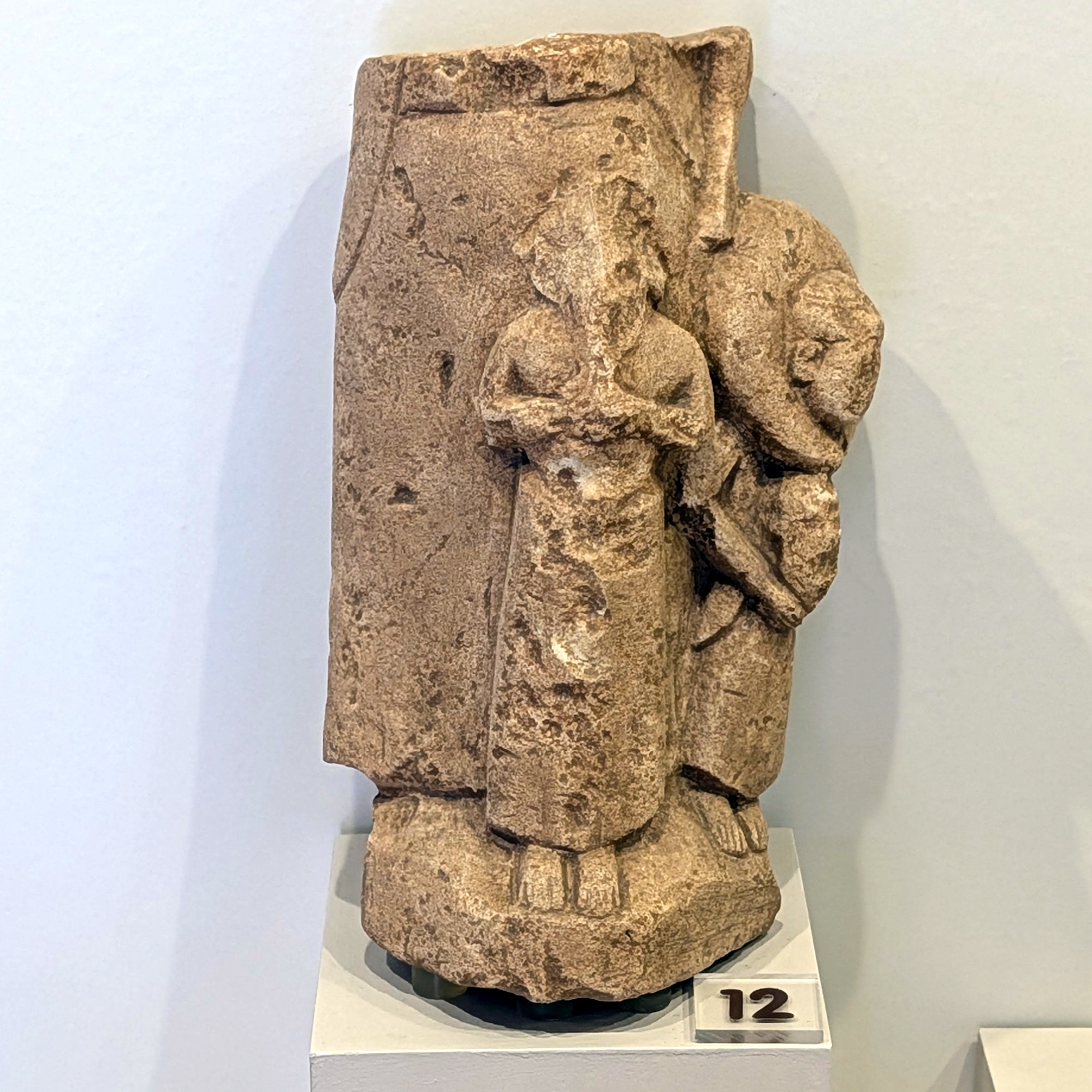
Another notable group of sixth-century BCE finds from Emecik consists of statuettes portraying male figures carrying animals as offerings to Apollo. The examples are classified according to the animals depicted: rams, goats, and calves, all regarded as sacred to the deity. Their presence illustrates the variety of offerings presented during the cult ceremonies. The figures are usually shown standing, with the animal either resting on their shoulders or held at chest level.
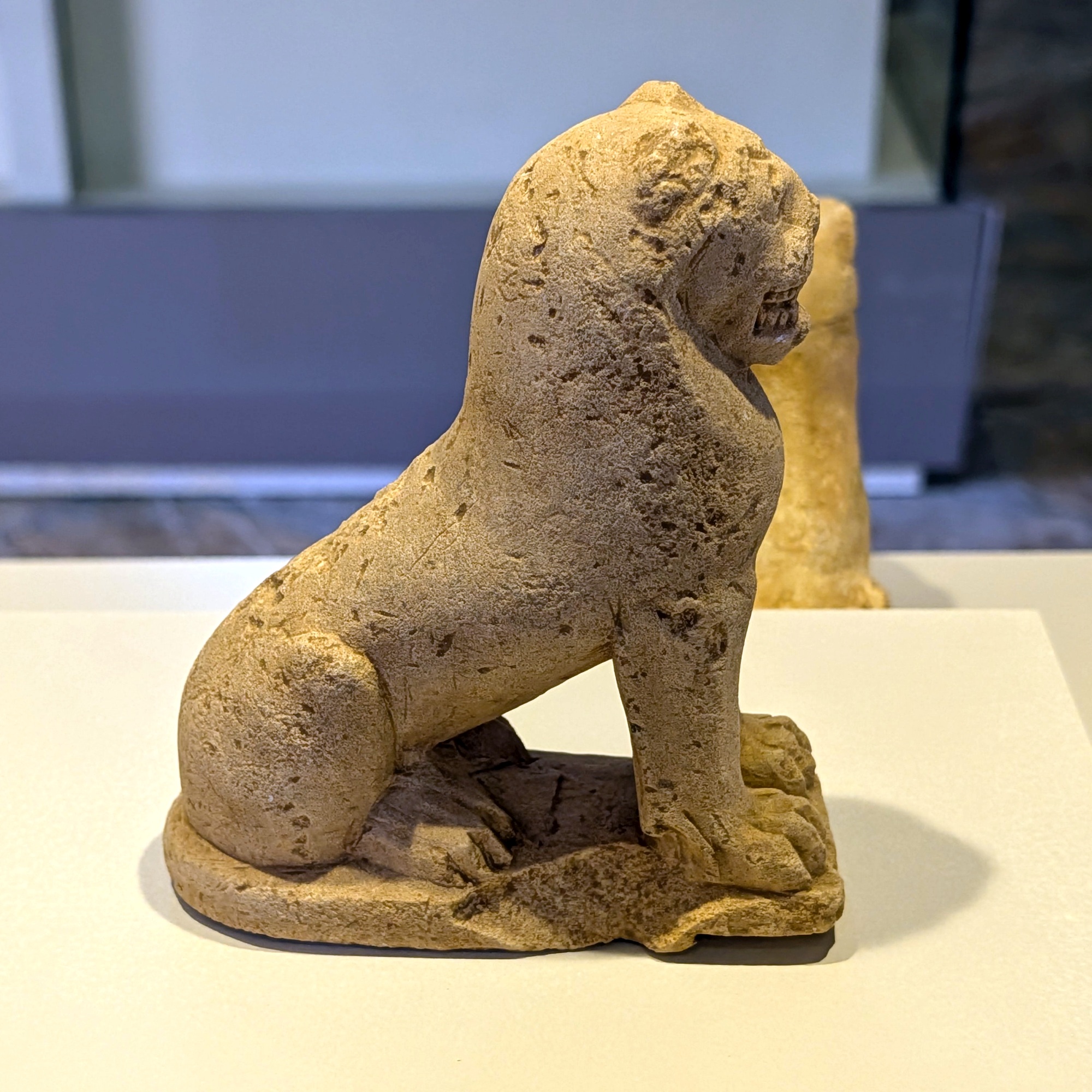
The sixth-century BCE lion statuettes from Emecik are carved from limestone and depict the animals seated on their hind legs atop platforms. Their tails curl backwards, while their claws are prominently rendered. The open mouths, exposed teeth, and protruding tongues give the figures a strikingly fierce appearance.
Scientific analysis has added an especially interesting dimension to the study of these objects. In their 2021 article, "Provenance Study of Votive Figurines from the Sanctuary of Apollon in Emecik", Üftade Muşkara, Sezgin Bakırdere, Numan Tuna, and Osman Yavuz Ataman examined 85 limestone figurines from the sanctuary using chemical and geological methods. The results distinguished two groups: one made from locally sourced limestone from the Datça Peninsula, and another whose material closely matches limestone from the Pakhna Formation in Cyprus. The findings indicate that the figurines were not all imported from elsewhere. Alongside objects made from Cypriot stone, some were produced locally, suggesting that sculptors or workshops operating in the region participated in a broader network of artistic exchange. This is an important contribution to understanding the movement of craftsmen, materials, and artistic ideas in the eastern Mediterranean during the Archaic period.
The terracotta figurines and other baked-clay objects from the sanctuary provide further evidence of its votive character. The excavations also recovered a wide range of pottery, including decorated vessels and objects of both local and foreign origin. Together, these finds demonstrate that the sanctuary was not an isolated place of worship, but a centre connected with wider patterns of religious activity, exchange, and interaction.
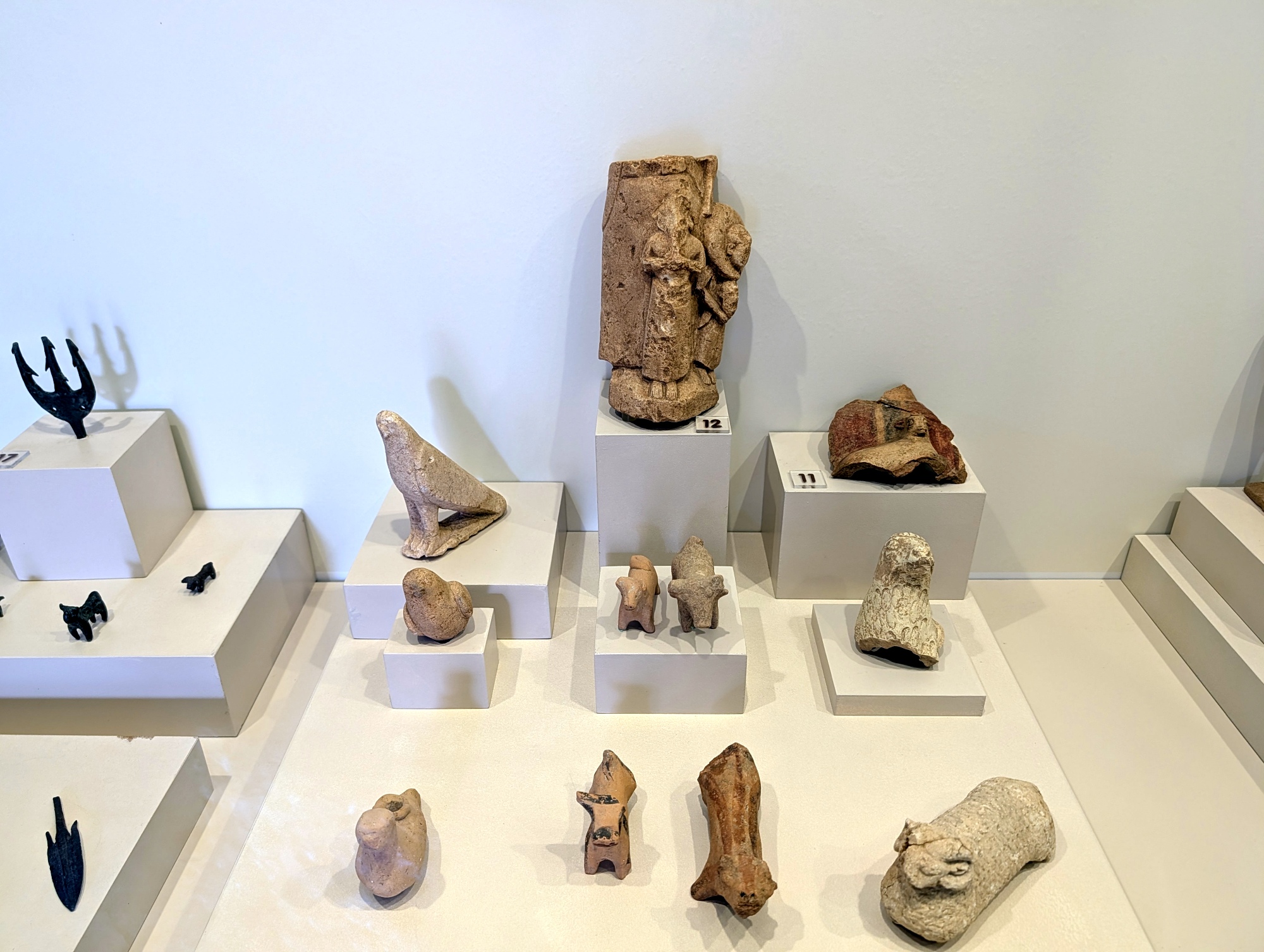
The Burgaz–Emecik Hall is therefore particularly valuable for visitors interested in the Archaic period. Its small-scale limestone sculptures and terracotta figures offer a more intimate view of ancient religious life than the monumental marble works displayed in the Knidos Hall. At the same time, their different materials and artistic influences provide tangible evidence of the connections linking the Knidian Peninsula with Cyprus and the wider eastern Mediterranean.
Marmaris and Around Hall
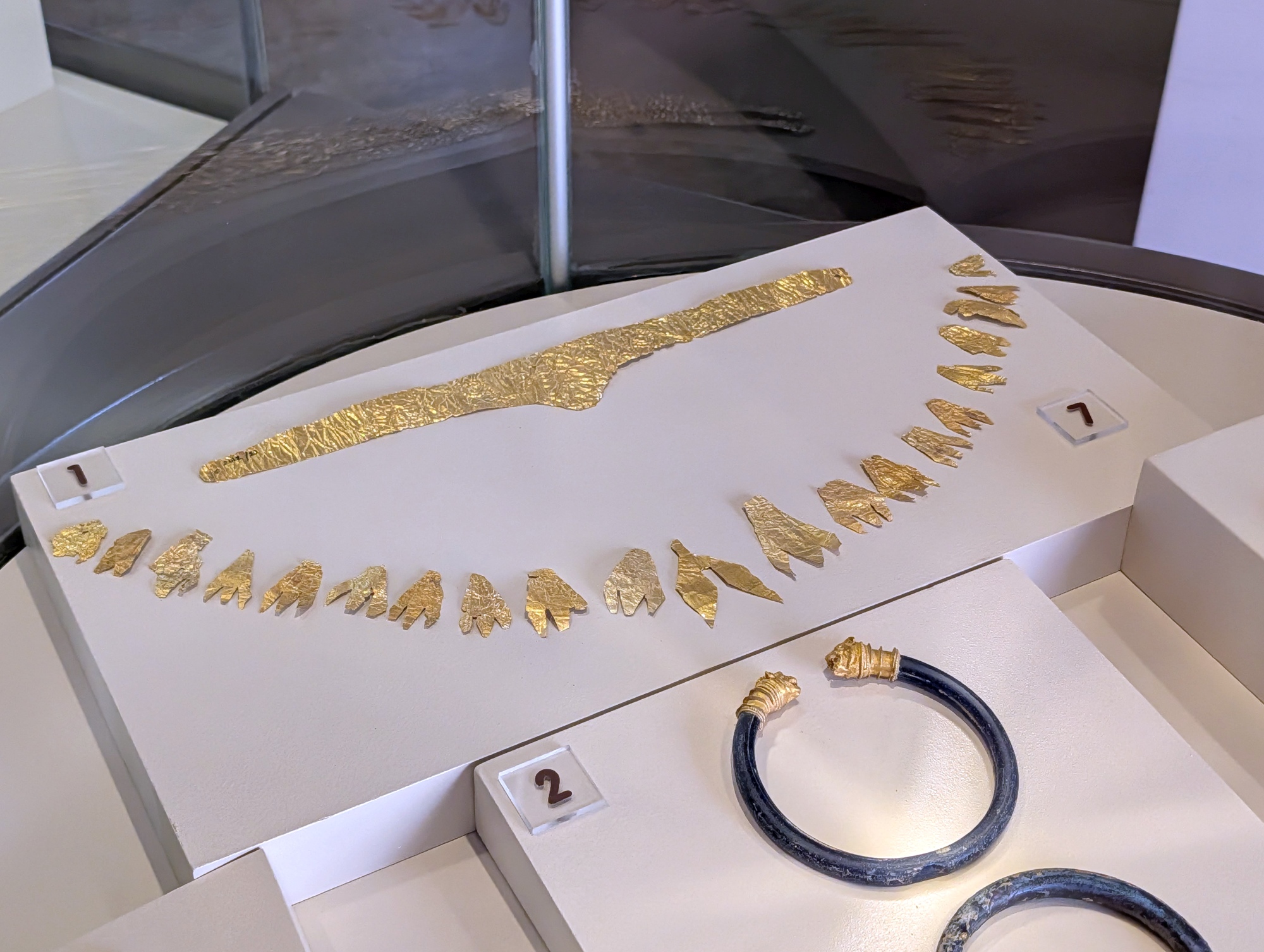
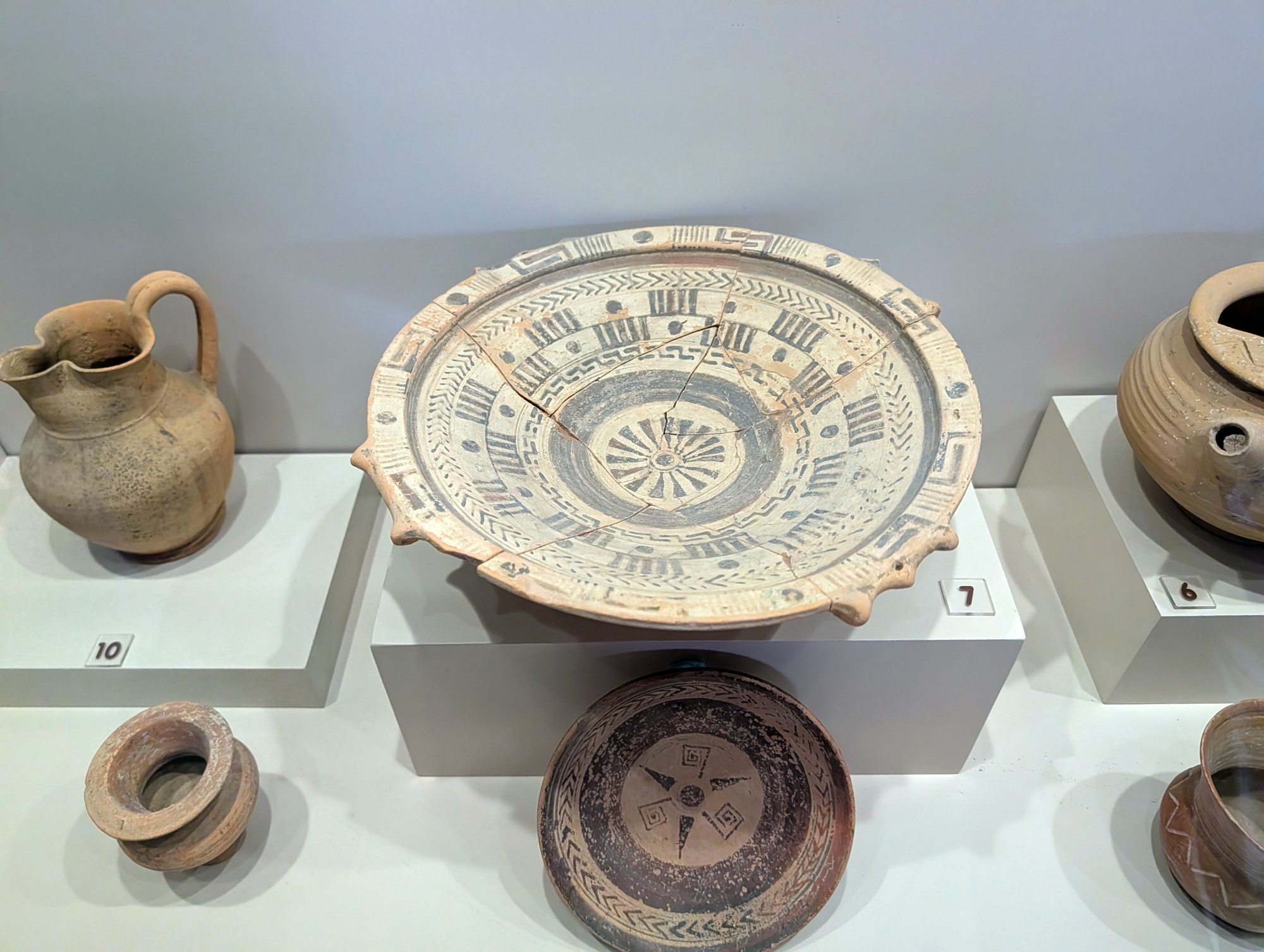
The third exhibition room, known as the Marmaris and Around Hall, occupies the south-eastern tower, at the point where the eastern and southern sides of the castle meet. Its collection brings together objects originating from Marmaris and the surrounding area, acquired by the museum through purchase, recovery, and donation. Among the exhibits are gold artefacts, coins, jewellery and other ornaments, figurines, glass objects, and vessels used in everyday life. Together, they offer a glimpse into the material culture of the ancient communities that once inhabited this part of Caria.
The collection also reflects the rich archaeological landscape surrounding Marmaris. The region was home to numerous ancient settlements, including Physkos, the predecessor of modern Marmaris, as well as Amos, Kastabos, Hydas, Erine, Tymnos, Bybassos, and Phoenix. Their remains, scattered across the coastline and hinterland, testify to the long history of habitation in this area and its connections with the wider Aegean world. Objects displayed in the hall provide a small but varied introduction to the communities that lived in these settlements, their craftsmanship, trade, and everyday activities.
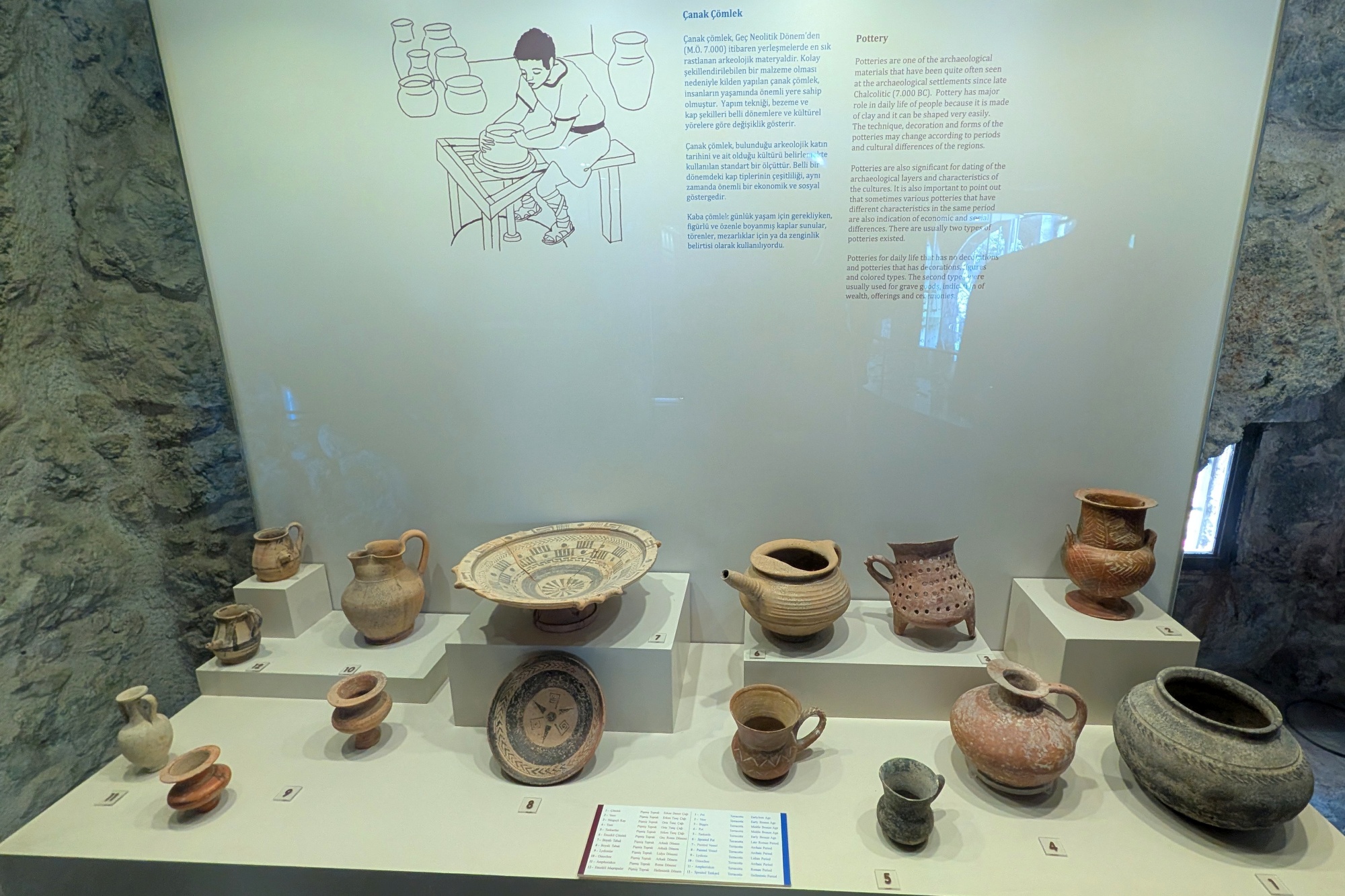
Two particularly interesting parts of the collection are devoted to precious objects and coinage. The gold exhibits and personal ornaments illustrate the range of decorative items produced, acquired, and worn in antiquity. The coins, meanwhile, represent a much longer historical span, with examples from the Persian, Roman, Eastern Roman (Byzantine), Seljuk, and Ottoman periods. Their succession reflects the changing political powers that held sway over the region and provides a tangible record of its history from antiquity into the medieval and Ottoman eras.
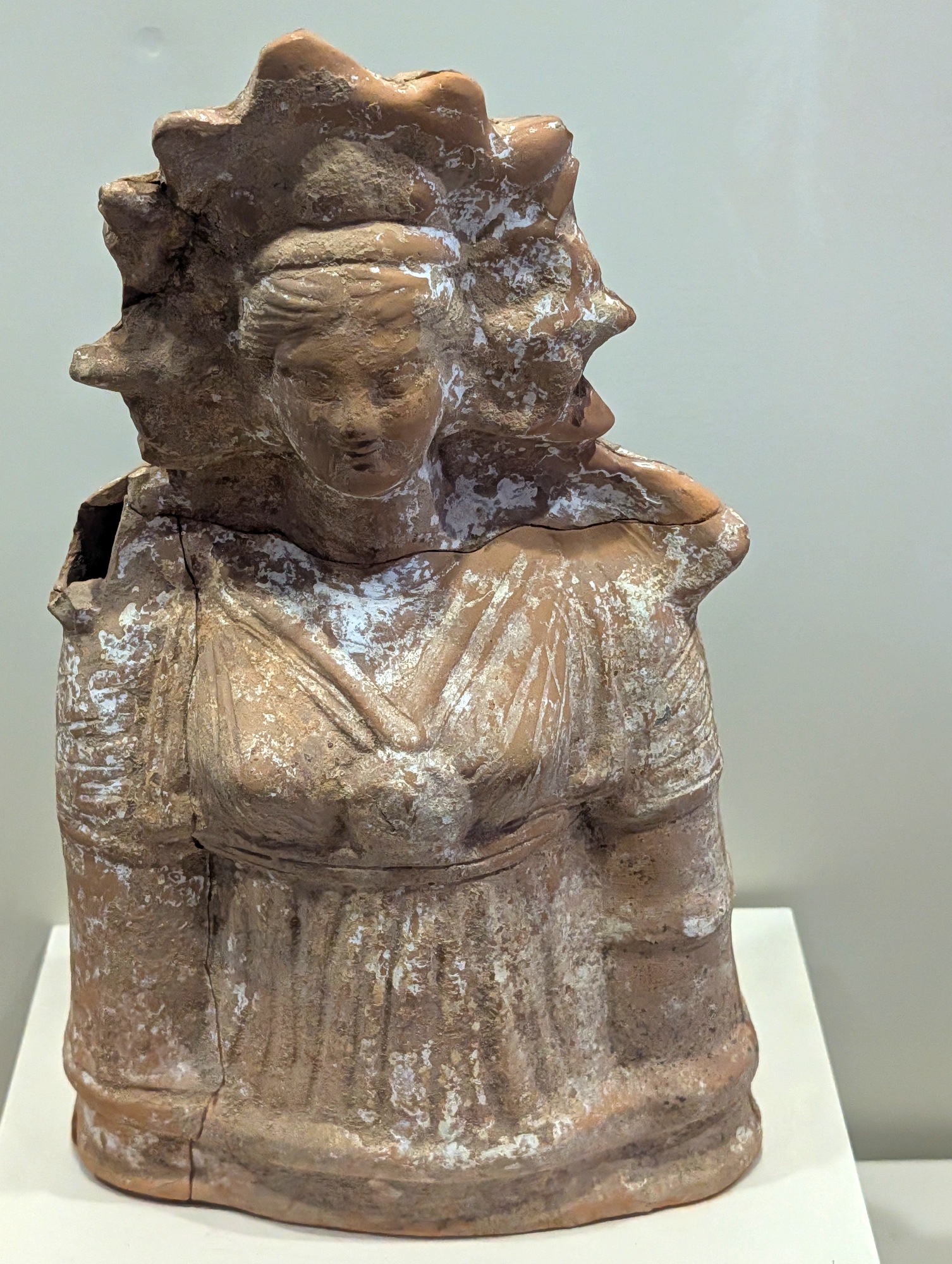
The variety of objects on display makes this hall an important complement to the collections from Knidos and Burgaz-Emecik. Rather than focusing on a single archaeological site or a particular period, it presents a broader picture of Marmaris and its surroundings, bringing together evidence of their ancient settlements, artistic traditions, economic activity, and successive historical influences.
Hall of Stone Artefacts
The fourth exhibition room, known as the Hall of Stone Artefacts, is devoted to objects carved from stone, particularly those associated with funerary practices and ancient architecture. Its displays include gravestones, osthoteks (containers used for the burial of cremated remains and bones), architectural friezes, and sculpted heads. These objects provide insight into the funerary customs, artistic traditions, and religious architecture of the ancient communities that inhabited the Marmaris region. The collection also includes an unusual terracotta oil lamp distinguished by its nine projecting nozzles, illustrating the development and variety of ancient lighting devices.
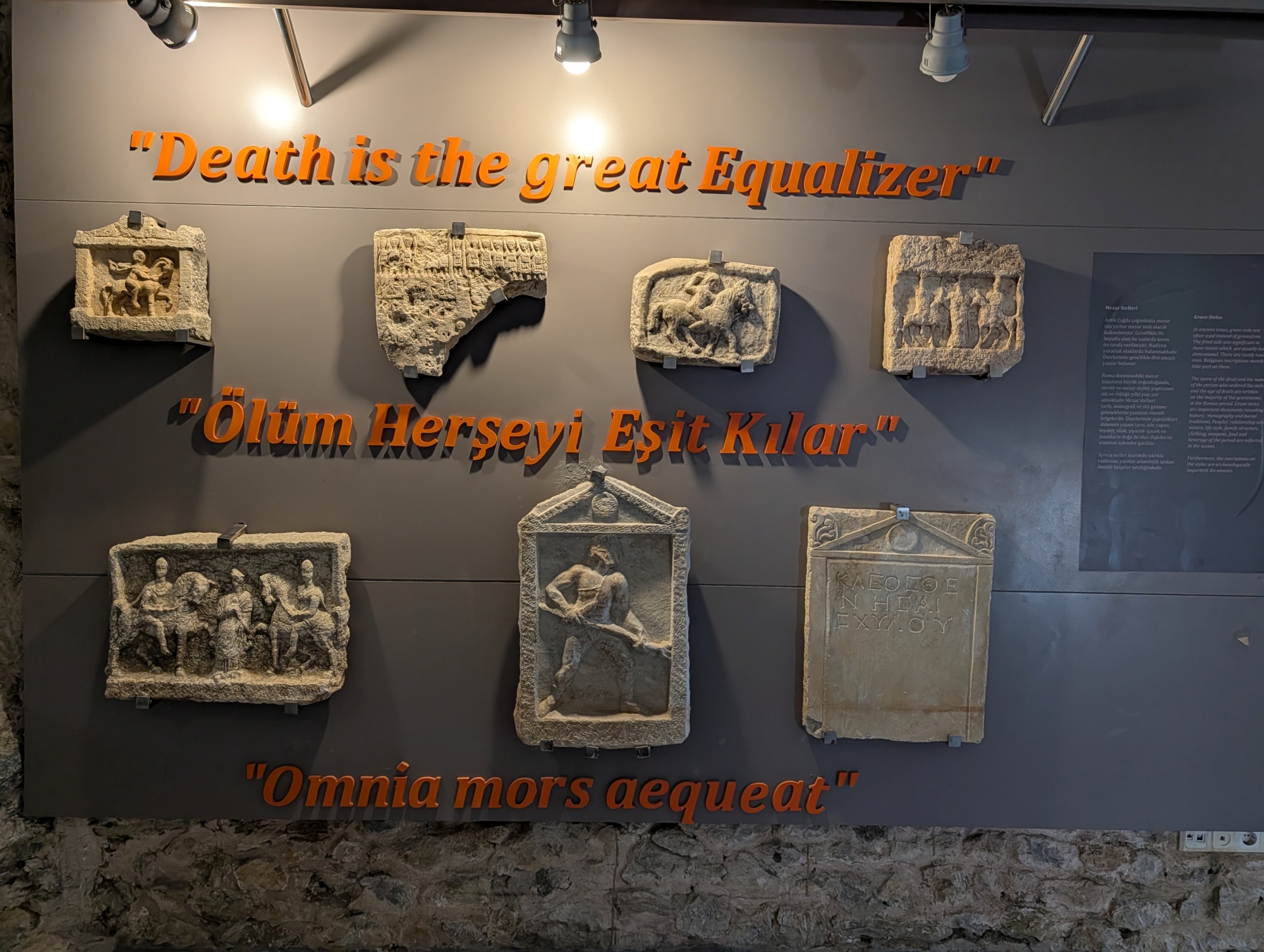
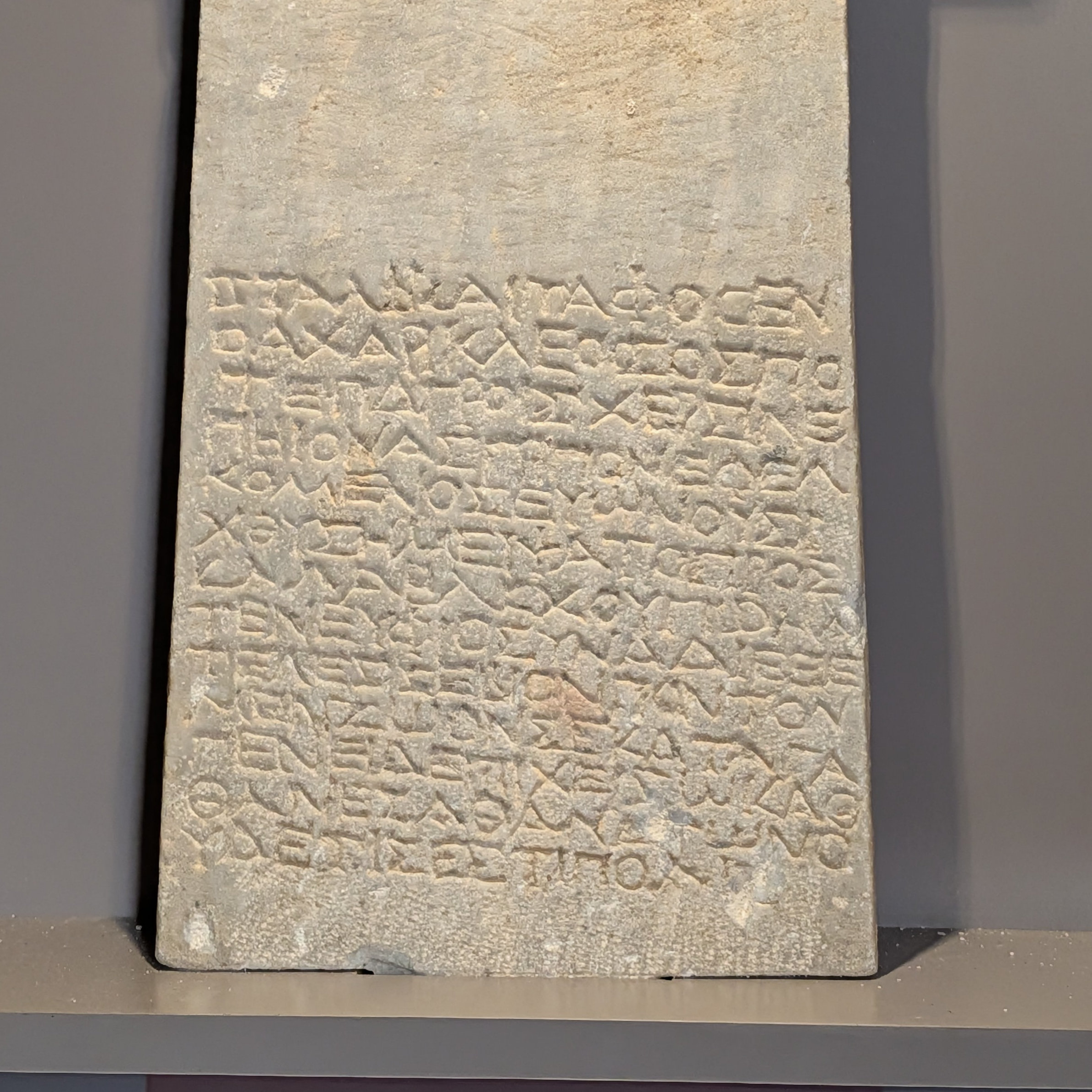
One of the most intriguing exhibits is the Stele of Datça, a marble funerary monument commemorating a fisherman named Charikles. Discovered in Datça and now preserved in Marmaris Museum, the stele measures approximately 76 cm in height, 34 cm in width, and 10 cm in thickness. Its inscription, written in Greek, dates to the late second or third century CE. Unlike many conventional epitaphs, which simply record a person's name and family connections, this text offers a glimpse into the deceased's occupation and everyday life through a short poetic composition.
The inscription recalls how Charikles used to haul his fishing net ashore with his hands and exchange inexpensive fish for wine, described poetically as the fine drink of Bacchus, the god of wine. It adds that he spent his life in happiness. The final lines address the contrast between his working life at sea and his death on land: the sea had once brought him safely home, but ultimately he died ashore, where, as the inscription observes, there is no city of immortals. The text combines a personal memorial with a reflection on human mortality, using the imagery of fishing and the sea to give the deceased a distinctive identity.
The stele is particularly valuable because it preserves evidence of an occupation that rarely appears in ancient funerary inscriptions. In his study "Working and Dying in the Harbour Cities of Roman Asia Minor: An Appraisal of the Funerary Inscriptions", published in 2020, Marcello Spanu discusses Charikles among the very few fishermen whose profession is explicitly recorded on funerary monuments from Asia Minor. He notes that only two such epitaphs were known in the region at the time of his study: the one from Datça and another from Elaiussa-Sebaste in Cilicia. The inscription therefore provides an unusually direct testimony to fishing as a source of livelihood in the coastal communities of Roman Asia Minor.
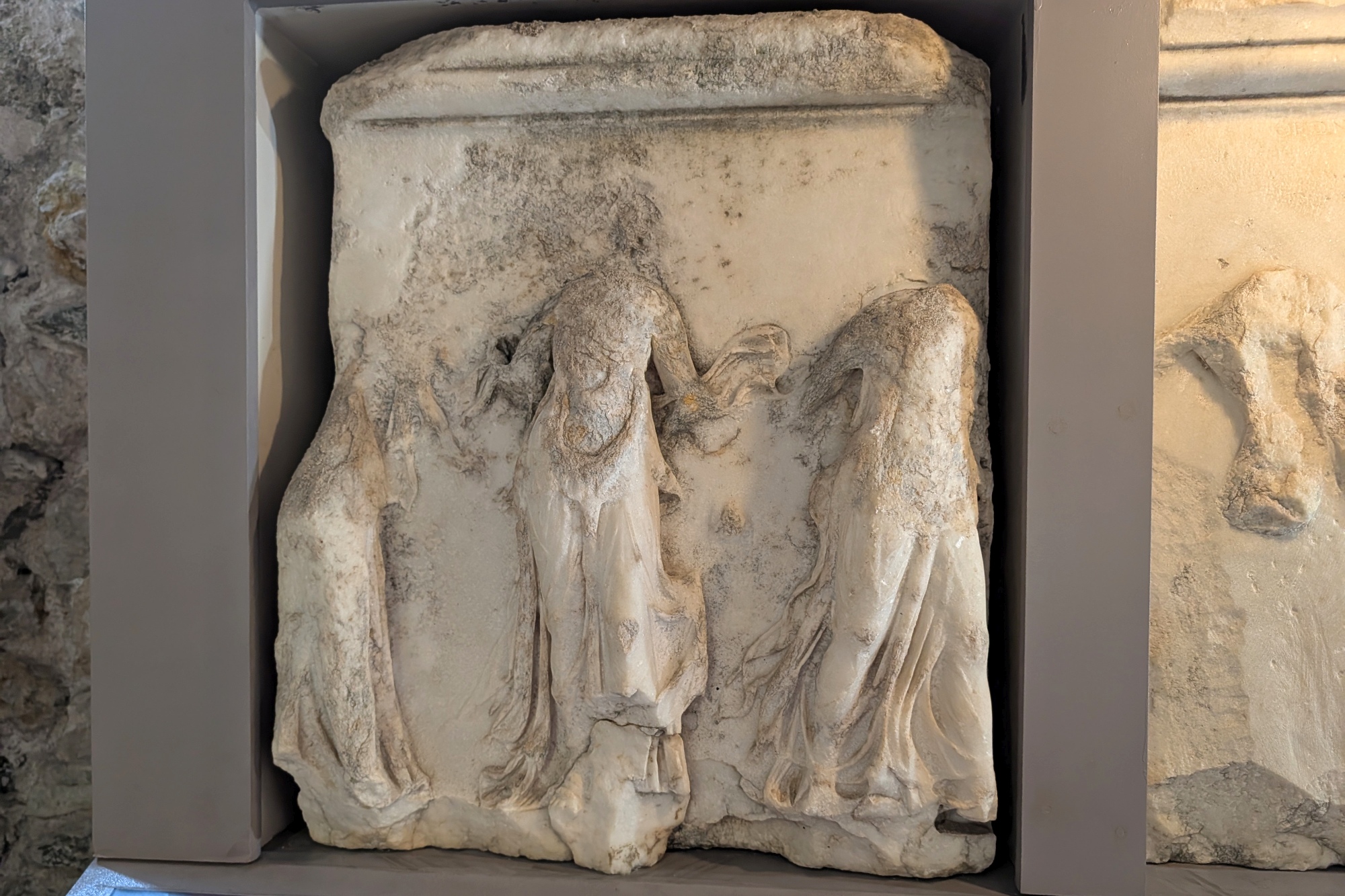
Another important exhibit in this hall is the Frieze of the Altar of Apollo from Knidos, an example of monumental Hellenistic sculpture dating to the early second century BCE. The marble reliefs originally formed part of an altar dedicated to Apollo at ancient Knidos. They are decorated with figures of dancing women, generally interpreted as nymphs, whose flowing garments and lively movements create a sense of rhythm across the sculpted surface. The frieze is attributed to Theon of Antioch and Zenotodos of Knidos, although the precise circumstances of their collaboration are not fully established. The reliefs are particularly valuable for illustrating the artistic achievements of Knidos during the Hellenistic period and the elaborate sculptural decoration used in religious architecture. Their presence in Marmaris Museum also reflects the close cultural and historical connections between Marmaris and the ancient settlements of the Datça Peninsula.
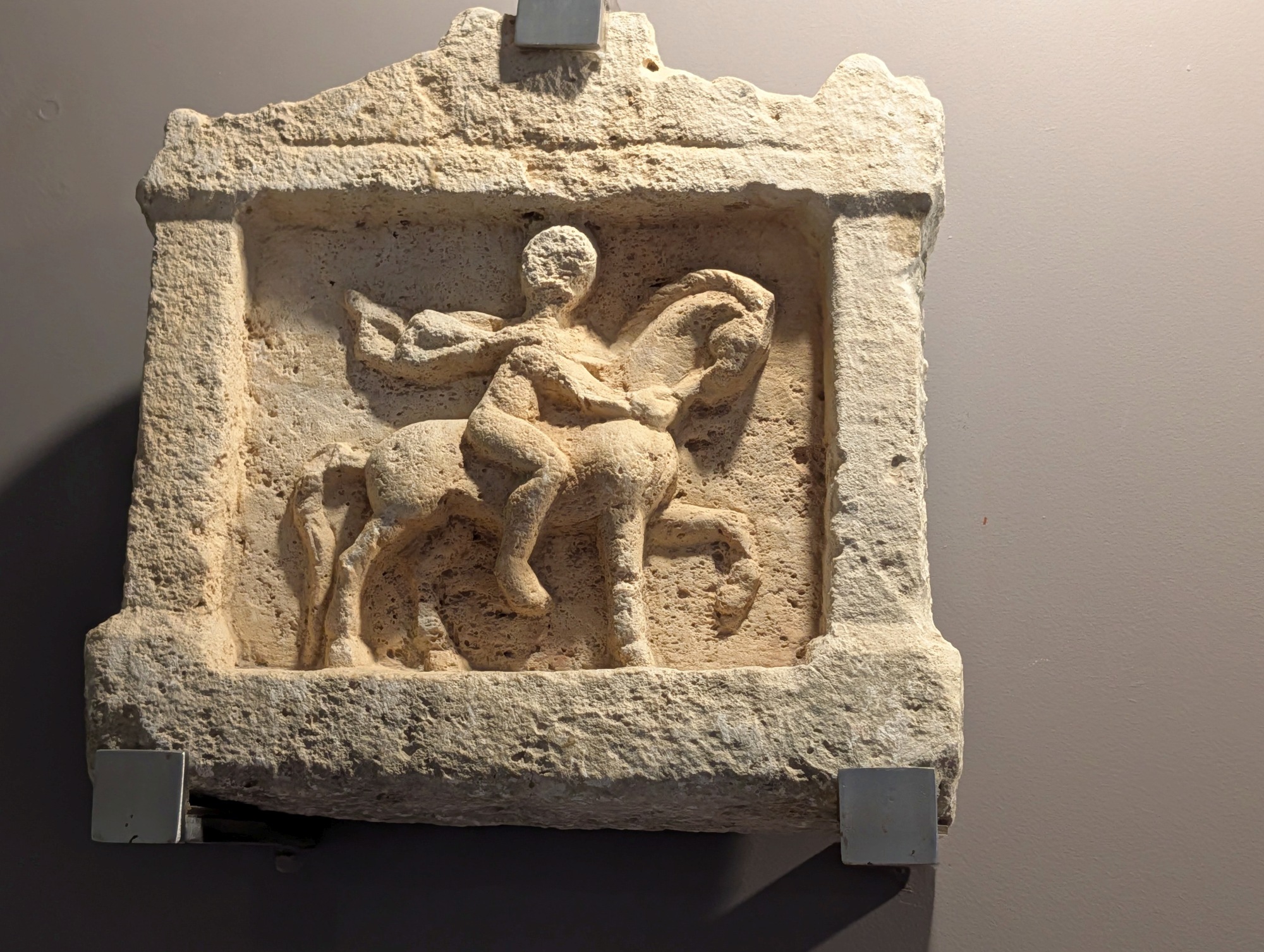
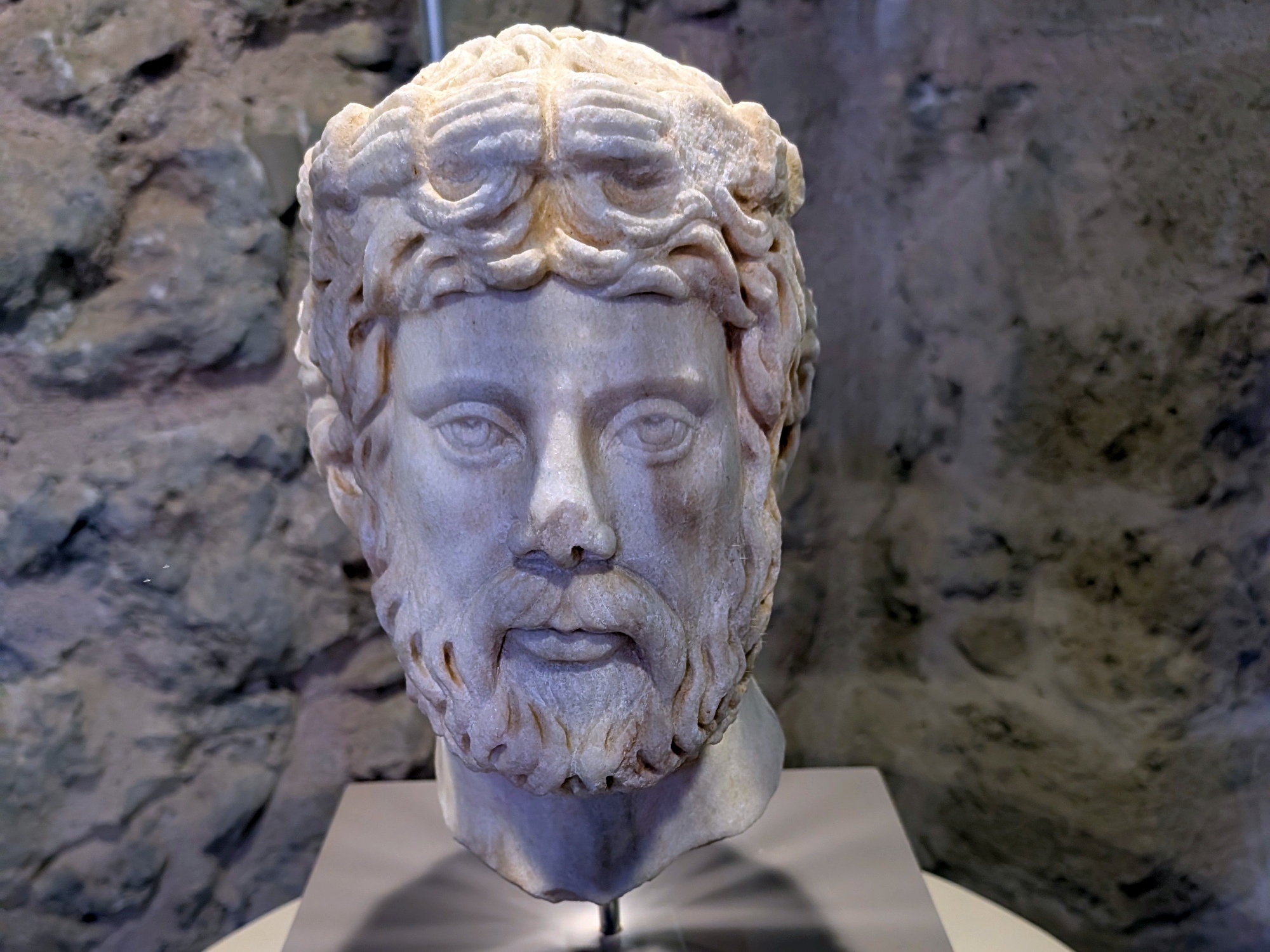
Beyond the Charikles stele and the Frieze of the Altar of Apollo, the other exhibits in this hall help reconstruct the visual and architectural environment of the ancient settlements. The gravestones and ossuaries illustrate different ways of commemorating and burying the dead, while the friezes preserve elements of the decorative programmes once used on temples and other monumental buildings. The sculpted heads, meanwhile, offer examples of ancient portraiture and the representation of human figures. Together, these objects make the hall a small collection of stone monuments through which visitors can explore both the public and private aspects of life in ancient Caria.
The Woman from the Sea Hall
The most striking exhibit in the fifth exhibition hall is a monumental bronze female statue known as The Woman from the Sea (Denizden Gelen Kadın). Discovered by fishermen in Hisarönü Bay on 17 November 2020, the sculpture became entangled in the nets of the trawler Azimler. The crew reported the find to the Coast Guard, and the statue was transferred to Marmaris Museum on the same day. It was already missing its head and arms when recovered, but much of the draped body had survived. Measuring approximately 180 cm in height and weighing around 400 kg, it is a hollow-cast bronze figure, produced using a technique that made it possible to create monumental sculptures without casting them as solid blocks of metal.
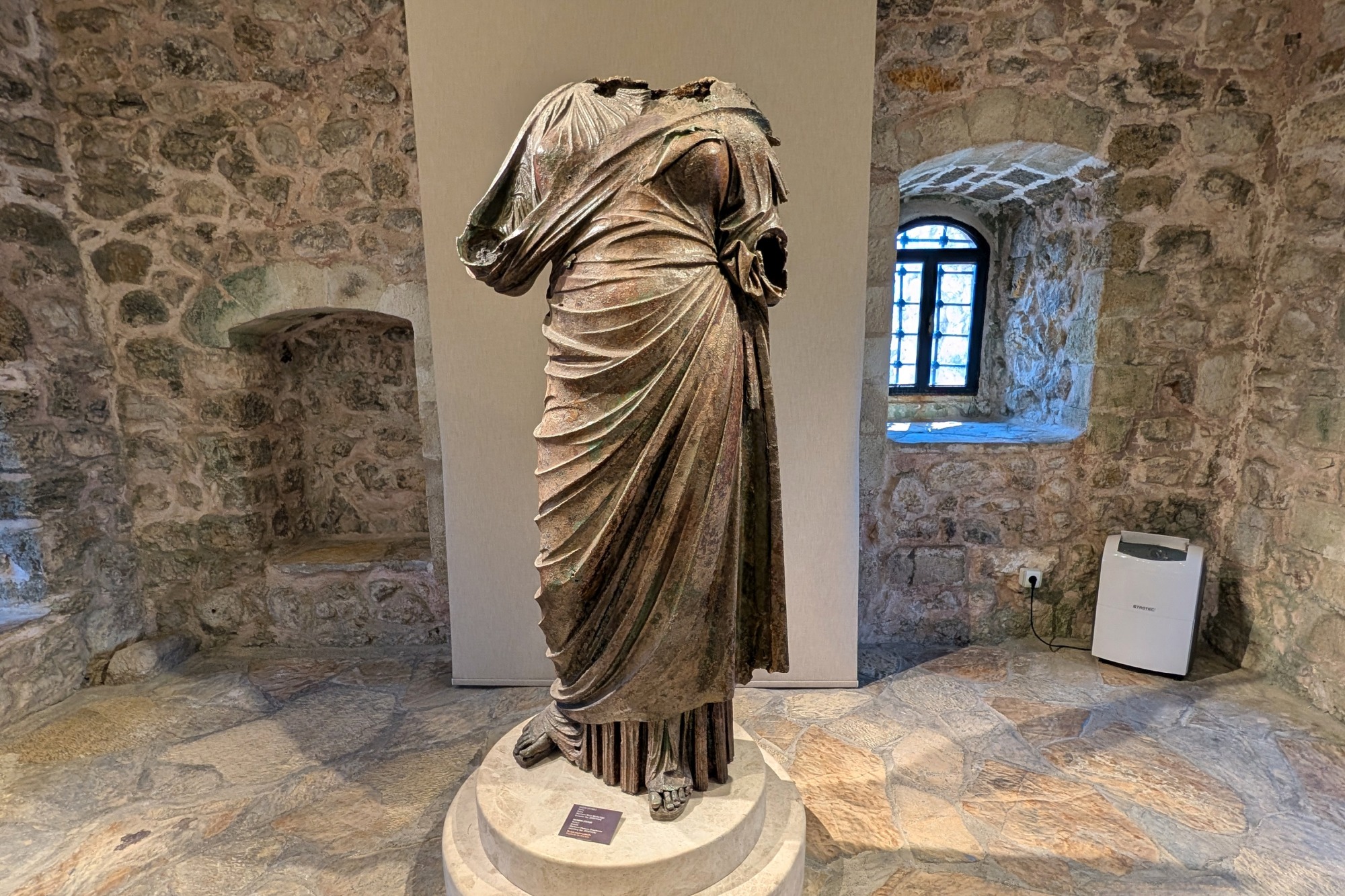
The woman is depicted wearing a long chiton beneath a himation, a mantle arranged around the body. The sculptor paid particular attention to the treatment of the drapery: deep, carefully modelled folds sweep diagonally across the torso, gather around the waist, and fall in long, flowing lines towards the feet. The arrangement creates a strong impression of movement while emphasising the volume and proportions of the figure. The sculpture displays stylistic characteristics associated with Hellenistic art and its date is generally placed around the second century BCE. The missing head and arms make it difficult to establish the woman's identity or determine whether she represented a deity, an imperial figure, or another individual.
Following its recovery, the statue underwent initial conservation treatment, including desalination to remove salt deposits, before being transferred to the Izmir Regional Laboratory for Restoration and Conservation. There, specialists carried out further work to stabilise and preserve the bronze. After the completion of these procedures, the sculpture returned to Marmaris and was prepared for public display. It was unveiled on 4 July 2025 as the centrepiece of an exhibition entitled The Woman from the Sea, organised as part of the Ministry of Culture and Tourism's nationwide programme 102 Exhibitions in 102 Years: A Journey Through Anatolia's Cultural Heritage in the Light of the Republic.
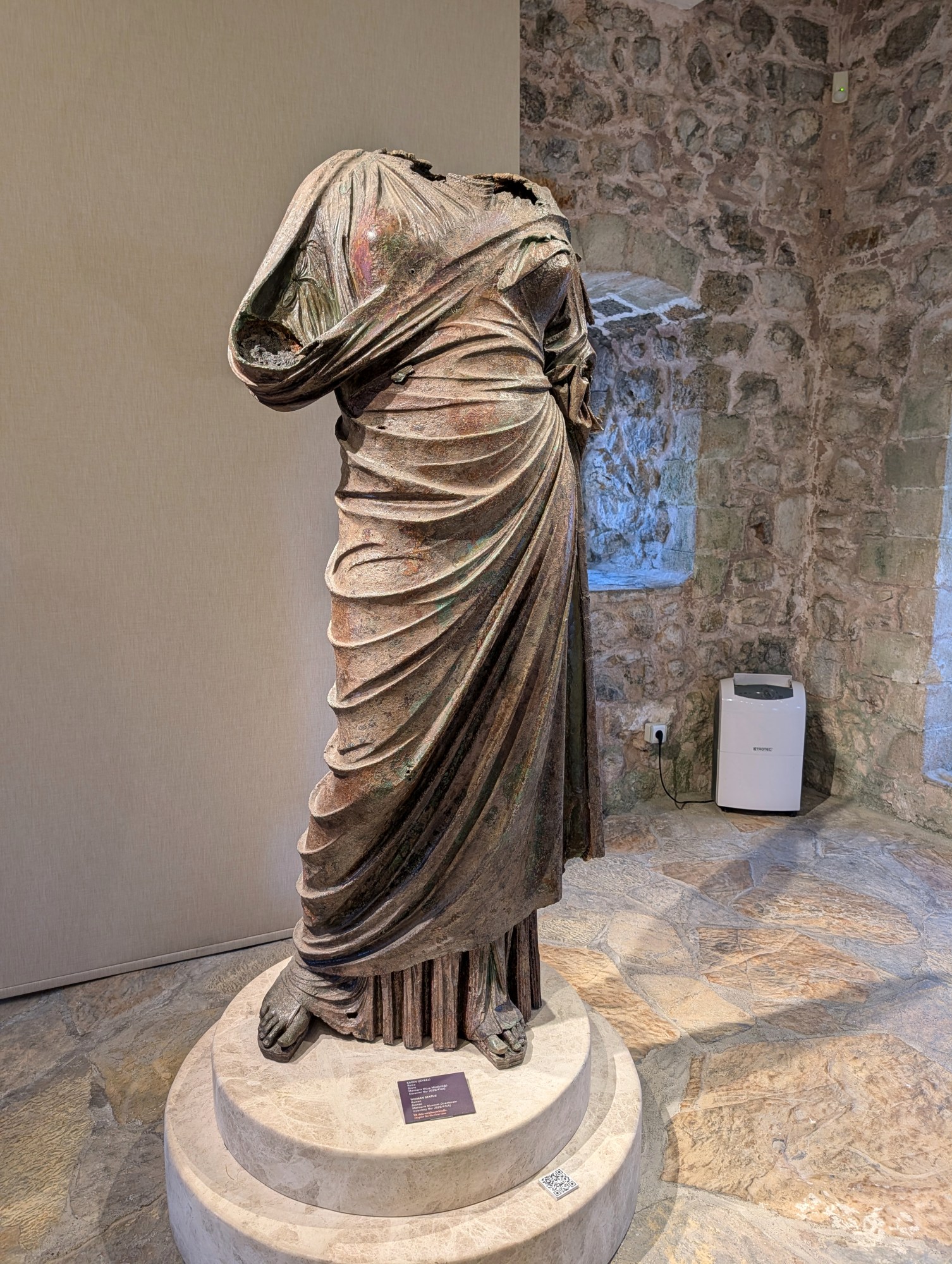
The exhibition occupies the former commander's quarters, a room situated at the highest point of Marmaris Castle. This space, once used for the accommodation and administration of the fortress commander, was adapted to serve as the museum's fifth exhibition hall. The bronze statue is displayed as the principal attraction, while the surrounding collection explores the representation of women and aspects of their lives in antiquity. The exhibits come from archaeological sites in the Marmaris region and encompass different historical periods.
Among the accompanying objects are personal ornaments and items associated with dress and grooming, including jewellery, mirrors, hairpins, dress pins, and brooches. Perfume containers and other small vessels provide further insight into ancient cosmetic practices and the use of scented oils and fragrances. Portrait heads and other sculptural representations offer a different perspective, illustrating how women were portrayed in the art of the ancient world. Taken together, these objects show the importance of personal appearance, adornment, and grooming, while also reflecting the variety of objects used in everyday and ceremonial contexts.
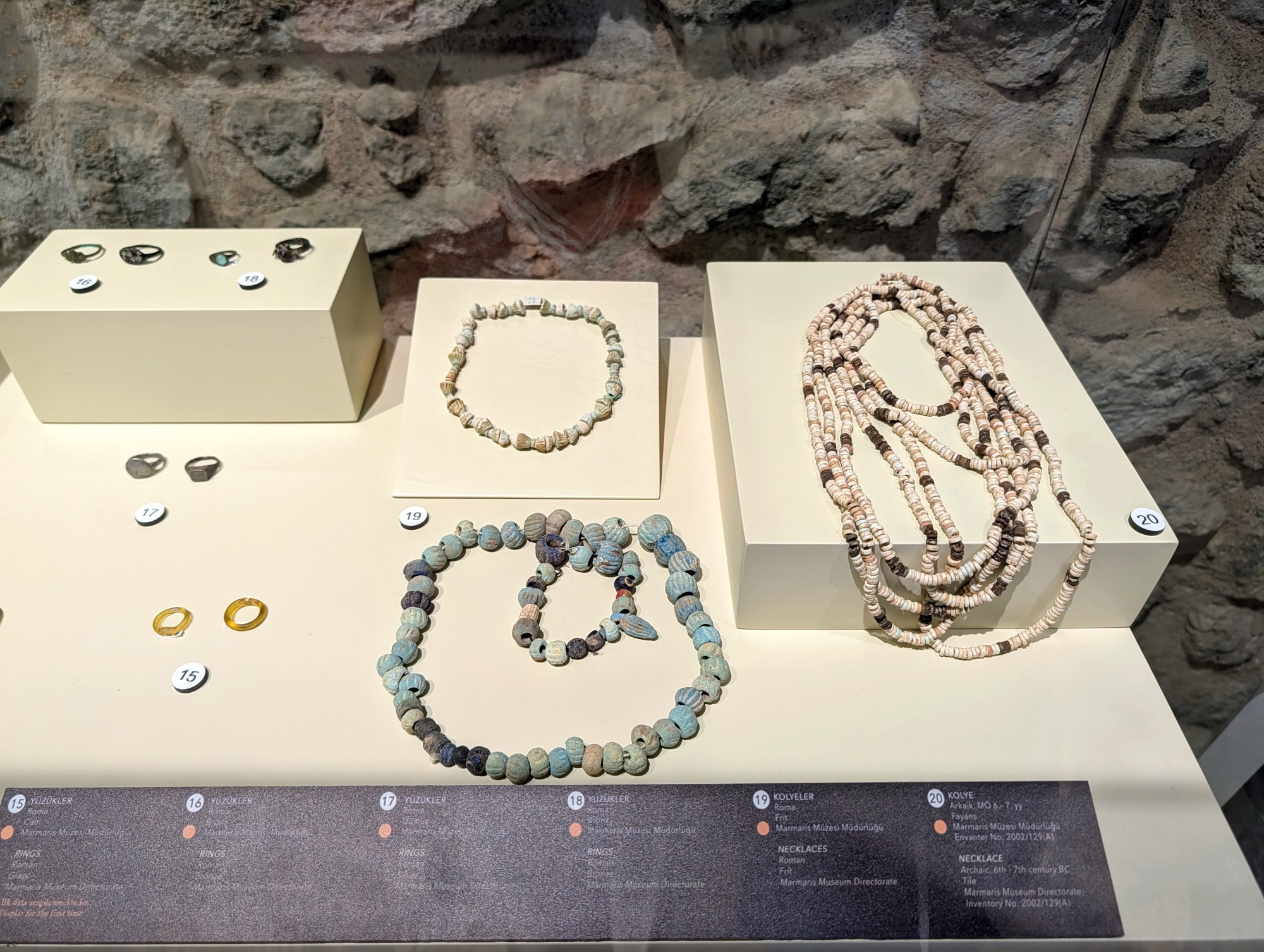
The exhibition thus places the monumental bronze figure within a broader presentation of women's lives and representation in antiquity. The contrast between the imposing, carefully modelled statue and the smaller personal objects surrounding it is particularly interesting: one reveals the artistic ambitions of monumental sculpture, while the others offer more intimate glimpses into everyday customs and personal possessions. The hall also provides an opportunity to see the results of the conservation of an important archaeological find, from its accidental recovery at sea to its return to public view in the museum.
Bibliography
- Akbulut, Osman Nuri. 2008. Evliya Çelebi'ye Göre Güneybatı Anadolu (Aydın, Denizli, Muğla). Master's thesis. This study is particularly useful for the account of Evliya Çelebi's visit to Marmaris in 1671 and his description of the castle, its garrison, harbour, and settlement. The relevant passage is in the section on Marmaris, pp. 164–166.
- Atıcı, Nadire. 2019. Settlement Pattern of Palaia Knidos (Burgaz) through 6th–4th Centuries B.C. Doctoral research, Middle East Technical University. Useful for understanding the earlier settlement at Burgaz, its urban development, and its relationship with the later city of Knidos.
- Demiral, Emirhan Talha, and Hüseyin Onur Çetinkaya. 2024. "Marmaris: Tarih ve Kültürün Buluştuğu Nokta." Sahil Güvenlik Dergisi, no. 54 (October): 33–35. An illustrated overview of Marmaris's historical monuments, including the castle, its restoration, architectural arrangement, and conversion into a museum.
- Heslop, Michael. 2017. "Hospitaller Statecraft in the Aegean: Island Polity and Mainland Power?" In The Military Orders, Volume 6.1: Culture and Conflict in the Mediterranean World, edited by Jochen Schenk and Mike Carr, 123–136. London: Routledge. Relevant to the Hospitaller presence in the Aegean and the relationship between Rhodes and the neighbouring mainland territories. It is particularly useful for distinguishing documented Hospitaller possessions from territories over which their influence or ambitions remain uncertain.
- Muşkara, Üftade, Sezgin Bakırdere, Numan Tuna, and Osman Yavuz Ataman. 2021. "Provenance Study of Votive Figurines from the Sanctuary of Apollon in Emecik." Cedrus 9: 109–129. An important scientific study of limestone votive figurines from the sanctuary of Apollo at Emecik. Its analysis of the stone's geological origin provides evidence for both local production and the use of material originating in Cyprus.
- Spanu, Marcello. 2020. "Working and Dying in the Harbour Cities of Roman Asia Minor: An Appraisal of the Funerary Inscriptions." In Reflections: Harbour City Deathscapes in Roman Italy and Beyond, edited by Niels Bargfeldt and Jane Hjarl Petersen, 169–192. Rome: Edizioni Quasar. Particularly relevant to the funerary stele of Charikles, the fisherman commemorated in the Greek inscription from Datça. The study places the monument within the wider evidence for occupations and working life recorded in funerary inscriptions from Asia Minor.
- Tuna, Numan, and İlham Sakarya. 2022. Emecik'teki Apollon Kutsal Alanı Arkeolojik Araştırmalar (1998–2006). A comprehensive publication of the archaeological investigations at the sanctuary of Apollo near Emecik. It discusses the site's stratigraphy, architecture, archaeological finds, and conservation proposals. Particularly valuable for the museum's Emecik-Burgaz collection and the limestone votive figures.
- Tütüncü, Mehmet. 2016. "Marmaris'te Osmanlı Eserleri Üzerine Bazı Notlar / Notes on Some Ottoman Monuments in Marmaris." Düşünce ve Tarih, October: 24–31. One of the most directly relevant studies of the Ottoman monuments in Marmaris. It examines the castle and its entrance inscription, as well as other Ottoman buildings and inscriptions in the town. Particularly important for the discussion of the weathered inscription above the castle entrance.
- Tuna, Numan, Nadire Atıcı, İlham Sakarya, and colleagues. Publications on the archaeological excavations at Burgaz (Palaia Knidos), particularly the annual excavation reports and studies of the settlement. These include reports published in Kazı Sonuçları Toplantısı and the research on locating Old Knidos. They provide the archaeological background for the Burgaz material displayed in the museum.
Visitor tips:
Marmaris Castle and Archaeology Museum is well worth visiting not only for its archaeological collections but also for the opportunity to explore the historic fortress itself. Allow approximately one to one and a half hours to see the exhibition halls, courtyard, and upper defensive level at a leisurely pace. The staircases leading to the ramparts offer particularly attractive views over the old town, marina, and sheltered bay, making this part of the visit especially rewarding. The castle's uneven surfaces, cobbled passages, and steps call for comfortable footwear.
The museum is generally open daily, with current published hours of 08:30 to 17:30 and the ticket office closing at 17:00. Admission is charged, and the Museum Pass is accepted. Opening times and admission arrangements may change seasonally, so it is advisable to check the latest information before visiting. The visit can also be combined with a stroll through the surrounding historic quarter of Kaleiçi, where the Hafsa Sultan Caravanserai and traditional streets provide further insight into Marmaris's Ottoman heritage.
Getting there:
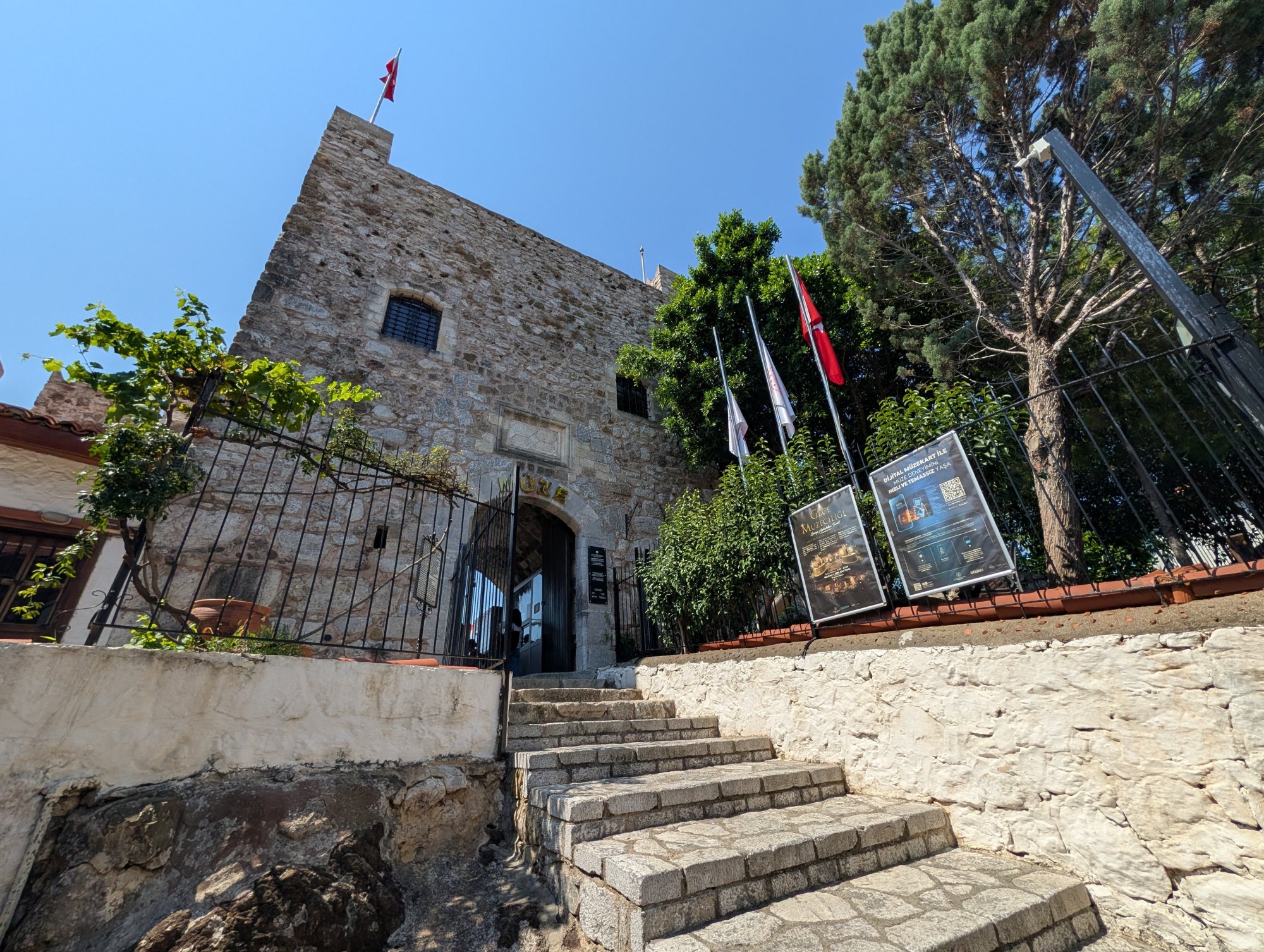
Marmaris Castle and Archaeology Museum is located in the historic Kaleiçi quarter, on a small peninsula rising above Marmaris harbour, behind the marina. It is easily reached on foot from the waterfront, Netsel Marina, and the Grand Bazaar. From the harbour promenade, follow the narrow streets and passages leading uphill through the old town towards the castle entrance. The final approach involves cobbled lanes, steps, and some steep sections.
The immediate castle quarter is largely pedestrianised, and vehicles cannot reach the entrance itself. Visitors arriving by car should leave their vehicles in one of the car parks in the town centre and continue on foot. The castle is also within walking distance of the main harbour and cruise-port area.
- Log in to post comments


