
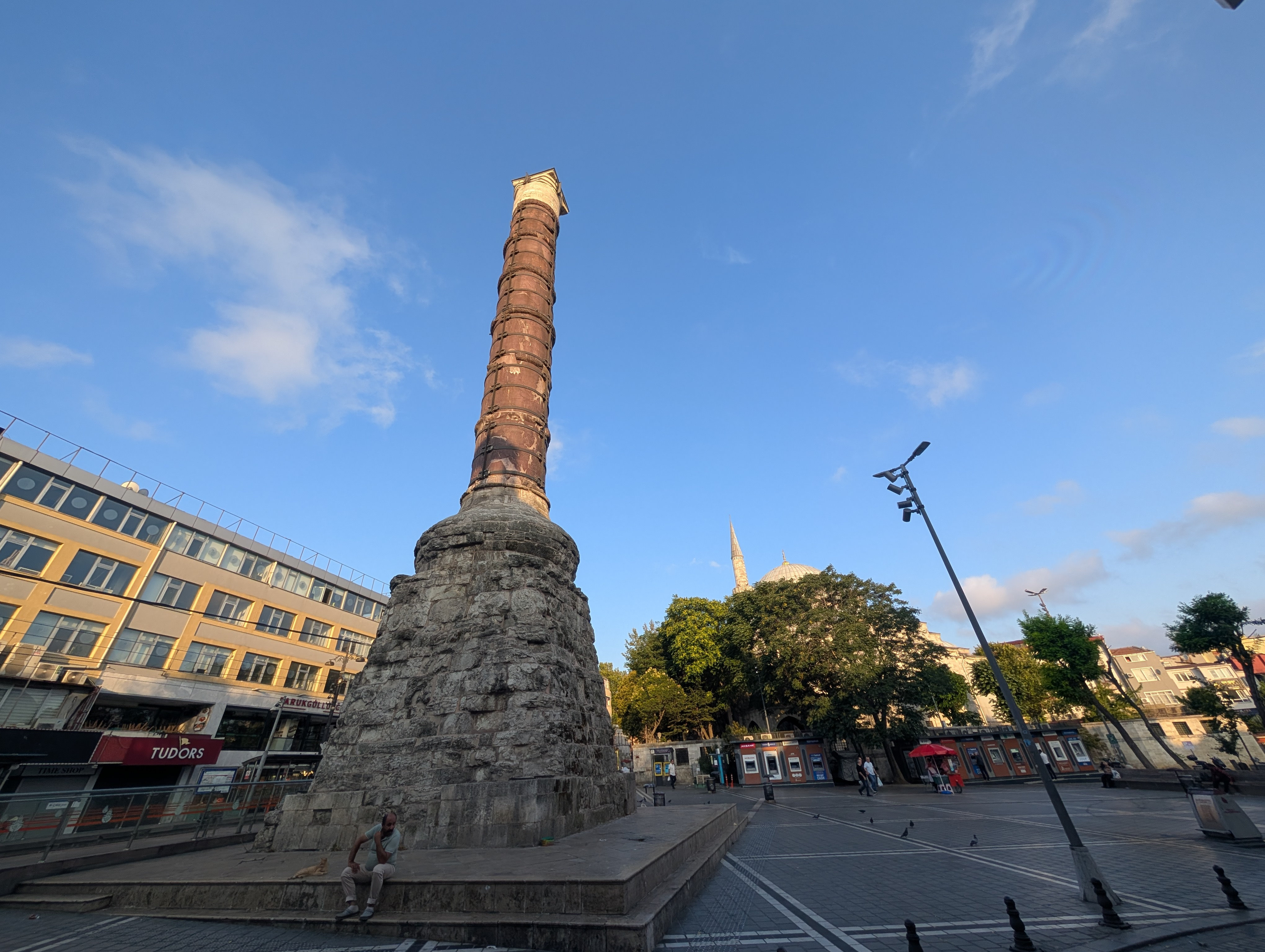
Description:
Long before Istanbul became a city of minarets and ferries, Emperor Constantine the Great envisioned a new imperial capital rising on the shores of the Bosporus. At the very centre of that grand project stood the Column of Constantine, known today as Çemberlitaş Sütunu. Erected around 328 CE and formally associated with the dedication of Constantinople in 330, the monument was designed as a bold statement of imperial power, standing in the middle of the Forum of Constantine along the city's main ceremonial avenue. Nearly seventeen centuries later, it remains one of the oldest surviving monuments from Constantine's city.
Originally, the column was a breathtaking sight. Built from massive drums of deep purple Egyptian porphyry, the most prestigious stone in the Roman world, the porphyry shaft rose to about 35 metres, while the entire monument, including its pedestal and crowning statue, may have approached 50 metres. At its summit stood a colossal bronze statue of Constantine gazing over his new capital. The column was not merely decorative; it was a powerful piece of imperial symbolism that linked Rome's first Christian emperor with the divine authority of the ancient world. The original Constantinian pedestal was far more elaborate than what survives today, decorated with sculptural reliefs that disappeared over the centuries.
The colossal bronze statue of Constantine would have been visible from many parts of the early city. Ancient and Byzantine sources describe the emperor wearing a seven-rayed solar crown, holding a spear in his right hand and an orb or globe in his left. Most modern scholars accept that the statue deliberately associated Constantine with the sun god Helios, and perhaps also Apollo, presenting him as a divinely favoured ruler rather than as a conventional Roman emperor. The figure was probably shown in the heroic nude style associated with classical divine and imperial imagery, echoing famous ancient colossi such as the Colossus of Rhodes.
What remains uncertain is the statue's exact appearance: no physical fragments survive, and modern reconstructions differ in details such as the pose, proportions, clothing, and even whether the globe was terrestrial or celestial. Likewise, while the Helios/Apollo interpretation is widely accepted, the precise symbolic message intended by Constantine continues to be debated by historians.
The survival of the Column of Constantine was never guaranteed. Already by the early 5th century, less than a century after its construction, the monument was showing signs of structural strain. Bronze reinforcements had to be installed by 416 to secure the enormous porphyry drums, and repeated urban fires scarred the column during the 5th and 6th centuries. Yet, the monument remained one of Constantinople's most recognizable landmarks, towering above the city's ceremonial heart as emperors, merchants, pilgrims, and foreign ambassadors passed beneath it. By the Middle Ages, legends grew around the monument, with Byzantine writers claiming that sacred relics — including objects associated with Christ and the True Cross — had been deposited within or beneath it to safeguard the city.
A dramatic turning point came in 1106 when a violent storm swept through Constantinople. The gale brought down the colossal statue that crowned the monument, along with three of its upper drums. The disaster permanently altered the appearance of the monument. Rather than restoring the ancient pagan-inspired statue, Emperor Manuel I Komnenos chose to give the column a distinctly Christian identity. He repaired the damaged structure, crowned it with a large cross, and added an inscription proclaiming that he had renewed this venerable work of art after the ravages of time. The transformation symbolized how Constantinople had evolved from Constantine's late Roman capital into the leading city of the Byzantine Christian world.
The column endured further hardships during the turbulent final centuries of Byzantium. When the armies of the Fourth Crusade captured and sacked Constantinople in 1204, many of the monument's valuable bronze fittings were stripped away, including the bronze wreaths that once covered the joints between the porphyry drums. Even so, the cross erected by Manuel remained in place for more than two centuries. Only after the Ottoman conquest of Constantinople in 1453 was it removed, marking yet another chapter in the monument's long life. By then, the Column of Constantine had already witnessed the rise and fall of empires, repeatedly adapting to the changing religious and political identities of the city while remaining one of its most enduring landmarks.
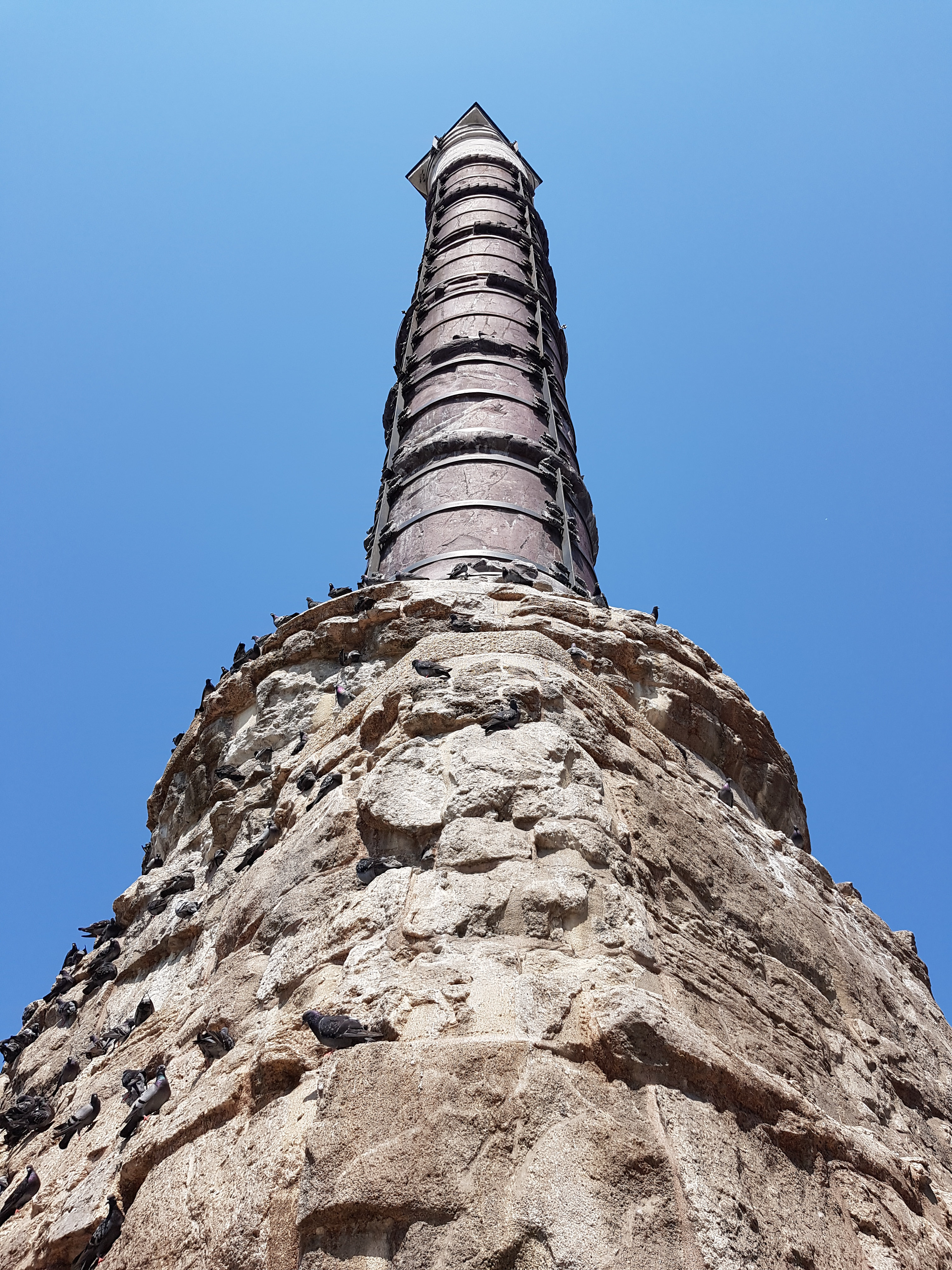
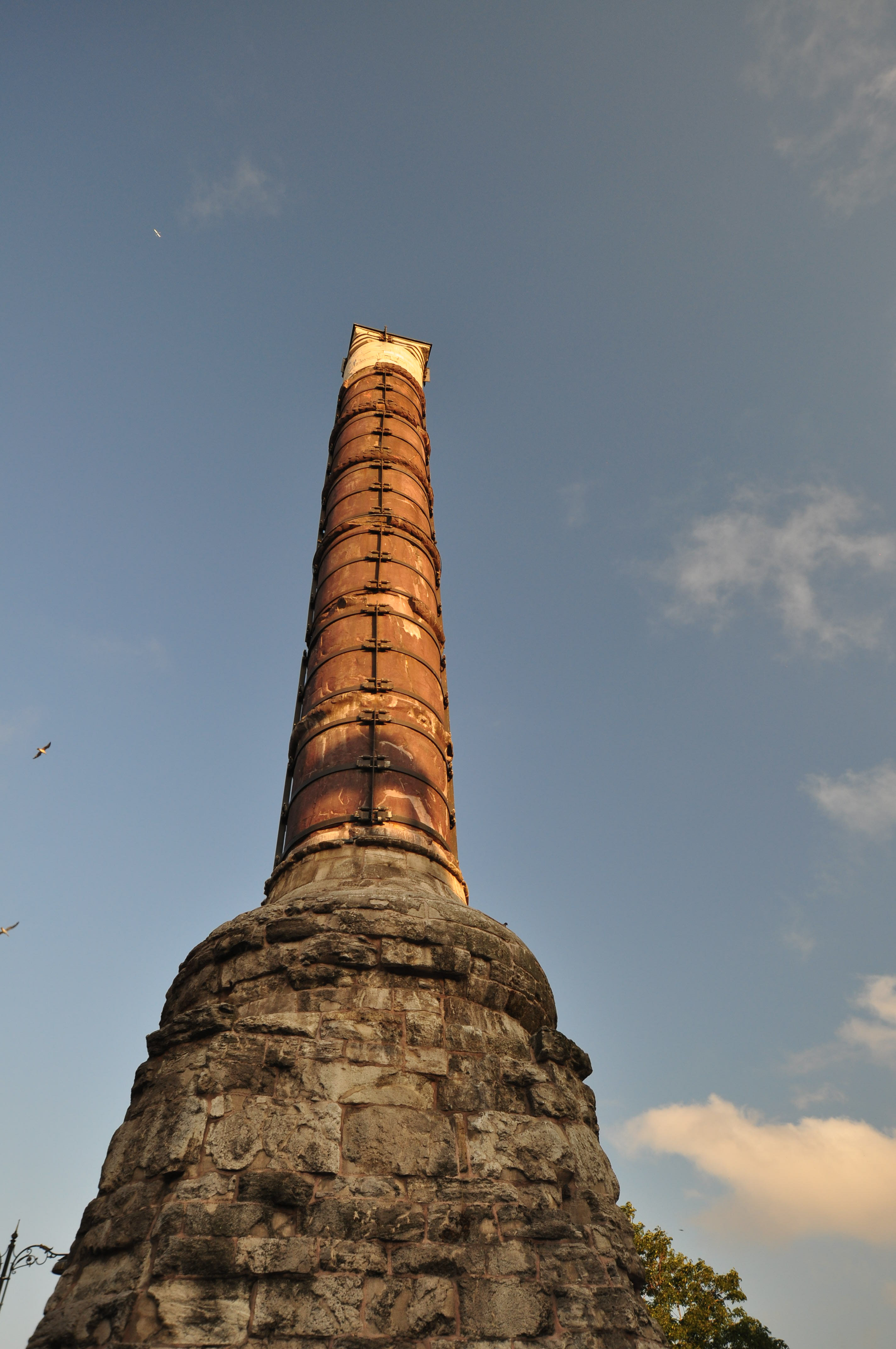
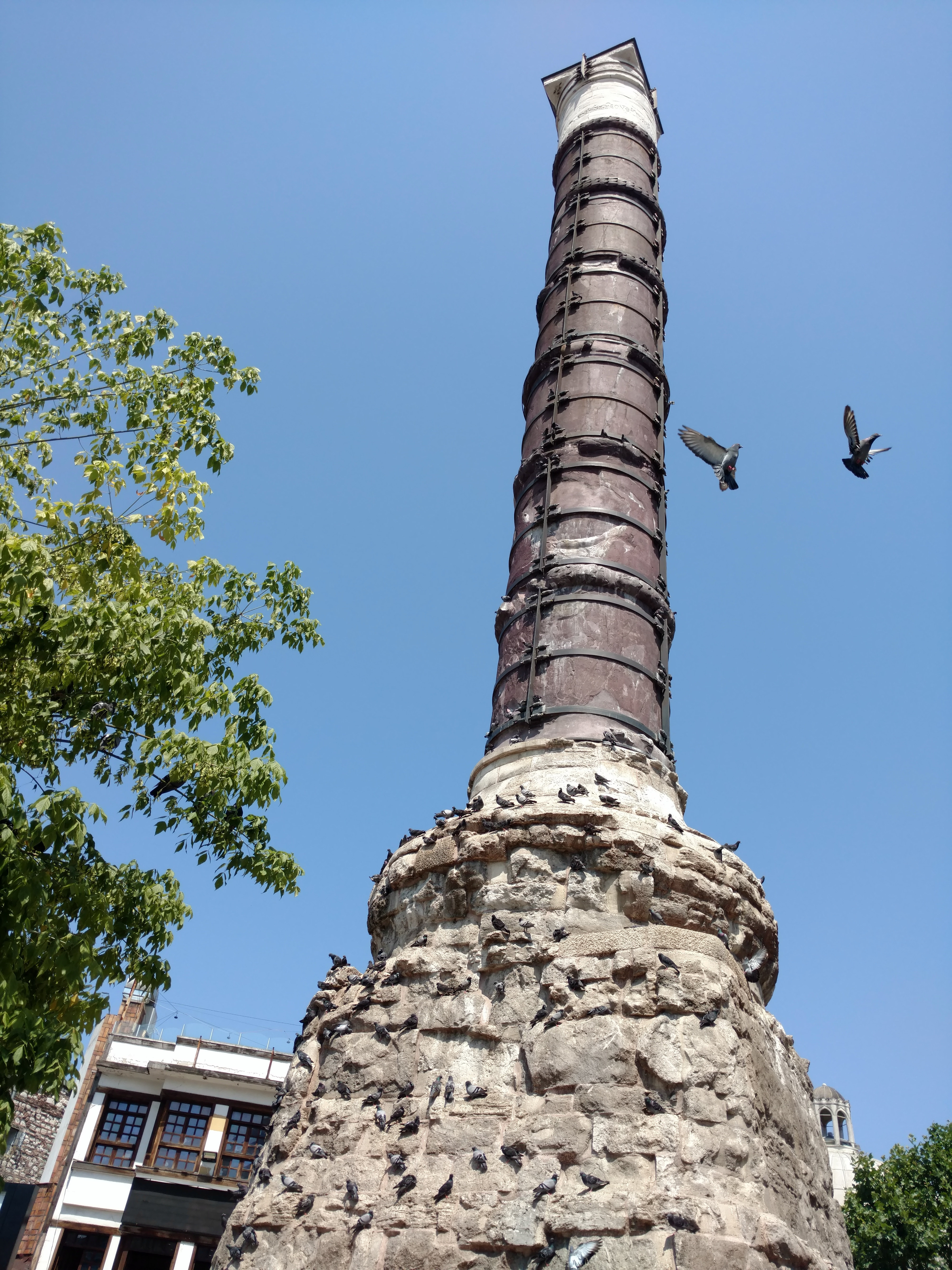
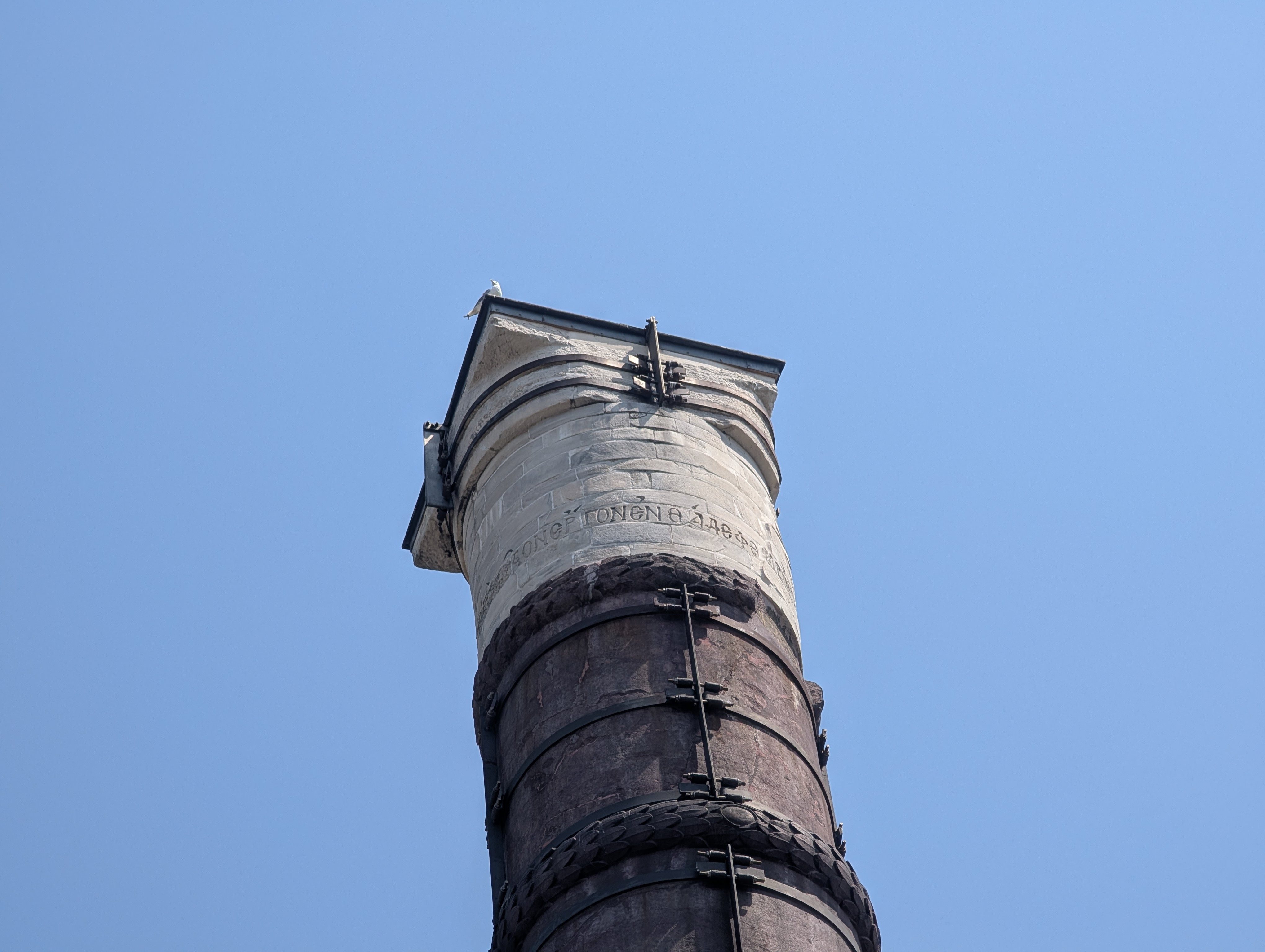
The monument's trials did not end with the Byzantine era. In 1779, a major fire swept through the surrounding district, blackening the porphyry shafts and earning the structure the nickname "Burnt Column" among European travellers. Cracks and structural weaknesses led to further repairs, including the iron hoops that still encircle the column today and gave rise to its Turkish name, Çemberlitaş, meaning "Hooped Stone."
Even in its altered state, the column remains remarkably impressive. Today, visitors see seven surviving porphyry drums reinforced by metal hoops and resting upon a reconstructed masonry base created during successive restorations. The rich purple stone still catches the light, hinting at the monument's former splendour. Standing amid the bustle of modern Istanbul, surrounded by shops, cafés, and the constant movement of pedestrians, the column creates a striking connection between the contemporary city and the vanished grandeur of Constantinople.
Conservation has been an ongoing challenge for decades. Major restoration campaigns began in the mid-twentieth century, with repairs to cracks, reinforcement of the metal bands, and structural stabilization. The monument forms part of the Historic Areas of Istanbul, a UNESCO World Heritage Site, and remains under continuous monitoring because of its age, exposure to pollution, seismic activity, and heavy urban traffic.
Perhaps the most remarkable aspect of the Column of Constantine is not what survives, but what it has witnessed. It stood through the rise and fall of the Byzantine Empire, the arrival of the Ottomans, countless earthquakes, crusades, fires, and the transformation of Constantinople into modern Istanbul. Few monuments in the world can claim such a continuous presence in the life of a great city. Each iron band, crack, and weathered stone tells part of that extraordinary story.
Visitor tips:
If you plan to visit, the column is easy to reach via the Çemberlitaş stop on Istanbul's T1 tram line and can be combined with a walk between Sultanahmet and Beyazıt. Early morning offers the best photographs before crowds gather. While there is no admission fee, take time to explore the surrounding neighbourhood, including the nearby historic Çemberlitaş Hamamı and the route of the ancient Mese, Constantinople's main avenue. Looking up from the base, it is worth imagining the vanished bronze emperor that once towered above the city, turning this weathered column into one of Istanbul's most evocative windows into the Roman past.
Image gallery:
- Log in to post comments


