
Description:
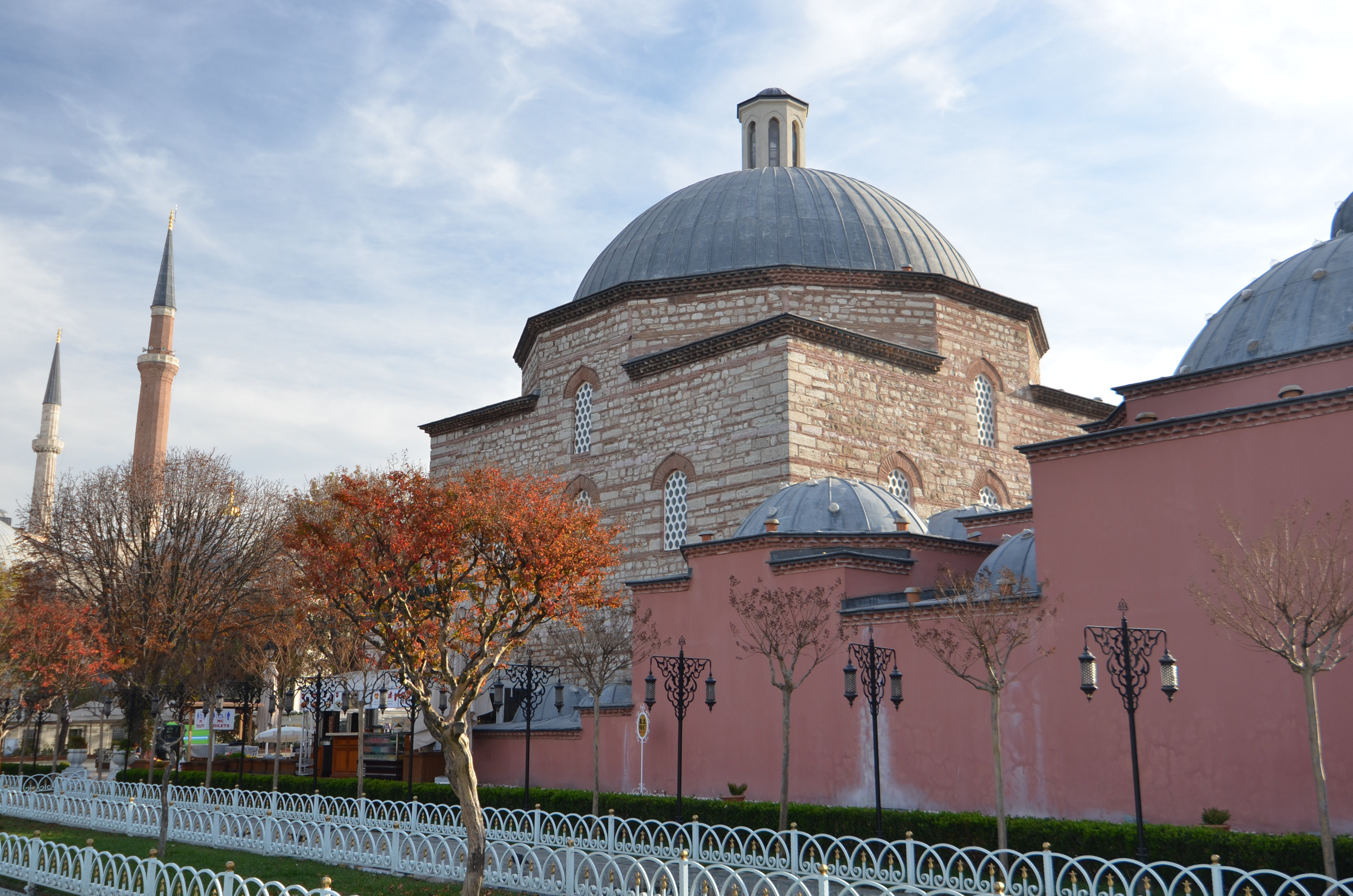
Standing between two of Istanbul's most celebrated monuments — Hagia Sophia and Sultan Ahmed Mosque — the Hagia Sophia Hurrem Sultan Bathhouse is one of the city's most elegant survivors from the golden age of the Ottoman Empire. Commissioned in 1556 by Hurrem Sultan (Roxelana), the influential wife of Sultan Suleyman the Magnificent, the bathhouse was designed by the legendary imperial architect Mimar Sinan. It rose on the site of the ancient Roman Baths of Zeuxippus, linking the Roman, Byzantine, and Ottoman histories of Istanbul in a single remarkable location.
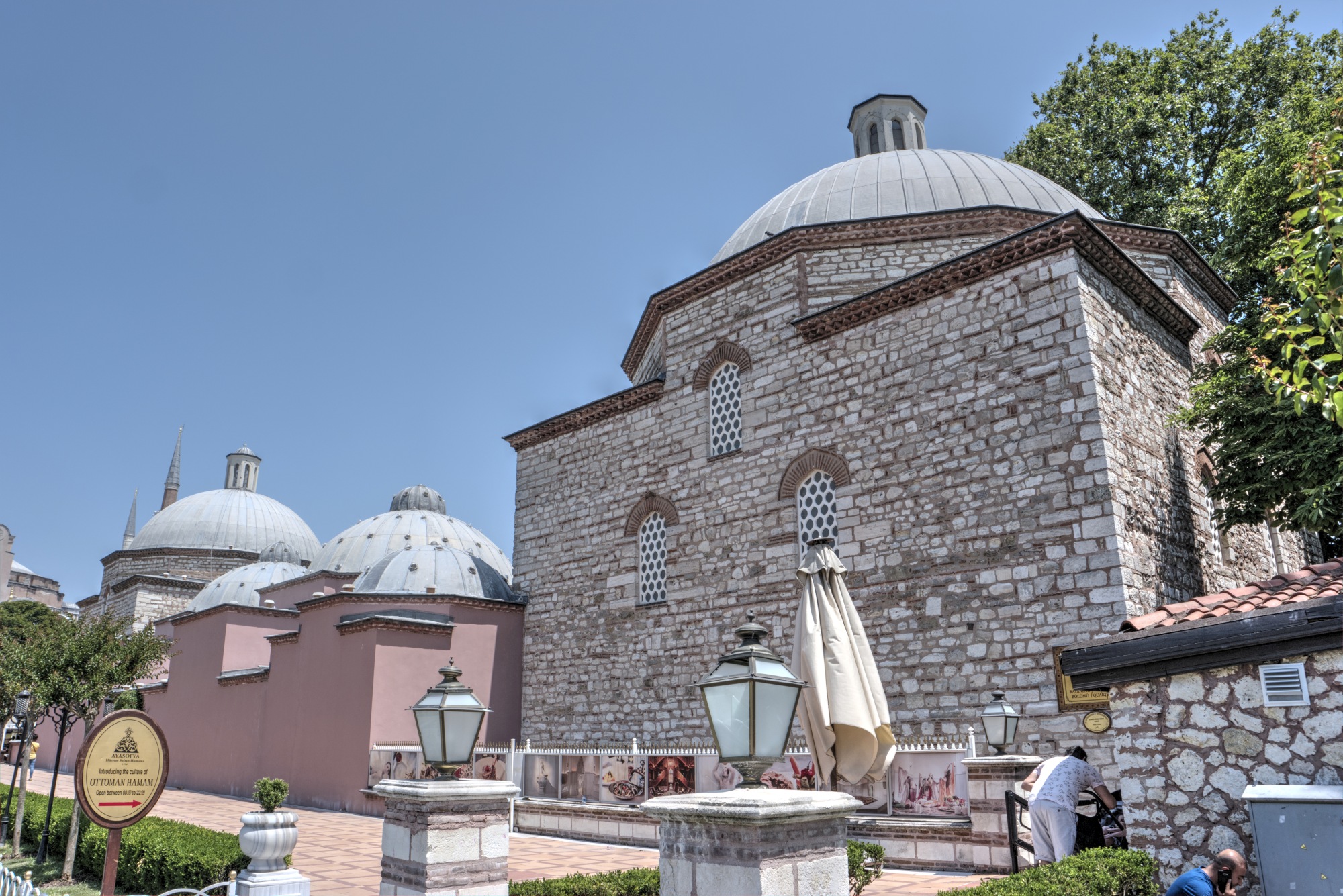
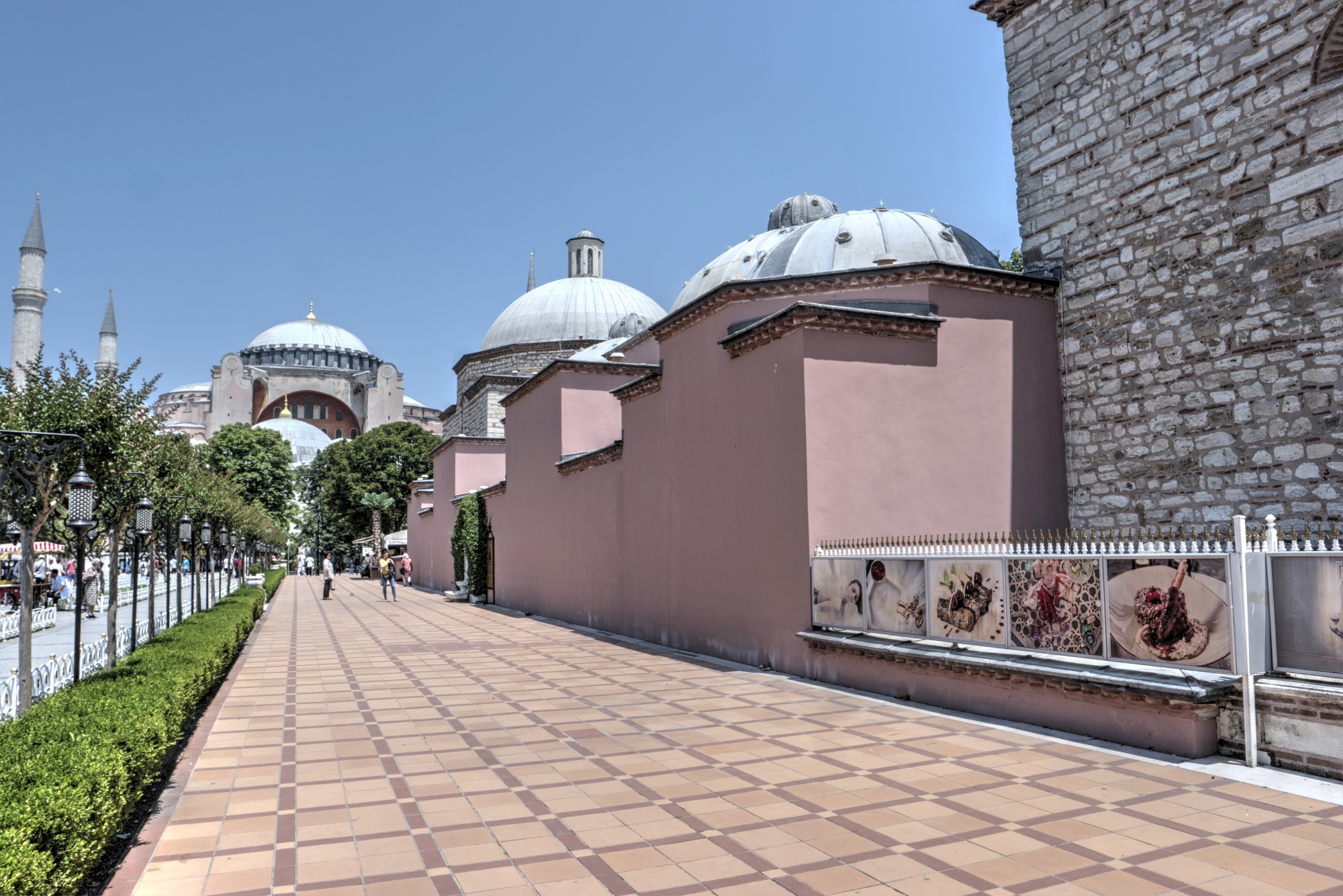
At first glance, the building appears deceptively simple, but its architecture was highly innovative for its time. What truly sets the Hagia Sophia Hurrem Sultan Bathhouse apart is not just its beauty, but its architectural originality. Stretching 75 metres (246 feet) from north to south, the building follows the principles of a classical Ottoman hammam while introducing a groundbreaking innovation. Traditionally, men's and women's bath sections were arranged side by side, but Mimar Sinan placed them on a single central axis. The men's section occupies the northern end of the complex, while the women's section lies to the south, creating a perfectly balanced composition that was highly unusual in sixteenth-century bath architecture. The result is a structure that feels remarkably orderly and harmonious, reflecting the geometric precision for which Sinan became famous.
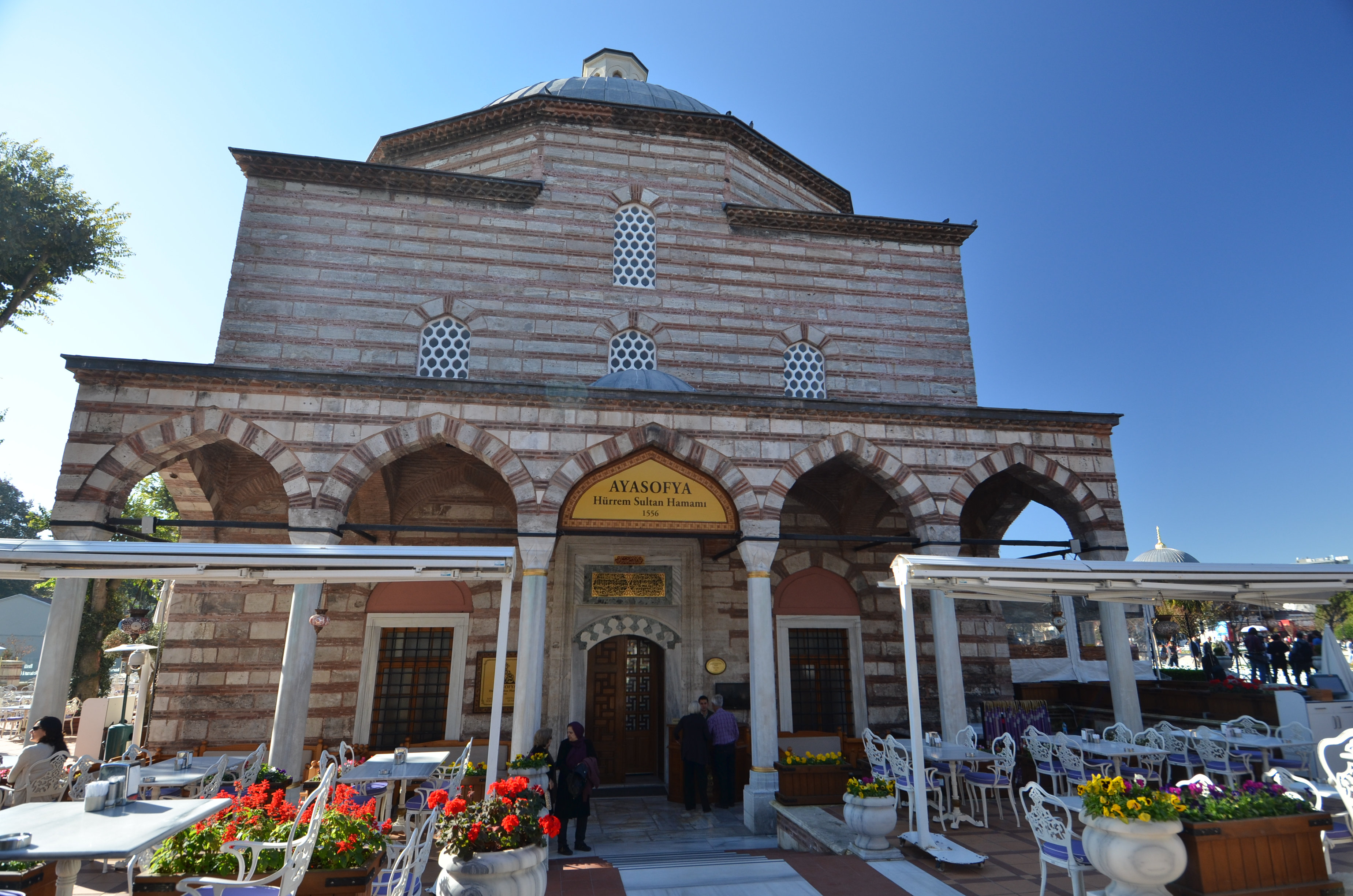
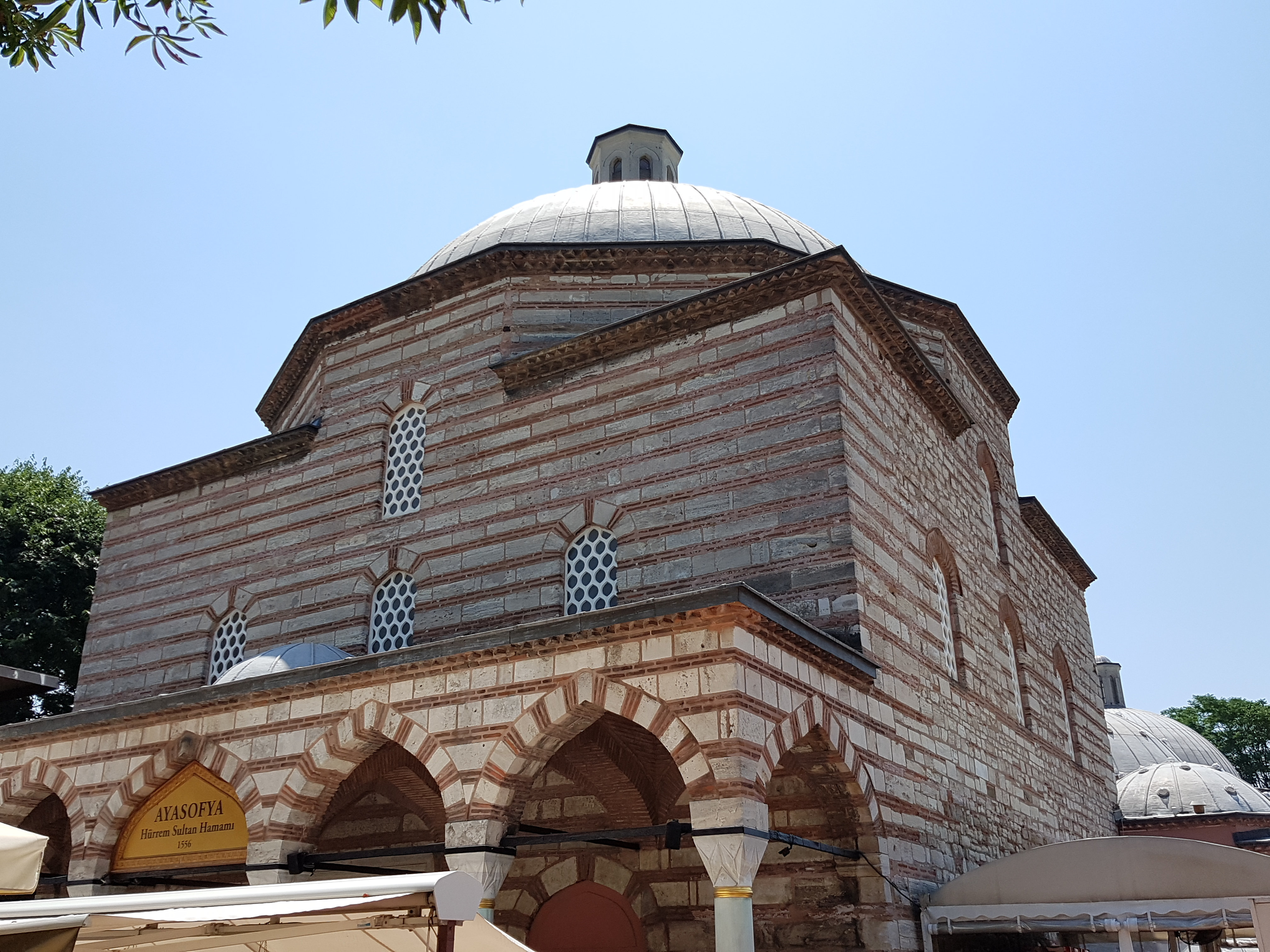
Even before stepping inside, visitors are greeted by a building rich in subtle detail. The exterior walls alternate courses of finely cut stone and brick, a characteristic Ottoman construction technique that gives the monument both strength and visual texture. The monumental entrance to the men's section is particularly striking, crowned by a pointed arch once adorned with colourful palmette motifs and an elegant inscription highlighted in gold. Above the changing room, stained-glass windows filter daylight into the interior, while an unusual domed portico projects from the façade. This covered porch, rarely seen in other Ottoman bathhouses, adds a ceremonial quality to the approach, making the entrance feel more like that of a palace than a public bath.
Inside, the bathhouse unfolds as a carefully choreographed journey through progressively warmer spaces. Each section consists of three interconnected rooms: the spacious changing hall, the cooler intermediate chamber, and finally the hot room where the bathing rituals took place. The men's changing room, crowned by a soaring dome and decorated with niches set into its walls, creates an immediate impression of grandeur. Beyond it lies the heart of the hammam: a cross-shaped hot chamber illuminated by dozens of small glass openings set into the dome above. The soft, filtered light mingles with rising steam, creating an atmosphere that feels almost otherworldly. At the centre stands the great octagonal marble göbektaşı, or "navel stone," where bathers traditionally reclined while attendants performed scrubbing and massage treatments. Around it, private domed alcoves offered more secluded bathing spaces. The women's section follows the same elegant plan, differing only in the slightly smaller size of its changing room, ensuring that both halves of the complex embody the same architectural sophistication and sense of ritual.
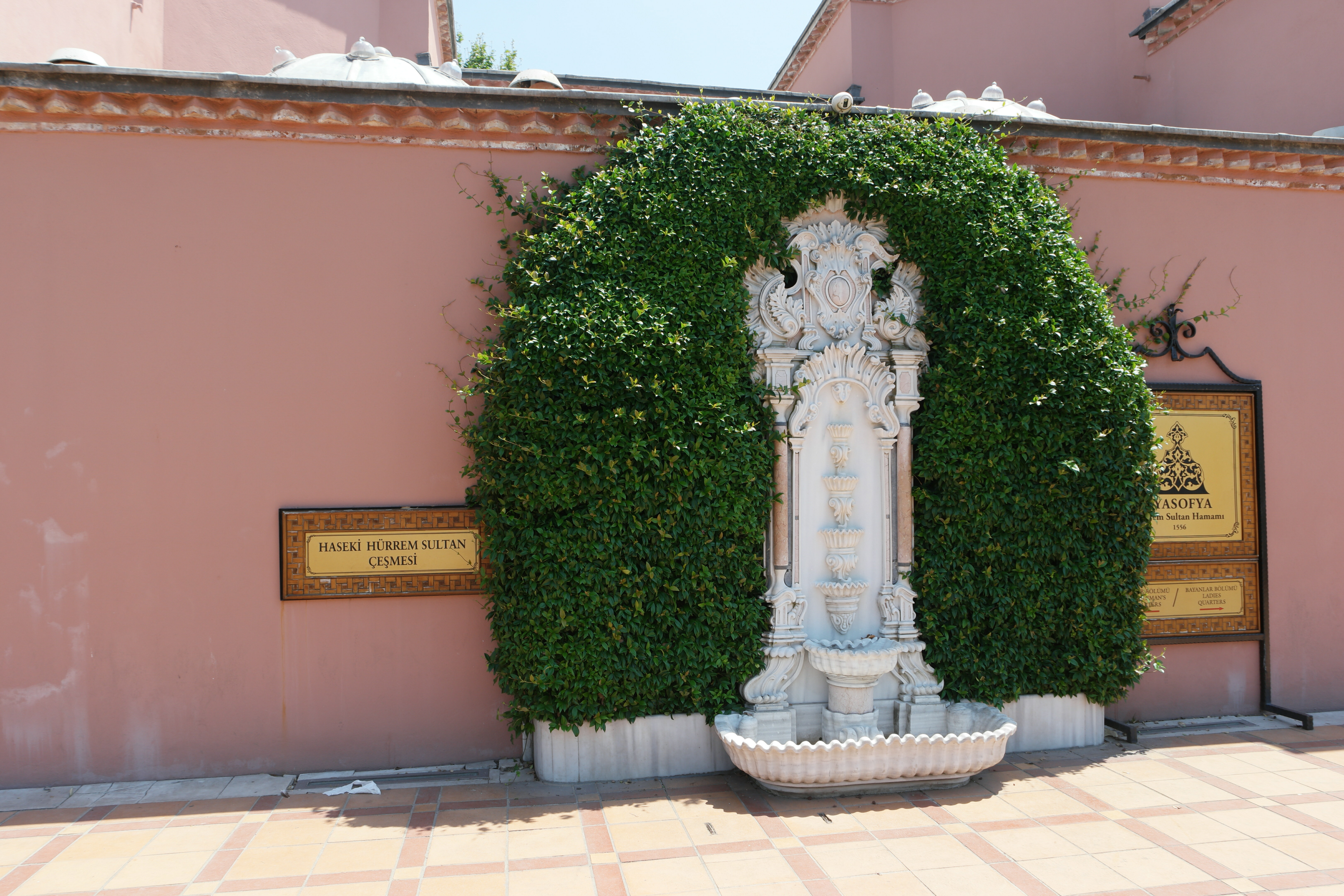
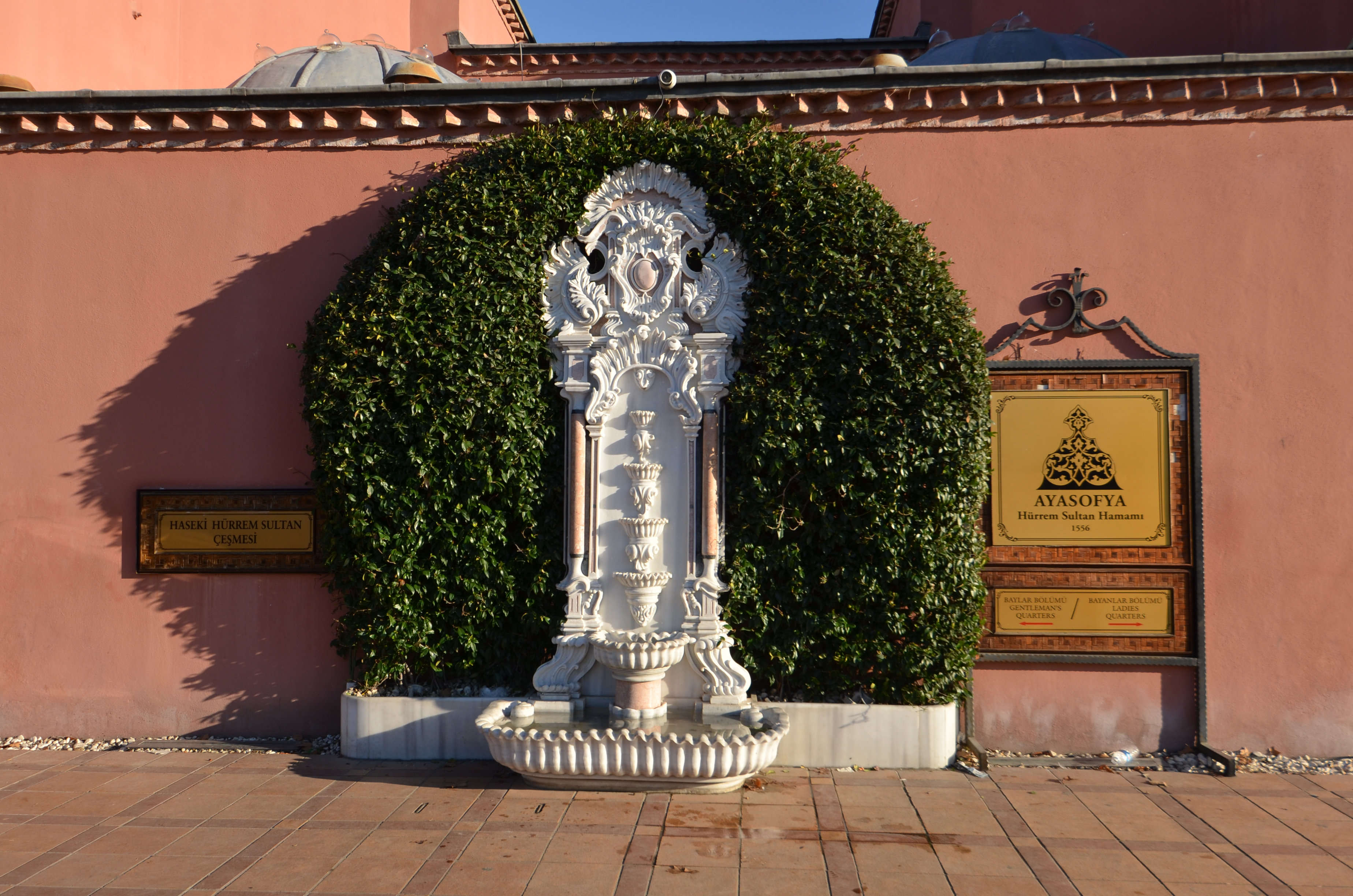
Just outside the bathhouse, attached to its outer wall facing the historic square, stands the modest yet often-overlooked Haseki Hürrem Sultan Fountain (Çeşme). Although far less famous than the grand hammam behind it, the fountain forms part of the same historic ensemble and reflects the Ottoman tradition of combining monumental architecture with public charitable works. According to local historical records, the fountain dates to the 15th century and was incorporated into the bathhouse complex, undergoing restoration alongside the hammam before its reopening in 2011. For centuries, fountains such as this provided free drinking water to residents, travellers, and worshippers heading to nearby Hagia Sophia, making them an essential part of daily urban life. Today, the small fountain serves as a quiet reminder that Hürrem Sultan's patronage was not limited to impressive monuments alone, but also extended to practical amenities that supported the community around one of Istanbul's most important ceremonial spaces.
The bathhouse enjoyed centuries of use before falling into decline in the late Ottoman period. By the early 20th century it had ceased functioning as a hammam and was used for a variety of purposes, including storage and even temporary accommodation linked to the nearby prison. After restorations in the mid-twentieth century, it spent decades as a carpet exhibition hall rather than a bathing facility. Its fortunes changed dramatically in 2007, when authorities decided to restore the monument to its original purpose. A meticulous three-year conservation project began in 2008 and culminated in its reopening as a luxury historic hammam in 2011.
Today, the Hurrem Sultan Bathhouse is both a functioning Turkish bath and a carefully preserved heritage monument. Visitors can still experience the traditional sequence of warm, hot and cooling chambers beneath the original domes while surrounded by restored Marmara marble and historic architectural details. Unlike many historic hammams that have disappeared or been heavily altered, this one remains remarkably faithful to Sinan's original vision while offering modern comforts expected by contemporary travellers.
Recent developments around the bathhouse have made the area even more interesting. The building itself remains fully operational, while the neighbouring Hagia Sophia is currently undergoing one of the most extensive restoration campaigns in its history. Conservation work has uncovered previously unknown Byzantine-era tunnels beneath the monument, and large-scale structural repairs continue on the dome and surrounding fabric. As a result, the Hurrem Sultan Bathhouse offers visitors a unique opportunity to experience a living Ottoman monument while witnessing one of the most significant heritage projects currently underway in Istanbul.
The wider district of Sultanahmet has also benefited from a broader revival of Istanbul's historic bath culture. Over the past decade, several major hammams have undergone ambitious restorations, bringing renewed attention to these remarkable buildings and helping preserve centuries-old bathing traditions for future generations. The Hurrem Sultan Bathhouse is often regarded as one of the finest examples of this movement, combining historical authenticity with a high-quality visitor experience.
Visitor tips:
Reservations are strongly recommended, especially during spring, summer, and holiday periods. The bathhouse offers various ritual packages, ranging from traditional scrubbing and foam treatments to longer spa-style experiences. Bring as little as possible, as towels, slippers and other essentials are generally provided. Even if you do not plan to book a treatment, the exterior is worth admiring for its harmonious proportions and prime location in Istanbul's historic heart.
Getting there:
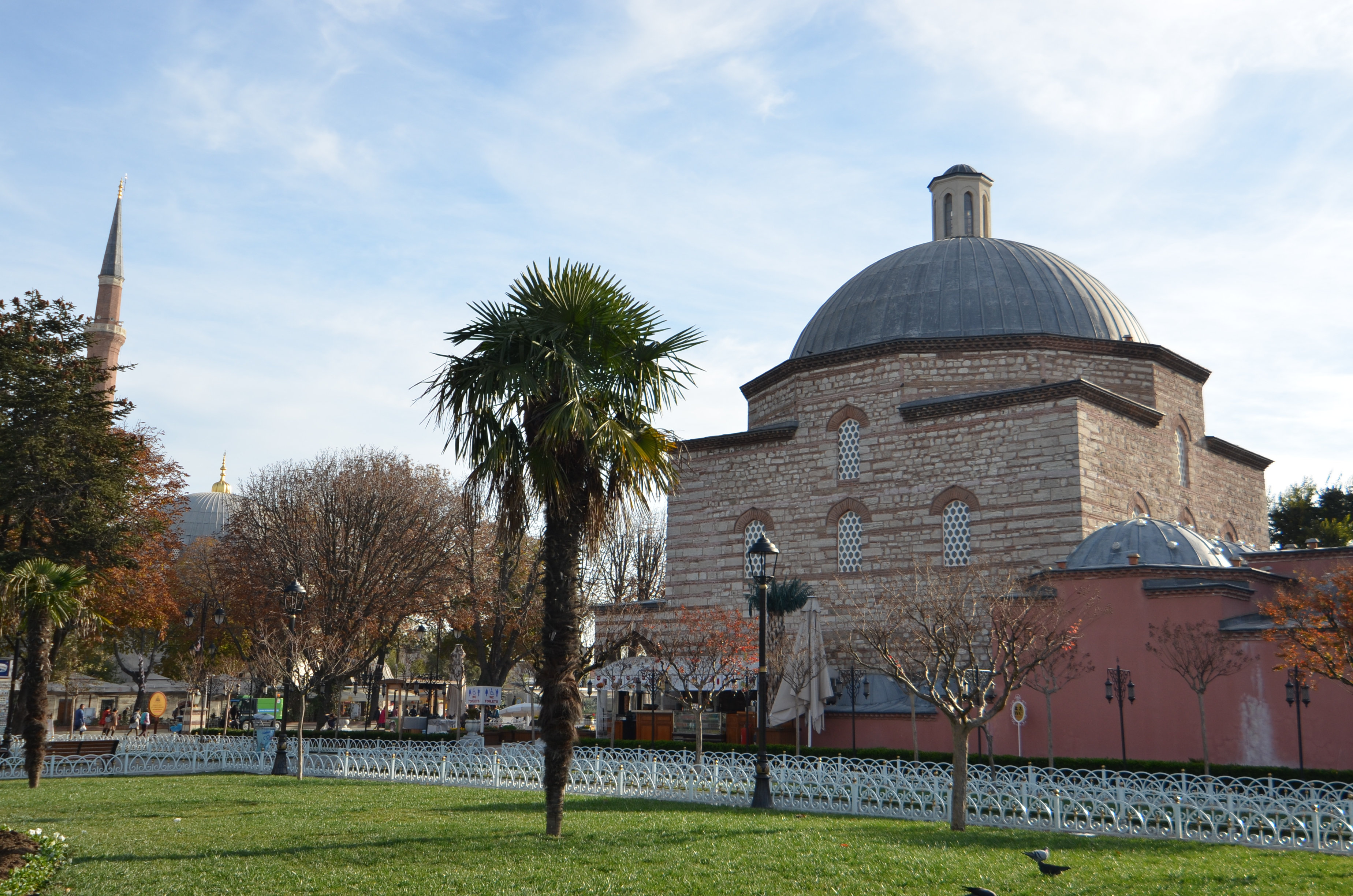
The bathhouse sits directly on Ayasofya Square in Sultanahmet, making it one of the easiest historic sites in Istanbul to reach. The most convenient option is the T1 Tram Line to Sultanahmet station, from which the bathhouse is only a short walk away. It can also be combined easily with visits to Hagia Sophia, the Blue Mosque, Topkapı Palace and the ancient Hippodrome. Arriving early in the morning or near sunset offers the most atmospheric views, when the domes of the bathhouse are framed by the silhouettes of Istanbul's greatest monuments.
Image gallery:
- Log in to post comments


