
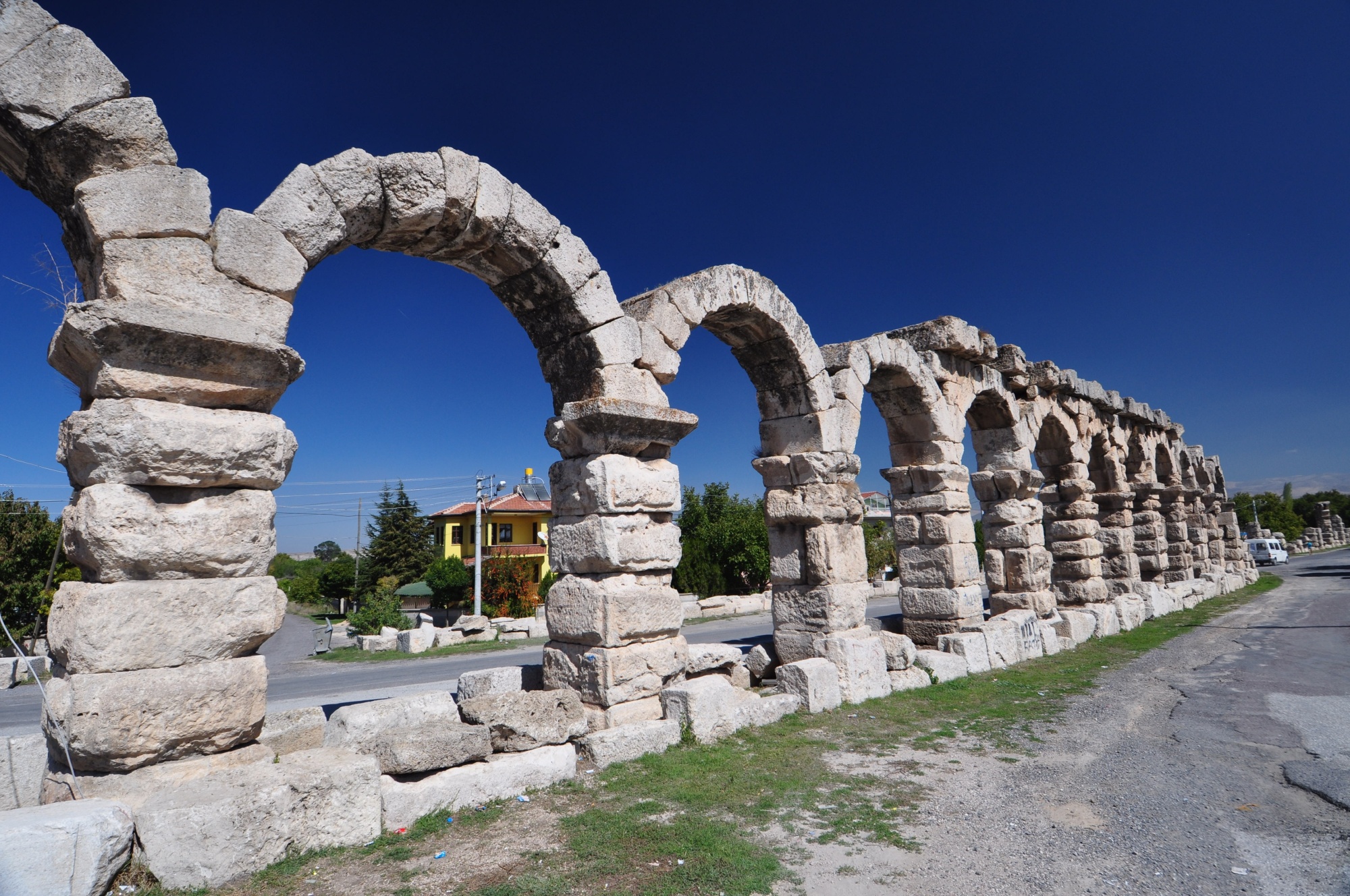
October 2026 brought a remarkable series of archaeological discoveries in Türkiye, spanning almost the entire history of human civilisation. Among the highlights were a 3,000-year-old Urartian fortress, a Hittite royal archive containing 184 tablets, and evidence of Early Bronze Age settlement layers beneath the Roman bath at Tyana. At Troy, archaeologists uncovered a 2,800-year-old bone flute and a 4,500-year-old human-shaped idol, while excavations at Smyrna revealed six architectural phases dating back approximately 5,000 years. Other fascinating finds included 11,000-year-old communal buildings at Gre Fılla, 4,000-year-old dog paw prints at Tavşanlı Höyük, a Roman oracle stone at Kibyra, and a previously unknown Bronze Age coastal settlement near Troy. Together, these discoveries offer new insights into Anatolia's rich cultural heritage, from prehistoric communities and Bronze Age kingdoms to the Greek and Roman worlds.
Turkish Archaeological News collects the most important, interesting and inspiring news from Turkish excavation sites. Here's the review for October 2026. Have we missed anything? Please let us know by using Contact tab!
October 01, 2026
Inside Safranbolu’s 300-year-old laundry house built around geometry, comfort
A historic communal laundry house in Safranbolu, Karabuk, northwestern Türkiye, is drawing visitors with a 12-sided stone washing platform designed centuries ago around geometry, water drainage, and the varying heights of its users. Source: Türkiye Today
Ancient ruins may be submerged settlement in Van Lake
Divers exploring Van Lake in eastern Türkiye have documented a large circular structure and a long wall made of interlocking stone blocks, raising the possibility that previously unknown settlement remains may lie beneath the lake. Source: Hürriyet Daily News
Archaeologists uncover 250-meter sacred wall at ancient Blaundos
Archaeologists have uncovered a wall about 250 meters long surrounding the North Temple at the ancient city of Blaundos in Usak's Ulubey district, western Türkiye, Anadolu Agency (AA) reported. Source: Türkiye Today
Ancient Smyrna Reveals Its First Wall Paintings Near the Agora and Theater
Archaeologists excavating the ancient city of Smyrna in western Türkiye have uncovered previously undocumented wall paintings and three rooms dating back approximately 1,500 years. The discoveries, made in the heart of modern İzmir, offer a new glimpse into a city that continued to change long after the height of the Roman Empire. Source: Arkeonews
Türkiye launches drone-based security center to protect Sardis, Bin Tepe tombs
Türkiye has opened a new aerial monitoring and security center at the ancient city of Sardis and the nearby Bin Tepe Lydian tumuli in Manisa, using long-range drones and night-vision technology to detect and prevent illegal excavations. Source: Türkiye Today
October 02, 2026
Selinus survey maps out ancient city from tombs to harbor slopes
Archaeologists have wrapped up the 2026 surface survey at the ancient city of Selinus in Antalya's Gazipasa district, documenting a wide stretch of the settlement from hillside tombs and defensive walls to the acropolis and slopes overlooking the harbor. Source: Türkiye Today
From prehistoric seas to Hittite medicine: New finds emerge at Kulhoyuk
Archaeologists excavating the 5,000-year-old settlement of Kulhoyuk in Ankara's Golbasi district have uncovered a 66-million-year-old marine fossil alongside 4,000-year-old plant remains that researchers believe could provide new clues about Hittite medicine and the region's natural history. Source: Türkiye Today
A Hidden Wall Reveals How the Phrygians Completed Midas Castle’s Natural Defenses
For generations, archaeologists could see where defensive walls once crossed the rocky landscape of Yazılıkaya, also known as Midas Castle. Grooves, cuttings and sockets carved into the bedrock preserved the architectural footprint of a fortification system whose masonry had largely disappeared. Now, excavations at the monumental Phrygian site in central Türkiye have exposed something far more tangible: a substantial section of the wall itself. Source: Arkeonews
All roads did not lead to Rome: Istanbul, Ankara emerge as ancient transport hubs
A vast new analysis of the Roman Empire's road system has challenged the familiar Rome-centered image of ancient transportation, finding that modern-day Istanbul and Ankara occupied more central positions than the imperial capital itself when the empire's land routes are examined as a network. Source: Türkiye Today
From Caesar to city branding: Zile turns 'Veni, Vidi, Vici' into museum identity
A museum built into the historic Zile Castle complex in Türkiye's Tokat province is using one of antiquity's most famous phrases to package thousands of years of local history, bringing together Roman-era memory, Ottoman heritage and everyday life under the name "Veni Vidi Vici City Museum." Source: Türkiye Today
Amazon and Achillia, Two Female Gladiators Who Fought in the Arena of Ancient Bodrum
Nearly 2,000 years ago, two female gladiators known as Amazon and Achillia faced each other in the arena at ancient Halicarnassus, the city that is now Bodrum on Türkiye’s Aegean coast. Almost everything about the event has disappeared, but a Roman marble relief preserves the names, equipment, and unusual outcome of their fight. Source: Arkeonews
Kütahya Archaeology Museum opens with millenia-old artifacts
Culture and Tourism Minister Mehmet Nuri Ersoy inaugurated the Kütahya Archaeology and Mining Museum on Sept. 30, describing it as a new cultural and artistic venue reflecting the city’s ancient heritage. Source: Hürriyet Daily News
October 03, 2026
Rare Orhan Gazi coin tied to birth of Ottoman statehood goes on sale in London
One of the earliest known silver coins minted under Orhan Gazi, a ruler from the formative years of the Ottoman state, has been put up for sale in London for £1,500 ($1,986.45). Source: Türkiye Today
October 04, 2026
Museums and archaeological sites to adopt new visitor system
Türkiye is modernizing its cultural heritage sites, with Culture and Tourism Minister Mehmet Nuri Ersoy confirming plans to install a next-generation visitor system at 216 locations by year-end 2026. Source: Hürriyet Daily News
Paleolithic People Lived Inside Their Own Stone Tool Factory 86,000 Years Ago
Around 86,000 years ago, Paleolithic people living in what is now northwestern Türkiye occupied a cave with an unusual advantage: the same rocky formation that sheltered them also contained an enormous supply of flint for making stone tools. Source: Anatolian Archaeology
October 05, 2026
18 artifacts from Türkiye's Burdur Museum join Roman fashion exhibition in Copenhagen
Eighteen artifacts from Türkiye's Burdur Museum have gone on display at Copenhagen's Glyptotek Museum as part of "The Power of Fashion in the Roman Empire," an international exhibition examining how clothing, jewelry and hairstyles reflected identity, social status and power in the Roman world. Source: Türkiye Today
October 06, 2026
10,000 cats wanted: How Russian traders turned to eastern Anatolia in 1923
Russian merchants sought to buy 10,000 cats from eastern Anatolia more than a century ago to tackle a serious rat infestation at ports and grain warehouses along the Black Sea and Caspian coasts, according to a newspaper record uncovered by researcher and author Taner Ozdemir. Source: Türkiye Today
October 07, 2026
1,000-Year-Old Byzantine Gold Coin Found in Shallow Waters off İzmir
A Byzantine gold coin dating to the late 10th century has been discovered in shallow waters off the Karaburun coast in İzmir, western Türkiye. Found only a few metres below the surface, the coin was issued during the reign of Emperor John I Tzimiskes, who ruled the Byzantine Empire from AD 969 to 976. Source: Anatolian Archaeology
October 08, 2026
A 3,000-year-old fortress covering roughly 120,000 square meters has been identified near Mescidli village in eastern Turkey, revealing one of the largest fortified sites yet recorded in the Muş region. Its walls stretch for about 1.4 kilometers, enclosing an area comparable to 17 football fields. Source: Arkeonews
Hittite royal archive with 184 tablets unearthed in central Türkiye
A royal archive unearthed at the ancient Hittite settlement of Samuha, in present-day Sivas in central Türkiye, has shed new light on the Hittite Empire, revealing records of a deadly epidemic, military threats and royal life dating back about 3,400 years. Source: Daily Sabah
A 1,400-year-old Turkic city has been discovered in Kazakhstan
The ruins of the ancient city of Kalzhir have been discovered in Kazakhstan’s East Kazakhstan region. The First Turkic (Göktürk) Khaganate was founded by Khagan Bumin, who defeated the Avars (Juan-Juan) in 552. The Khaganate was the first Turkic state in Turkic history to use the name “Turk” as its official state name. Source: Anatolian Archaeology
October 09, 2026
2,000-year-old Roman bath in Yozgat opens to evening visitors
The Basilica Therma Roman Bath in the Sarikaya district of Türkiye's Yozgat province, which is around 2,000 years old, now welcomes visitors in the evenings as well. Source: Türkiye Today
Roman bath in Tyana sees excavators return after 20 years
Excavations have restarted at the Roman Bath in the ancient city of Tyana in Nigde province after a break of 20 years. Source: Türkiye Today
A New Oven Dating Back 2,600 Years Has Been Unearthed in an Ancient Lydian Kitchen
During the 2026 excavation season at the ancient city of Daskyleion on the shores of Lake Manyas in Balıkesir, western Türkiye, archaeologists uncovered a new semicircular oven and food remains dating to the Lydian period approximately 2,600 years ago. Source: Anatolian Archaeology
October 10, 2026
Earthquake Research or Treasure Hunt? Controversy Over Digging at Manda Tumulus
Heavy machinery work at the Manda Tumulus near Saraycık village in Afyonkarahisar’s Sinanpaşa district has drawn criticism. Locals say the digging, presented as earthquake research, is harming the historic site. Source: Anatolian Archaeology
October 11, 2026
Ancient Hierapolis theater to host Italy-Türkiye friendship concert with 2 culture ministers
The ancient theater of Hierapolis in Türkiye's western Denizli province will host an Italy-Türkiye Friendship Concert on Oct. 13, bringing together the two countries' culture ministers for the opening of an international archaeology symposium focused on scientific discoveries and bilateral cooperation. Source: Türkiye Today
Traces of a Massive Earthquake-Damaged Building Uncovered at Ancient Klaros Oracle Site
Archaeologists working at the ancient city of Klaros in Izmir’s Menderes district have uncovered evidence that a large Roman-period structure may have been destroyed by an earthquake. The complex, covering roughly 2,500 square meters, appears to have collapsed in its first phase of use, with later construction possibly erected over the debris. Source: Anatolian Archaeology
October 12, 2026
Türkiye assesses World War I defense line for national park status
Survey work is underway in Giresun and Gumushane, two provinces in Türkiye’s Black Sea region, to determine whether the Harsit Valley Defense Line, a key point of resistance against Russian forces in World War I, could become a national park. Source: Türkiye Today
Türkiye documents nearly 7,000 historic tombstones, inscriptions
The Culture and Tourism Ministry has documented nearly 7,000 tombstones and inscriptions bearing traces of the Turkish-Islamic civilization as part of a nationwide project that expanded from four provinces in 2025 to 18 in 2026. Source: Daily Sabah
New Dionysos cult areas uncovered at 2,300-year-old castle in Türkiye's Ordu
Archaeologists excavating the 2,300-year-old Kurul Castle in northern Türkiye have uncovered new areas associated with the ancient cult of Dionysos, adding to earlier discoveries linked to the goddess Cybele and revealing further evidence of religious practices at the ancient settlement. Source: Türkiye Today
1,800-Year-Old Oracle Stone Found in Türkiye Reveals How People Cast Bones to Consult the Gods
A 1,800-year-old stone monument discovered in Kibyra, an ancient city located in southwestern Türkiye, exposes a unique method individuals employed to consult deities during the Roman era. By casting five animal knucklebones, practitioners could access an oracle capable of providing 56 possible responses regarding matters pertaining to their future. Source: Anatolian Archaeology
October 13, 2026
Ongoing digs at Klaros Sanctuary reveal Roman Imperial complex
Excavations are continuing in two areas of Klaros Sanctuary in the western province of İzmir’s Menderes district, including structures where visitors stayed and a building complex containing seven rooms dating to the Roman Imperial period. Source: Hürriyet Daily News
725-year-old church in Türkiye's Aksaray reveals centuries of shared religious history
A 725-year-old church on Ana Sultan Hill in Türkiye's central province of Aksaray is drawing attention for its history of religious transformation, having reportedly served as a mosque after the Turkish conquest of the region before becoming a gathering place for local communities. Source: Türkiye Today
Ottoman-era Suleymaniye Complex in Damascus nears reopening as restoration reaches 95%
The historic Suleymaniye Complex in Damascus, Syria, is nearing its return as a visitor attraction, with restoration work on the 16th-century Ottoman site now more than 95% complete. Source: Türkiye Today
October 14, 2026
Historic structure restored for academy
Restoration is underway at Kızılhan, a historic building nestled in the ancient city of Beçin in the southwestern province of Muğla’s Milas district, to transform it into an academic hub for social science summer schools, conferences and symposiums. Source: Hürriyet Daily News
World's oldest shipwreck uncovered off Türkiye's Mediterranean coast
Archaeologists have recovered amphorae dating back up to 4,700 years from a shipwreck near Kekova Island in Antalya, southern Türkiye, offering new evidence of ancient maritime trade routes and daily life aboard vessels in the Eastern Mediterranean. Source: Türkiye Today
New Evidence Challenges the Location of a Fortress Linked to the Ottoman Entry into Europe
New historical and archaeological evidence challenges the previously accepted site of Çimpe Castle, which served as a fortress linked to the Ottoman Empire’s initial advance into Europe. The location where researchers believe this traditional stronghold near Gallipoli actually stands may be in northwestern Türkiye’s Tekirdağ province at Yeniköy instead. Source: Anatolian Archaeology
October 15, 2026
Türkiye, Italy seek to expand archaeological cooperation
Türkiye and Italy are seeking to expand archaeological cooperation through joint excavations, conservation projects and exhibitions, Culture and Tourism Minister Mehmet Nuri Ersoy said on Oct. 14 at the opening of the 17th Symposium of Italian Archaeological Missions in the ancient city of Hierapolis in Denizli. Source: Hürriyet Daily News
Historic wrecks open to dive tourism
Divers have begun exploring shipwrecks off the coast of the western province of Muğla’s Bodrum district following a campaign opening the protected underwater site. Source: Hürriyet Daily News
Archaeologists uncover 5,000-year-old settlement layers in Türkiye's ancient Smyrna
Archaeologists working at Smyrna Mound in Izmir, western Türkiye, have uncovered settlement layers dating back approximately 5,000 years, revealing six architectural phases from the Early Bronze Age and providing new evidence of the ancient city's development and defensive systems. Source: Türkiye Today
October 16, 2026
5,000-year-old silver jewelry trove sheds light on İzmir’s past
Archaeological excavations at the ancient city of Smyrna in İzmir’s Bayraklı district are shedding light on the region’s 5,000-year history, revealing evidence of early urban planning, metalworking and trade. Source: Hürriyet Daily News
5,000 Years of History: Archaeologists Reveal Six Building Phases at Ancient Smyrna in Türkiye
Archaeologists excavating ancient Smyrna in western Türkiye have identified six architectural phases from the Early Bronze Age, challenging the long-held understanding that the settlement developed through just two. The findings at Bayraklı Höyük in İzmir offer a more detailed picture of a community whose history stretches back approximately 5,000 years. Source: Anatolian Archaeology
October 17, 2026
How a small village museum in Türkiye won 5 major awards in 5 years
The Kenan Yavuz Ethnography Museum, located in a village in Türkiye's northeastern province of Bayburt, has received its fourth European award, bringing its total to five major honors over the past five years. Source: Türkiye Today
Stone by stone, Türkiye rebuilds 1,800-year-old fountain in ancient Tripolis
An approximately 1,800-year-old monumental fountain in the ancient city of Tripolis in western Türkiye is set to regain its original appearance as archaeologists work to reinstall 400 stone blocks, with restoration expected to be completed by the end of 2026. Source: Türkiye Today
Restoration reveals architectural secrets of Istanbul’s Süleymaniye Mosque
Restoration work at Istanbul’s Süleymaniye Mosque, a landmark of Ottoman design, has uncovered hidden acoustic vessels inside its dome, 16th-century decorative paintings and calligraphy preserved on a metal surface, shedding new light on the engineering techniques of architect Mimar Sinan. Source: Hürriyet Daily News
Archaeologists remove 3,000 tons of debris from tunnels beneath Hagia Sophia
Archaeologists working beneath Istanbul's iconic Hagia Sophia have removed approximately 3,000 tons of mud and debris from an extensive network of ancient Roman tunnels since February 2025, revealing previously inaccessible sections of infrastructure and structures that predate the existing monument. Source: Türkiye Today
October 18, 2026
Bronze Age Oven Bakes Bread but Struggles with Stew in Türkiye Experiment
A reconstructed Bronze Age oven in western Türkiye could bake bread but struggled to cook stew, prompting archaeologists to test a different approach. Source: Anatolian Archaeology
October 19, 2026
Türkiye’s ancient Lydian kitchen reveals 2,600-year-old seeds
Carbonized seeds dating back 2,600 years have been discovered in an oven unearthed during excavations at the ancient city of Daskyleion, on the shores of Lake Manyas in northwestern Türkiye’s Balıkesir province. The site bears traces of many civilizations that once ruled Anatolia. Source: Daily Sabah
Didyma's ancient Temple of Apollo draws over 60,000 nighttime visitors
The ancient Temple of Apollo at Didyma in western Türkiye has welcomed 60,884 nighttime visitors, making it one of the country's most visited archaeological sites after dark under the Ministry of Culture and Tourism's Night Museum initiative. Source: Türkiye Today
October 20, 2026
Archaeologists uncover 2,000-year-old mosaic in central Türkiye
Türkiye’s Ministry of Culture and Tourism has announced the discovery of a mosaic-floored structure dating back more than 2,000 years at Kültepe, an archaeological site in Kayseri, central Türkiye. Source: Daily Sabah
Hittite kings’ spring retreat set for new excavations
Excavations at Sarissa, a 3,500-year-old Hittite city in the central Anatolian province of Sivas, will resume in 2027, Governor Yilmaz Simsek said during a site visit, the Anadolu Agency reported. Source: Türkiye Today
Unique 1,900-Year-Old Sarcophagus with Silenus Relief Identified in Ancient Anatolia
A Roman-era terracotta sarcophagus found in the ancient city of Attouda in western Türkiye bears an unusual image of Silenus, a mythological figure associated with Dionysus. A new archaeological study suggests that the relief, unmatched among known cylindrical terracotta sarcophagi in Anatolia, may have served as a symbolic guardian of the dead. Source: Arkeonews
October 21, 2026
Türkiye seizes over 7,000 historical artifacts in border smuggling operations
Turkish customs authorities have seized more than 7,000 historical artifacts during two separate anti-smuggling operations at the Ipsala and Kapikule border crossings in Edirne, northwestern Türkiye, preventing the cultural objects from being taken abroad. Source: Türkiye Today
2,000-Year-Old Marble Head of Zeus Seized in Western Türkiye
A marble head depicting Zeus, believed to date to the Roman period around 2,000 years ago, has been seized during an anti-smuggling operation in İzmir, western Türkiye. Three suspects were detained in connection with the artifact, whose original archaeological provenance remains unknown. Source: Anatolian Archaeology
Early Bronze Age Layers Found Beneath 1,800-Year-Old Roman Bath in Ancient Tyana, Türkiye
Archaeologists investigating a Roman bath built during Emperor Caracalla’s reign have identified Early Bronze Age cultural layers beneath the structure in ancient Tyana, central Türkiye. The discovery comes as excavations resume after a 20-year interruption, offering new opportunities to investigate the city’s much earlier history. Source: Anatolian Archaeology
October 22, 2026
Topkapı Palace’s Darphane-i Amire to open with five museums
Restored and thoughtfully repurposed, the historic Darphane-i Amire complex in Topkapı Palace’s First Courtyard will soon welcome visitors across five specialized museum spaces. Source: Hürriyet Daily News
2,800-year-old bone flute, 4,500-year-old idol head unearthed at ancient Troy in Türkiye
Archaeologists working at the ancient city of Troy in northwestern Türkiye have uncovered a 2,800-year-old bone flute and a 4,500-year-old human-shaped idol head, shedding new light on the site's musical traditions and symbolic practices across different periods. Source: Türkiye Today
195 Meters of Seljuk City Walls Uncovered in Konya, Türkiye
Archaeological excavations in Konya, central Türkiye, have exposed approximately 195 meters of medieval city walls and the remains of Larende Gate, one of the principal entrances to the former Seljuk capital. The findings are revealing a substantial section of a defensive system that had largely disappeared beneath the modern city. Source: Anatolian Archaeology
October 23, 2026
16th-Century Ottoman Mosque Rebuilt in Istanbul 70 Years After Demolition
A 16th-century Ottoman mosque built for sick members of the imperial palace guard is being reconstructed in Istanbul, nearly 70 years after it disappeared during coastal road construction. The Bostancılar Tabhanesi Mosque, also known as the Yedekçiler Mosque, once stood outside the sea walls of Topkapı Palace, between Sarayburnu and Ahırkapı. Source: Anatolian Archaeology
October 24, 2026
11,000-Year-Old Buildings Were Burned and Rebuilt at Gre Fılla in Türkiye
Archaeologists studying the Neolithic settlement of Gre Fılla in southeastern Türkiye have uncovered an unusual tradition: communal buildings were deliberately burned, buried, and rebuilt in the same locations. The discovery, alongside human-faced stone altars and animal sculptures, reveals a fascinating side of life nearly 11,000 years ago. Source: Anatolian Archaeology
1813 Ottoman Gravestone Found in Türkiye May Belong to Governor’s Daughter
An Ottoman gravestone inscription dating to 1813 has been found at a research institute in Tekirdağ, northwestern Türkiye. Its initial examination suggests a connection to the family of a former Ottoman governor of Edirne, although the identification remains provisional. Source: Anatolian Archaeology
October 25, 2026
Türkiye signs contract to rebuild Ani Bridge on Armenian border
Türkiye has completed the tender process to rebuild the historic Ani Bridge on its border with Armenia after signing the contract on Sept. 28, Transport and Infrastructure Minister Abdulkadir Uraloglu said in a written statement. Source: Türkiye Today
Hattusa in Black and White: 120 Years of Excavations at the Hittite Capital
Historic photographs from Hattusa document 120 years of excavations at the ancient Hittite capital, revealing how archaeologists uncovered its monumental gates, temples and fortifications. The images, shared during the city’s 40th UNESCO World Heritage anniversary, trace the transformation of one of Anatolia’s most important Bronze Age archaeological sites. Source: Arkeonews
Restoration Continues at Laodikeia’s 2,200-Year-Old West Theatre
Restoration work continues at Laodikeia’s ancient West Theatre, where archaeologists are preserving a monument repeatedly rebuilt over the centuries. The excavation team has also completed conservation work on mosaics in the North (Sacred) Agora, allowing visitors to view the ancient floors from a protective glass walkway. Source: Anatolian Archaeology
October 26, 2026
4,000-Year-Old Dog Paw Prints Found at Tavşanlı Höyük in Türkiye
Archaeologists excavating Tavşanlı Höyük in western Türkiye have discovered 4,000-year-old dog paw prints preserved on a mudbrick from a Bronze Age house. The accidental impressions offer a rare glimpse of everyday life in one of western Anatolia’s largest Bronze Age settlements. Source: Arkeonews
166-Year-Old Greek Orthodox Church in Türkiye at Risk as Historic Frescoes Fade
The paintings of Archangel Michael are fading inside a 166-year-old church in western Türkiye, where deep cracks have appeared in load-bearing walls and parts of the roof have collapsed. The damage threatens Taxiarchis Church, one of the surviving landmarks of the former Greek Orthodox community in Mursallı, a village in Aydın’s Germencik district. Source: Anatolian Archaeology
October 28, 2026
Türkiye’s ancient Teos reveals Antinous portrait, 13 inscriptions
Archaeologists have uncovered 13 inscriptions, new statue bases and a marble portrait of Antinous, a close companion of Roman Emperor Hadrian, during ongoing excavations at the ancient city of Teos in the Seferihisar district of Izmir, western Türkiye. Source: Daily Sabah
2,000-Year-Old Mosaic Offers New Evidence of a Hellenistic City at Kültepe
Archaeologists working at Kültepe-Kaniş in central Türkiye have uncovered evidence that could significantly change our understanding of the ancient settlement during the Hellenistic period. A mosaic floor, remains of at least three buildings and four successive archaeological layers suggest that the site continued to support substantial urban activity long after its celebrated Bronze Age trading era. Source: Anatolian Archaeology
October 29, 2026
Şanlıurfa museum preserves centuries-old traditions
A nearly 900-year-old building from the era of the Crusader County of Edessa has been transformed into a city museum, safeguarding the southeastern province of Şanlıurfa’s traditional heritage for future generations. Source: Hürriyet Daily News
Unusual tomb discovered at ancient theater in Türkiye
An ancient tomb has been uncovered during excavations at the ancient theater of Apollonia ad Rhyndacum in Gölyazı, a picturesque neighborhood in northwestern Türkiye's Bursa province. The discovery is expected to shed new light on the settlement’s history during the Hellenistic period. Source: Daily Sabah
Fishing Hooks and Fish Bones Suggest Ancient Fishing Shop at Metropolis in Türkiye
An unusual collection of objects suggests that a small room at Metropolis in western Türkiye may once have served a fishing-related business. The possible shop lies within an area where archaeologists are investigating a monumental courtyard complex whose original purpose remains uncertain. Source: Anatolian Archaeology
October 30, 2026
1,800-Year-Old Greek Tomb Monument in Türkiye Challenges Passersby with a Riddle
Recent roadworks in Sakarya have drawn attention to a large inscribed stone initially reported as an unidentified ancient find. The Greek text, however, belongs to a previously documented Roman-period funerary monument whose owner left an unusual puzzle for anyone passing his grave. Source: Anatolian Archaeology
Unknown Bronze Age Coastal Settlement with Unusual Pottery Found Near Troy
Archaeologists have identified a previously unknown Bronze Age settlement on the Biga Peninsula—where Troy is also located—on the Anatolian coast of the Dardanelles. The ceramics found at the site, named Yaylatepe Höyük, bear significant similarities to the prehistoric pottery tradition of Troy. Source: Arkeonews
October 31, 2026
Century-old railway workshops in Türkiye's Sarikamis face uncertain future
Century-old railway workshops in Sarikamis, in Türkiye's northeastern Kars province, have fallen into disuse, leaving behind a complex of interconnected buildings whose maze-like architecture reflects the region's railway history. Source: Türkiye Today
- Log in to post comments


