The question of whether Cleopatra's sister, Arsinoë IV, was buried in Ephesus has long fascinated historians and archaeologists alike. The story begins in 1904, when archaeologists uncovered an enigmatic monument known as the Octagon. At first, it was thought to be a trophy monument commemorating some forgotten victory. But in 1929, further excavations revealed something unexpected: a burial chamber built atop its base. Inside lay a sarcophagus containing the skeleton of a young individual, in their teens at the time of death. Tragically, the skull — so crucial for identification — was later lost during the Second World War.
Reconstructed Octagon in the Ephesos Museum in Vienna, Austria
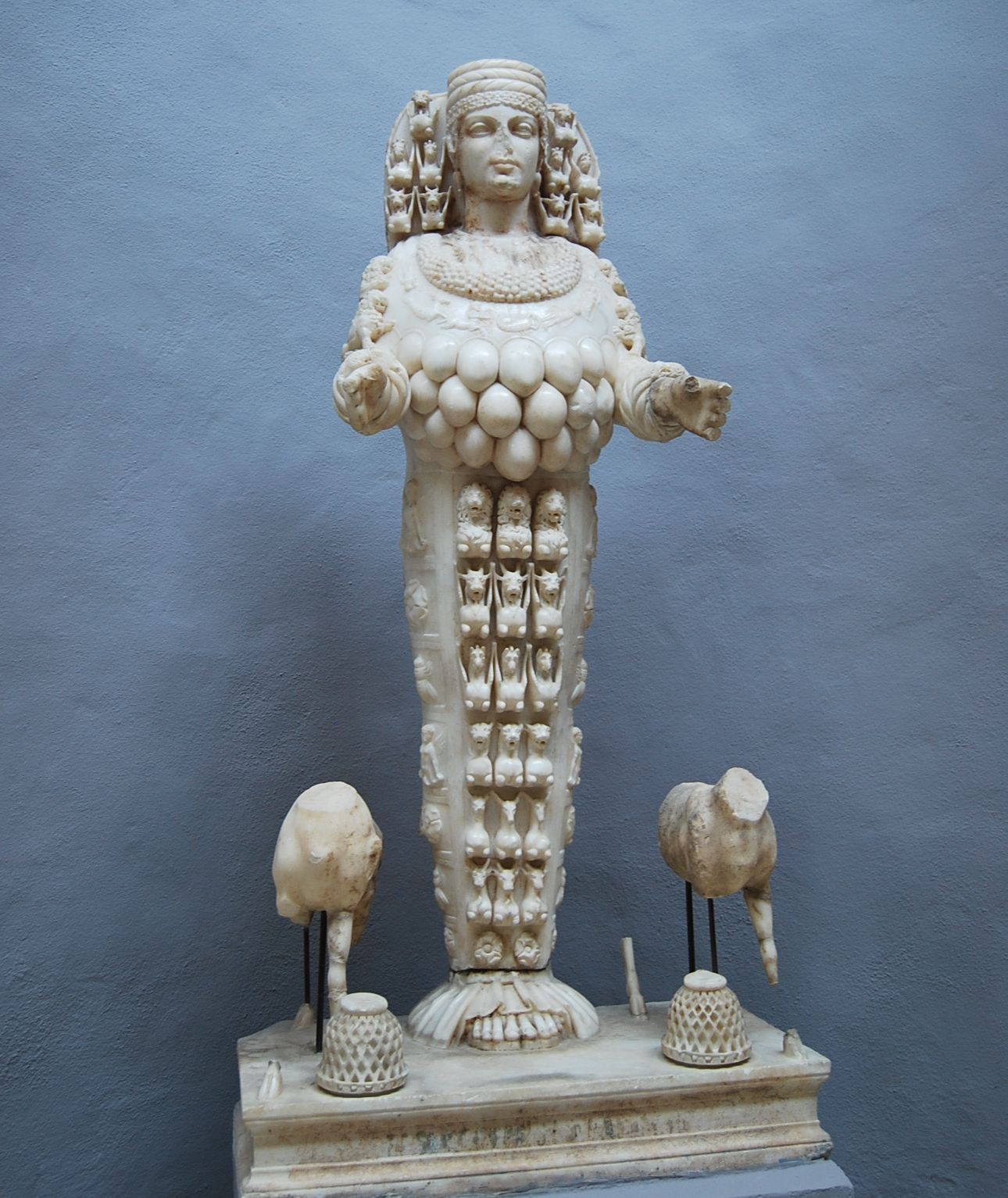
Long before the great Artemision rose in Ephesus, the ground it occupied was already sacred. This was no sudden invention of Greek settlers, but rather a place layered with memory — like a manuscript written, erased, and written over again. To understand the Artemis of Ephesus is to abandon the idea of a single, fixed deity and instead step into a slow fusion of beliefs that unfolded across centuries.
Statue of Beautiful Artemis in Ephesus Museum in Selçuk