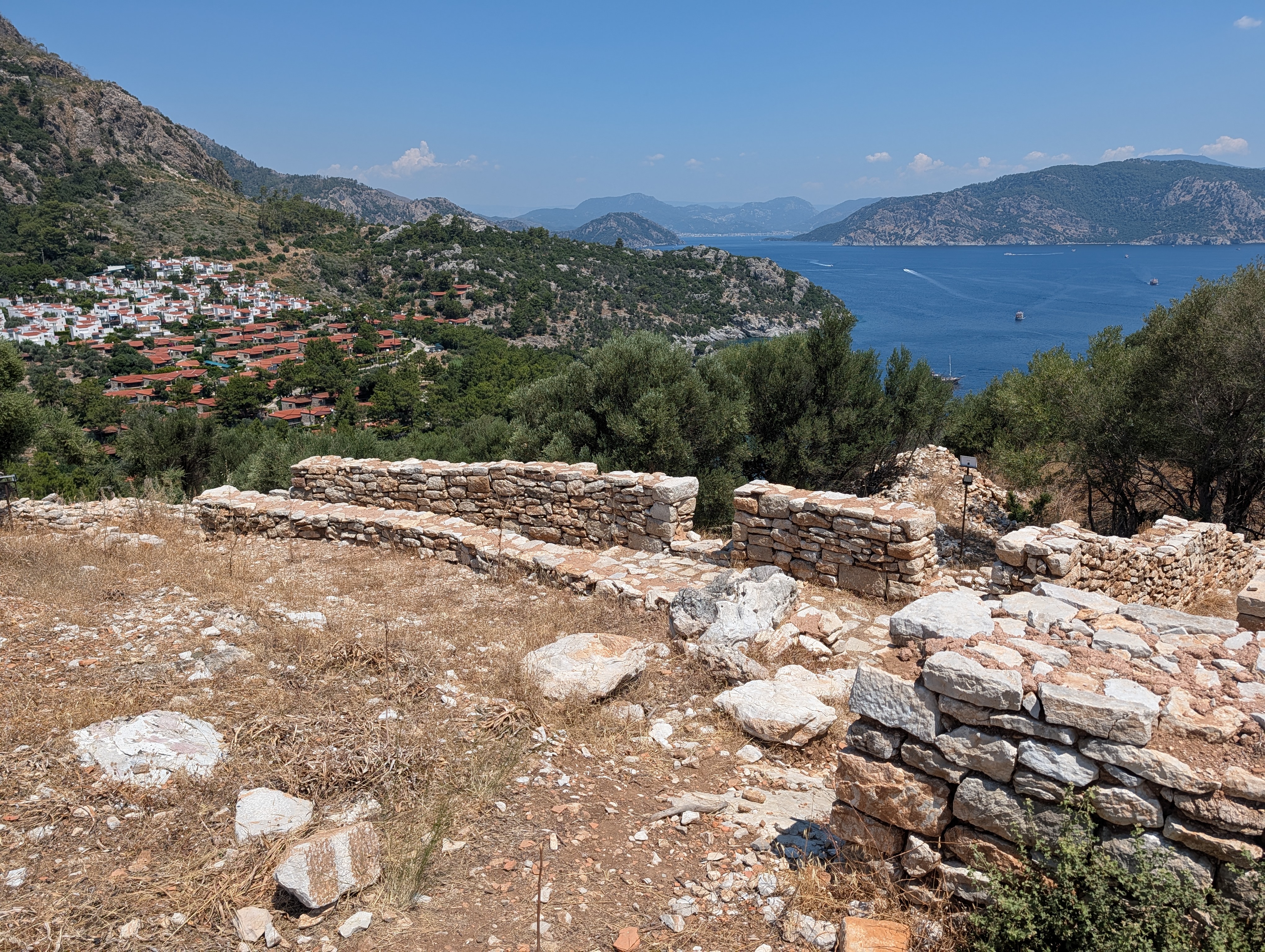
Perched on a steep, rocky hill above the cerulean waters of the Mediterranean, the ruins of ancient Amos command a spectacular stretch of the Carian coast. The settlement occupies the elongated Asarcık promontory, rising between two sheltered bays and offering wide views across the surrounding sea and hills. Its surviving walls, theatre, sanctuaries, and recently excavated domestic buildings reveal the remains of a small but remarkably well-organised ancient community, once connected with the powerful Rhodian world across the water.
For centuries, however, Amos remained little more than a name and a scattering of ruins on a wooded hillside. Today, a new generation of archaeological excavations is gradually changing that picture, revealing unexpected evidence for the settlement's much earlier origins and providing fresh insights into the lives, beliefs, and daily activities of its inhabitants. Easily reached from the nearby resort of Turunç, Amos offers something increasingly rare: the opportunity to explore an ancient city while its history is still being uncovered.
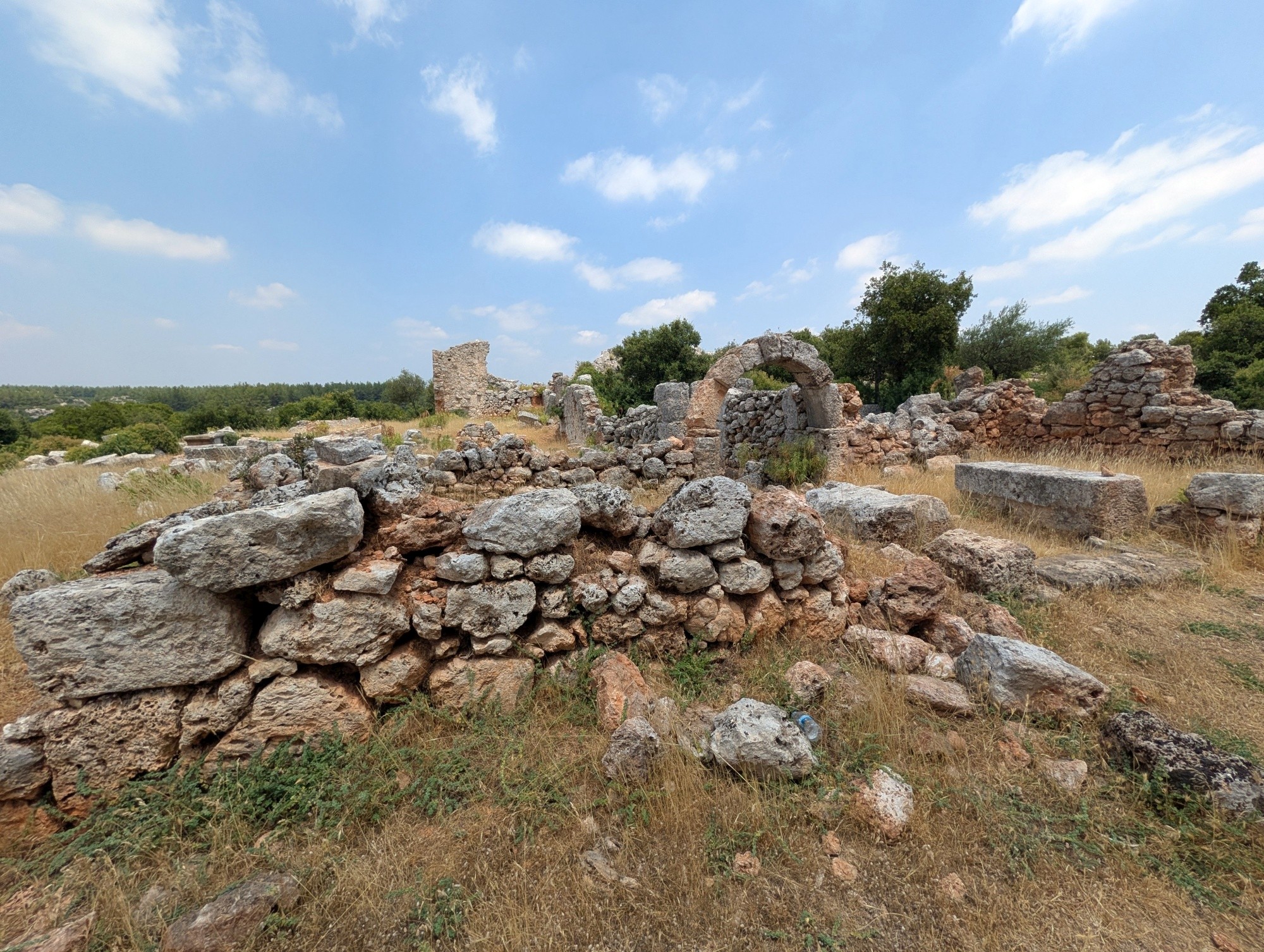
Just 12 kilometres south of the Mediterranean coast, on a hill overlooking the provincial capital of Antalya, stand the extensive ruins of an ancient settlement virtually unknown to most travellers and tourists. These ruins are known as Lyrboton Kome and come as a surprise because of their picturesque setting above the metropolis, within a pleasantly forested area. Sadly, as of 2026, they seem largely abandoned by researchers and visitors alike. So, what is the history of the Lyrboton Kome settlement? Let us try to find out as much as possible.
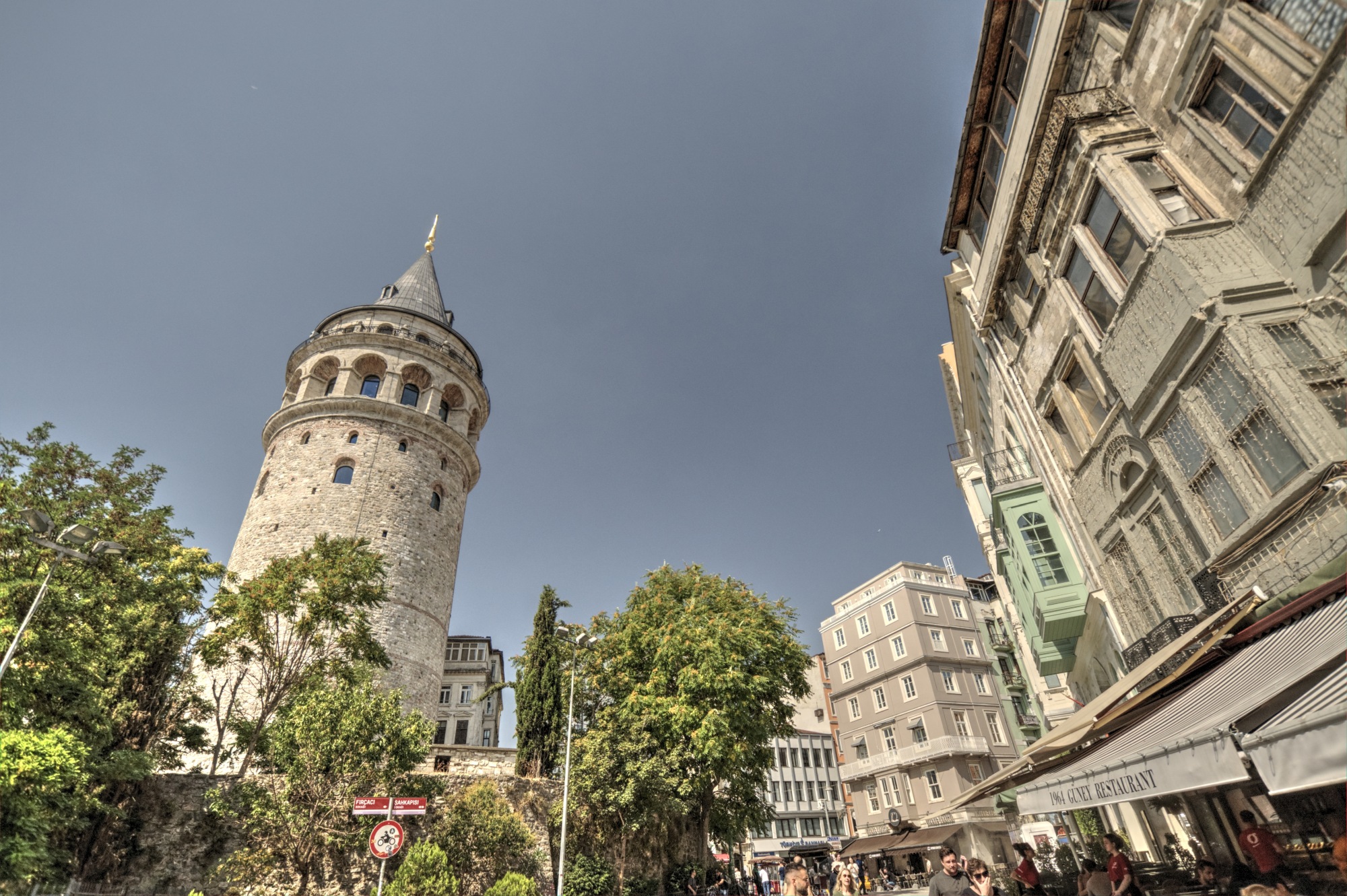
Rising above the winding streets of Galata, the Galata Tower is one of Istanbul's most recognizable landmarks and a monument that embodies the city's extraordinary layers of history. Standing on a ridge overlooking the Golden Horn, the tower has dominated the skyline for centuries, serving at different times as a defensive structure, observation point, fire-watch station, and symbol of the city itself. Today it remains one of the most visited monuments in Istanbul, offering spectacular views across Europe and Asia.
July 2026 was another remarkable month for archaeology in Türkiye, with discoveries ranging from the Neolithic to the Byzantine and Ottoman periods. Among the standout finds were a hoard of 50 Persian gold coins buried around 2,500 years ago at Notion, a rare 5,000-year-old Bronze Age temple with altars and sacred hearths at Tadım Höyük, and the identification of a long-misunderstood temple at Yalvaç as a sanctuary dedicated to the Anatolian goddess Hecate. Excavations also revealed the remains of the lost church associated with the First Council of Nicaea beneath the Iznik Basilica, a 2,000-year-old Roman road at Aspendos, an impressive Roman swimming pool, and a beautifully preserved Poseidon mosaic at Tralleis, while work at Türkmen Karahöyük produced a 3,500-year-old Luwian seal and a Late Roman gold amulet.
Important research shed new light on ancient trade, climate and daily life, including Early Bronze Age obsidian from the Greek island of Melos at Çaltılar Höyük, evidence that olives once grew around Kültepe 5,000 years ago, and a rare Byzantine twin burial uncovered at Ephesus. Archaeological projects across Ani, Tyana, Karahantepe, Oylum Höyük, and Pompeiopolis continued to expand knowledge of Türkiye's rich past, while restored monuments and museums, including the Macedonian Tower, Hıdırlık Tower, Topkapı Palace's Serbethane and the Museum of Anatolian Civilizations, made newly conserved heritage accessible to visitors. The month also saw Türkiye recover the long-lost 13th panel of the famous Zeugma 'Gypsy Girl' mosaic from the United States, underscoring the country's ongoing efforts to protect and reunite its archaeological heritage.
Hıdırlık Tower and archaeopark in Antalya, July 2026
June 2026 brought a remarkable series of discoveries that expanded our understanding of Anatolia's deep past. Among the most significant was the identification of a prehistoric painted cave in Malatya's Tohma Canyon, containing nearly 100 human and animal figures as well as geometric symbols, a find that could become one of the most important examples of prehistoric rock art in Türkiye. Equally significant was the announcement from Çemka Höyük in southeastern Türkiye, where 12,000-year-old clay container fragments suggest that pottery technology emerged through much earlier experimentation than previously believed. Archaeologists also uncovered four 8,000-year-old headless female figurines at Kanlıtaş Höyük, offering new insights into Neolithic ritual practices, while research around Mount Nemrut in Bitlis revealed evidence of Palaeolithic occupation, including caves, obsidian workshops and raw material sources. Another striking discovery came from Lifos Mountain near Kayseri, where snowmelt exposed a previously unknown ancient walled sanctuary and settlement complex at an altitude of 2,500 meters.
The month also yielded essential discoveries from later periods. Excavations at Aspendos uncovered a rare third-century CE mosaic depicting the river god Eurymedon, while work at Hadrianopolis in Karabük revealed a 1,750-year-old pithos tomb, the first known example of its type in the inland western Black Sea region. At Blaundos, archaeologists identified a restricted sacred area within a 1,900-year-old temple, shedding new light on local religious practices. Researchers at Termessos documented inscriptions relating to the city's independence and ancient divination rituals, and scholars working at Side advanced the decipherment of the long-lost Sidetic language by identifying 31 letters of its alphabet. Finally, excavations beneath Niksar Castle brought to light an 1,800-year-old Roman arsenal, while a 4,000-year-old cuneiform tablet from Kültepe, preserved inside its original clay envelope, was successfully read without breaking the seal, demonstrating how modern technology continues to reveal new information from some of Anatolia's oldest written records.
Turkish Archaeological News collects the most important, interesting and inspiring news from Turkish excavation sites. Here's the review for June 2026. Have we missed anything? Please let us know by using Contact tab!