Kırkkaşık Bedesten, literally translated as the Bazaar of Forty Spoons, is a covered market in Tarsus. Its history is closely related to the Grand Mosque of Tarsus, standing next to it. The bedesten is not only a historical attraction to the tourists who visit Tarsus, but it also plays a commercial role as a famous shopping centre.
When visiting the city of Tarsus, it is worth to remember not only about the monuments of the ancient period and the times of early Christianity. The history of the Grand Mosque (tr. Ulu Cami) is a perfect illustration of the turbulent history of the town, where numerous cultures and religions influenced each other, sometimes in an unexpected way.
Yesemek quarry and workshop complex is truly a unique place on a global scale. In the old days, it served as a quarry and a workshop of monumental sculptures that decorated the Hittite sanctuaries in the south-eastern Anatolia. Today, it is the largest place of its kind, known to researchers of the Middle East. The travellers who arrive there can admire hundreds of Hittite sculptures in various stages of completion.
Tarsus is a city with a very long history, and numerous famous individuals have strolled down its streets. The first meeting of Mark Antony and Cleopatra is undoubtedly one of the most colourful episodes in the history of Tarsus. It is often said that it took place at one of the massive gates of the city. This particular gate is now called the Cleopatra's Gate at the memory of that event.
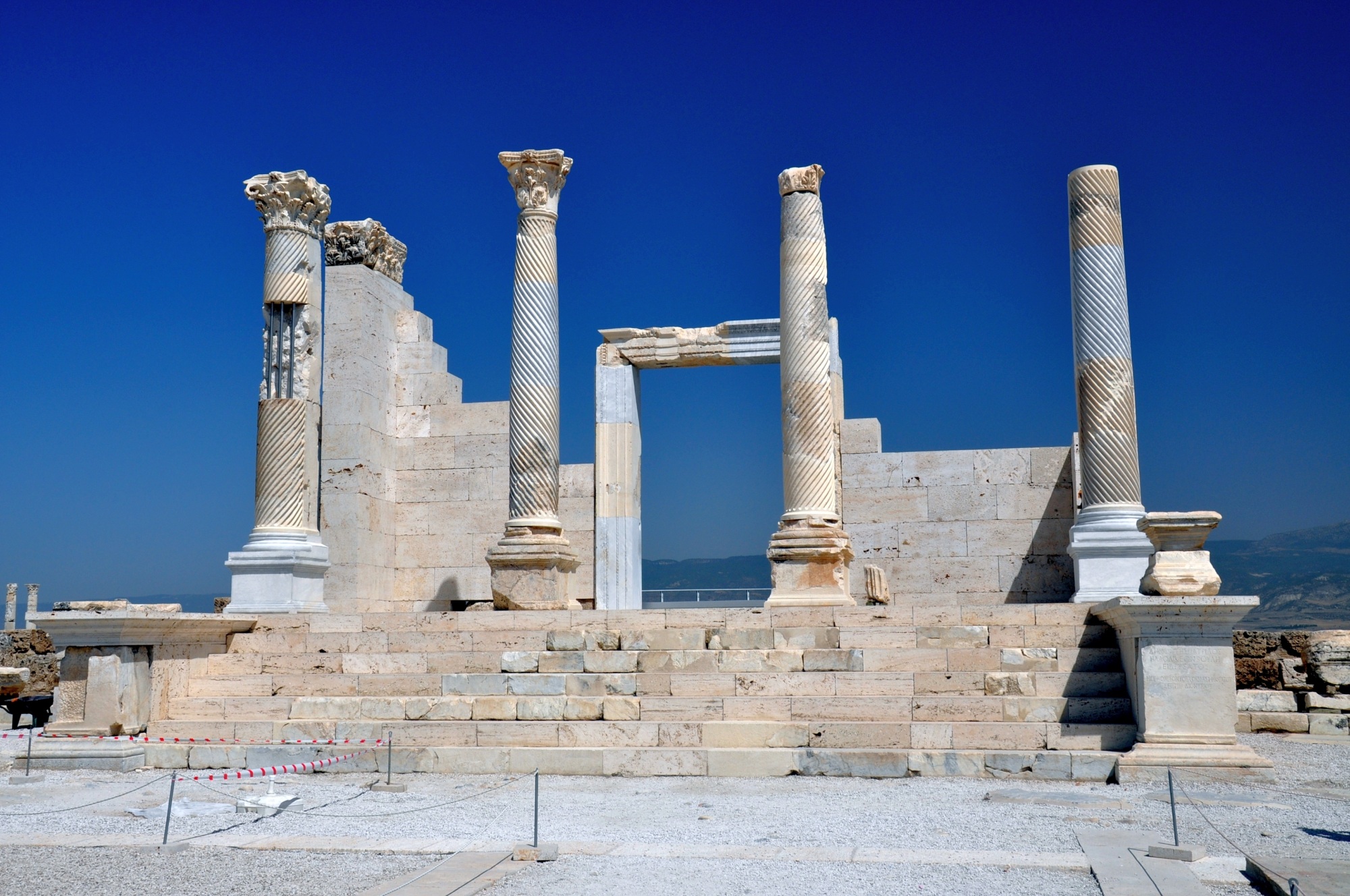
Laodicea on the Lycus, located at the crossroads of important trade routes, was once a prosperous city, famous for its black wool, banking services, and medical achievements. In the times of late antiquity, it had a large Jewish community and a significant congregation of Christians. St. John mentioned Laodicea as one of the Seven Churches of Asia in the Book of Revelation